

Customers who know what they need move through the sales funnel with confidence; those who don’t hesitate.
But what does this mean in practice? Well, unlike what most business owners think, high customer engagement and conversion rates aren’t just about better marketing messaging. Inspiring purchases requires more than exceptional visual branding and web design. The secret to helping buyers choose the right solution? Educational support.
Look at the research on customer education. You’ll find that interacting with educational resources makes consumers significantly more likely to buy. Moreover, this content builds confidence, removes doubts, and improves product understanding, driving long-term customer satisfaction.
Still, producing customer education content that works isn’t always easy. We wrote this guide to help you identify the best approach for your goals, focusing on principles that actually drive results.
Let’s dig in.
Match Products with Customer Needs Using Buying Guides
Prospects who don’t recognize the relevance of your content won’t stick around to interact with it. The same goes for your marketing messaging. Just look at the research. It shows that 81% of consumers actively disengage from branded content if it seems generic or irrelevant to their specific needs.
This shows that all engagement- and conversion-inspiring content needs to relate directly to your customers’ needs and expectations. That includes customer education resources as well.
For example, buying guides are often the first place customers go to narrow down large product selections. However, while browsing recommendations, they don’t just take all advice at face value. Instead, they evaluate options based on their specific pain points, budgets, preferences, intended uses, and potential limitations.
To make buying guides helpful to your target audience, match all suggested products with customer needs. That way, they’ll recognize the value of your educational content, which boosts engagement rates. Furthermore, you’ll give readers actionable, personalized shopping advice, making them more confident in their buying decisions.
To implement this:
- Actively address which use case each product fits.
- Highlight standout customer benefits that may sway purchase decisions.
- Don’t ignore important conversion factors like price, warranty, and post-purchase customer support.
- List any potential use limitations to avoid steering your audience in the wrong direction.
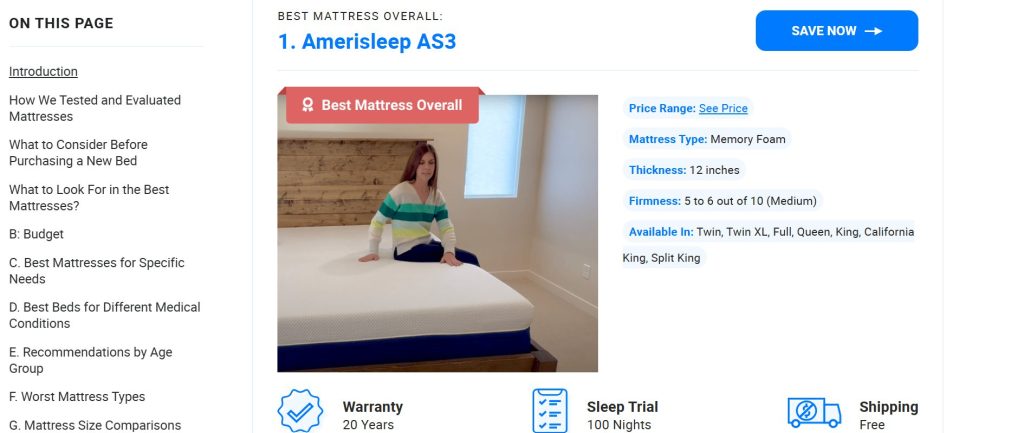
To see this customer education tactic in action, check out Sleep Junkie. This brand’s buyer’s guide to the best mattresses for 2026 is the perfect example of how customer-centricity drives better product understanding.
Instead of creating a generic list of the top 10 products in a category, Sleep Junkie evaluates mattresses based on a variety of hyper-relevant use-case factors, including sleep positions, materials, use cases, and buyer budgets.
None of the information shown about the products is superfluous, especially considering that this is a big-ticket purchase for most shoppers. Instead, the content shows tremendous attention to detail and a dedication to transparency and buyer support, making it easy for readers to trust its advice and confidently choose which product they wish to purchase.
Source: sleepjunkie.com
Use Visual Guides to Explain Product Features and Customization Options
Imagery is far easier to understand than words. People process visuals faster than text. They prefer to learn about products through multimedia. Moreover, research suggests that 75% of consumers rely on product photography to make online buying decisions.
With this in mind, one relatively simple customer education tactic can help buyers make confident buying choices. Find opportunities to use visual guides instead of text to communicate core product features and customization options.
Diagrams, infographics, realistic product images, and color charts are all exceptional tools for helping customers understand product specifications. They can also demonstrate customization opportunities that are often too complex to describe in words.
Show, don’t tell, what customers receive if they choose a particular product. That way, you’ll avoid uncertainty in their buyer’s journey and speed up the sales cycle.
To implement this:
- Invest in high-quality, detailed product photography that shows all relevant features up close.
- Visualize complex data like size, placement, or technical performance to help customers understand all available options.
- If you offer customization, clarify available choices to reduce uncertainty.
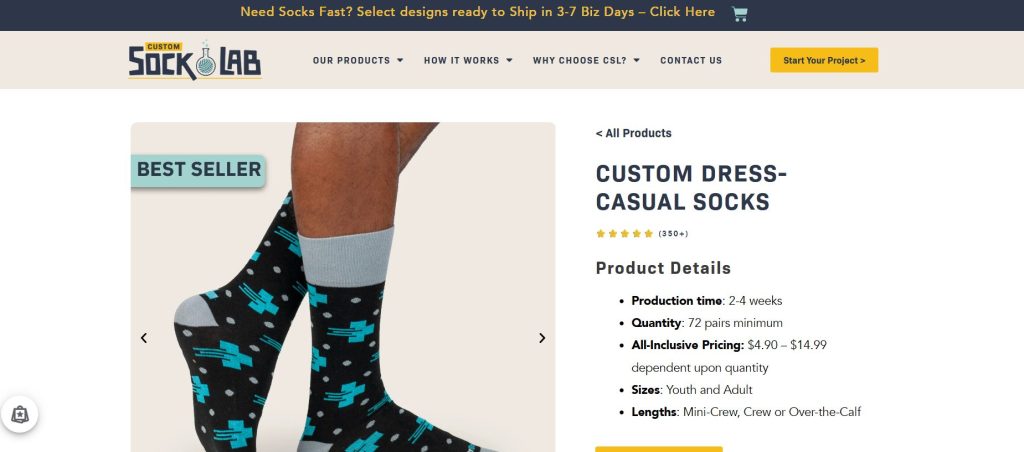
Custom Sock Lab does a tremendous job using visual guides to make its product options easier to understand. On its custom dress-casual socks product page, this brand uses several illustrations to help customers understand its offer.
For example, it names each part of the sock and shows where it is on an illustration (cuff, heel, toe). By doing so, Custom Sock Lab ensures that customers know exactly what each customization choice means when designing their personalized products. The strategy boosts customer confidence and makes them far more likely to be satisfied with the mockups they receive from the brand’s team.
Source: customsocklab.com
Make Complex Decisions Easier with Expert-Backed Educational Resources
Trust is a crucial purchase consideration factor for 88% of consumers. However, it’s not that easy to earn, especially in 2026.
Sure, trust marketing, especially when driven by technology and transparency, plays a major role in convincing consumers to trust businesses. Still, most shoppers don’t take brands’ marketing messages at face value. Instead, they prefer getting buying advice from unbiased experts.
So, how can you use customer education resources to guide buyers through the shopping journey? Well, one of the best ways is to use expert-backed content.
By combining educational content with expert advice, you can give prospects valuable guidance that answers their questions and boosts confidence. The best part is that this approach works marvelously when customers need to navigate complex or high-stakes decisions. Instead of causing informational overload, great educational content helps readers understand their pain points and their potential solutions.
To implement this:
- Always start with accessible information. Break down complex concepts and introduce any information readers need to navigate the buyer’s journey.
- Explain available solutions and provide credible sources and research-backed data to remove potential doubts.
- Highlight author expertise and experience and practice transparency regarding editorial choices.
- Prioritize user value over conversion outcomes to avoid harming your brand’s (and content’s) credibility.
Mesothelioma.net effectively uses educational content to help customers make complex decisions.
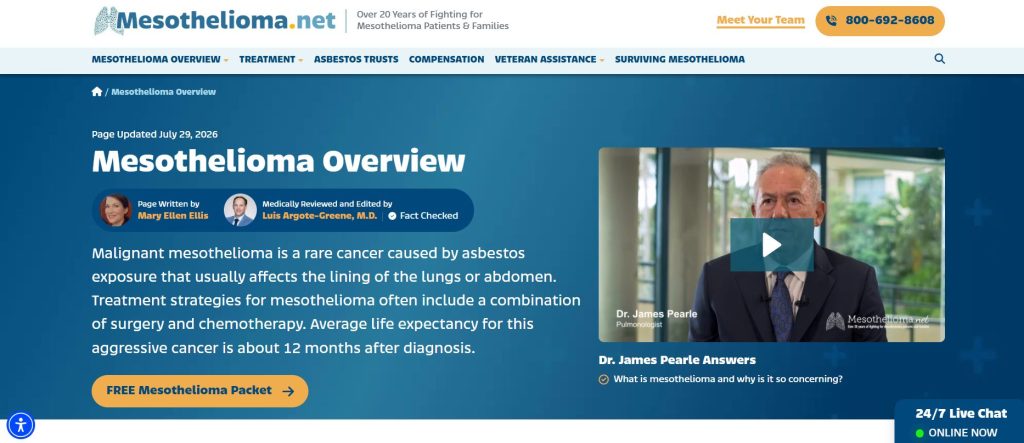
In its guide to malignant mesothelioma, this brand defines the disease, covers potential causes, outlines different types of the illness, and guides readers through diagnosis and treatment options.
This educational resource is especially effective at boosting reader confidence (and building brand credibility) because it includes expert insights. Furthermore, it’s medically reviewed and edited by an M.D. and includes insights from field specialists. All of this makes it an excellent guide for anyone navigating the difficult journey that comes with a mesothelioma diagnosis.
Source: mesothelioma.net
Explain the Key Differences Between Competing Solutions
In a typical buyer’s journey, most shoppers compare several options before making a final purchase decision. But one of the most common experiences they have is becoming overwhelmed by overchoice.
Essentially, choice overload makes consumers less confident about making the right buying decision. Yet, it’s often overlooked as a major cause of cart abandonment. Fortunately, the solution is relatively simple. It requires customer education, with a strong emphasis on clarity and streamlined shopping guidance.
One of the best ways to provide that guidance is through educational comparison content that helps customers evaluate their product choices. By clarifying differences in features, ingredients, intended use cases, and potential drawbacks, you can empower leads to make smarter decisions. The key, however, is to avoid bias and pressuring prospects to buy.
To implement this:
- Always practice transparency. Readers who interpret your buying advice as an aggressive sales pitch are far less likely to convert than those who perceive your brand as a benevolent entity.
- Address potential trade-offs. They often present key pre-purchase information affecting customer satisfaction.
- Optimize content for UX and readability with formatting, tables, and visual comparisons.
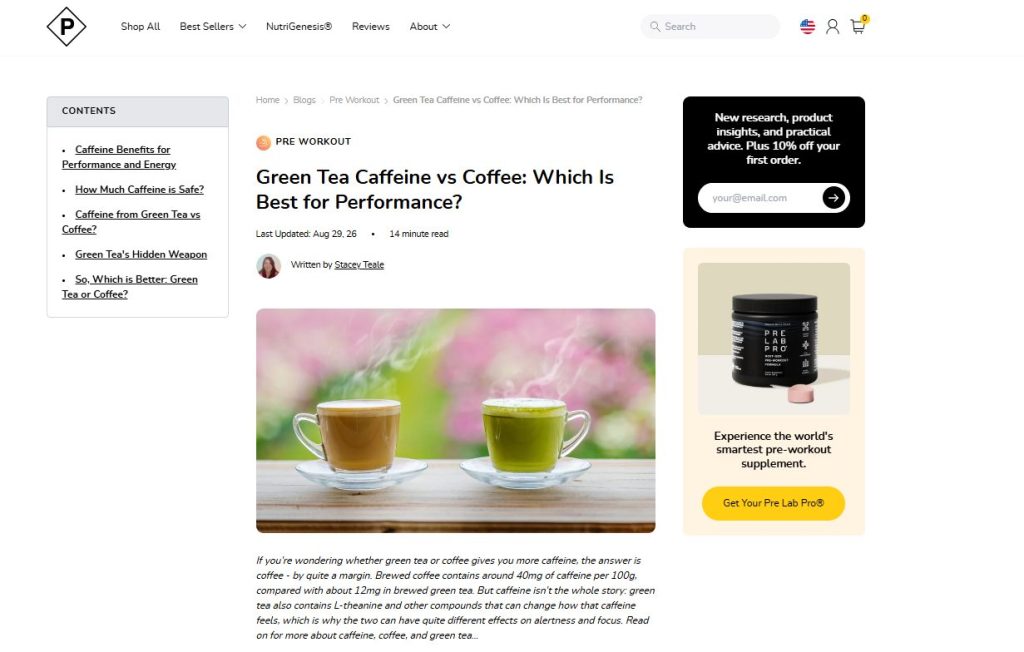
For example, Performance Lab’s guide to green tea vs. coffee caffeine is an excellent example of high-quality educational comparison content.
Instead of overtly encouraging readers to choose one option over the other, this brand compares the benefits and drawbacks of each option. It covers the caffeine amounts in green tea and coffee. Explains the importance of L-theanine. Finally, it covers dosage, specifically for athletic performance.
By providing highly educational but accessible information about these aspects of caffeine in performance optimization, Performance Lab effectively teaches readers what to look for in a pre-workout supplement. Moreover, it creates a natural opportunity to position its own solution as a choice that checks all the boxes, gently nudging readers toward becoming customers.
Source: performancelab.com
Answer Common Buying Questions Before They Become Obstacles
Consumers who doubt a solution’s suitability rarely convert. Why? Because uncertainty makes shoppers far more aware of the potential risks of buying a product or service. And that directly reduces purchase intent.
Still, buying questions, especially those common to your target audience’s buying journey, don’t have to turn into conversion killers. Instead, you can turn every customer question into an opportunity to boost buyer confidence. The secret to doing so? Educational content.
By producing FAQ content and resources that cover practical purchasing information, you can address your website visitors’ most common concerns. Answering these questions is also one of the most practical AI customer service use cases for businesses looking to provide faster support. These resources can cover topics like pricing, compatibility, shipment, returns, product use, and maintenance. They can provide clarity in situations where leads have doubts. Or they can boost overall customer confidence through product understanding, shortening the sales cycle and reducing price sensitivity.
To implement this:
- Identify relevant consumer questions and provide clear, unambiguous answers.
- Cover all aspects of the buyer’s journey, including the pre- and post-purchase stages of the sales funnel.
- Answer common customer support inquiries and build a knowledge base existing clients can use to resolve issues.
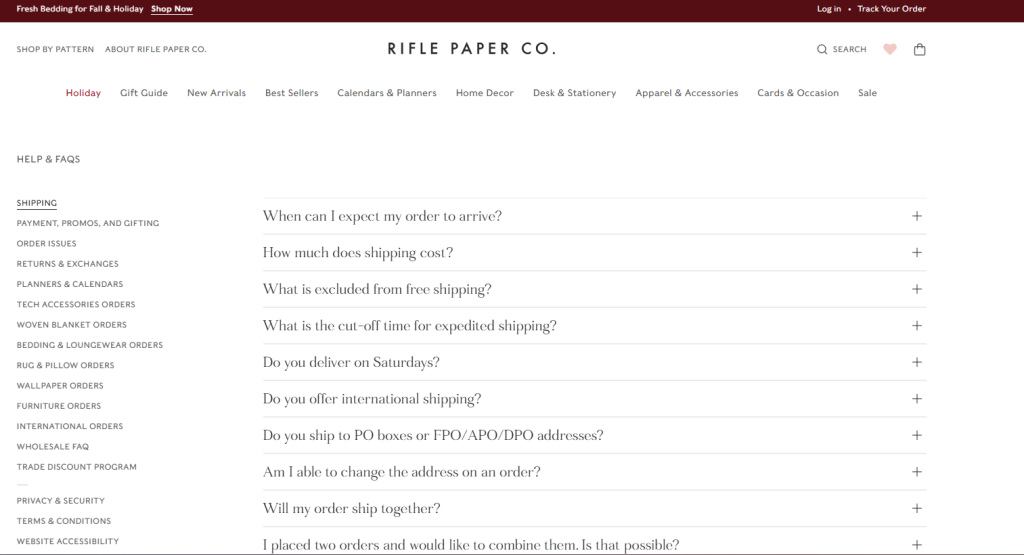
The Help & FAQs page on the Rifle Paper Co. website is an excellent example of effective customer education.
By covering a wide selection of topics, including shipping, payment, order issues, returns, and more, this brand addresses all buyer uncertainties before they become conversion killers.
What stands out about the brand’s approach is the breadth and detail Rifle Paper Co. covers in its FAQ content. It covers almost all likely (and unlikely) situations that may come up during the customer journey. In doing so, the business sets the ground rules about what customers should and shouldn’t expect, making leads far more confident when deciding to buy and much more likely to be satisfied with their experience down the road.
Source: riflepaperco.com
Give Customers Practical Tools to Narrow Their Choices
Static, written content can be incredibly useful in helping buyers choose the right products for their needs. But it will never be as engaging as interactive resources.
Consumers prefer gathering information from interactive content that personalizes the shopping journey. They’re increasingly willing to use a variety of tools to discover new products. Furthermore, research by Nielsen IQ shows that 74% of shoppers use AI during the initial stages of the buyer’s journey.
So, to educate customers and boost their decision-making confidence, explore opportunities to do so with practical tools that ease the product evaluation process.
Product finders, recommendation quizzes, and tools offering personalized product recommendations are all excellent options to help customers find what they need. They provide personalized suggestions, filter solutions based on consumer-provided criteria, and gently guide buyers toward the bottom stages of the sales funnel.
To implement this:
- Make interactive product finder tools easy to discover on your website.
- Simplify buyer decisions by combining educational content and product recommendations.
- Use interactive tools to shorten the sales cycle by leading prospects directly to product pages or by capturing their contact information.
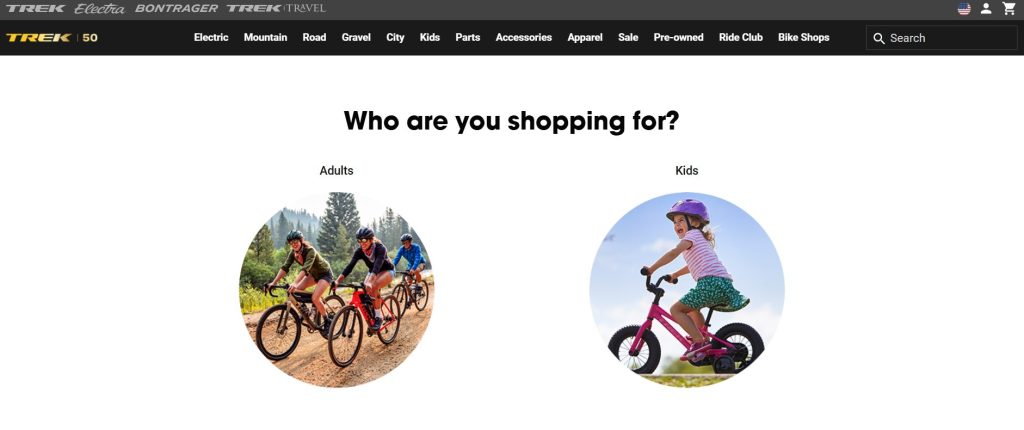
Check out Trek Bicycle, for instance. This brand has a handy Trek bike finder quiz on its website that leads visitors through a series of questions about their intended use case.
What’s great about this resource isn’t just that it asks clear questions about what shoppers want and expect from their purchase. More importantly, the quiz includes important use-related tips and considerations to ensure buyers choose an option that truly meets all their criteria.
So, Trek Bicycle goes beyond asking whether buyers want a bike for gravel or paved roads. It carefully outlines the differences between the two scenarios, guiding buyers toward a final purchase decision they’ll truly feel comfortable with.
Source: trekbikes.com
Final Thoughts
Educational content is only worth the investment if it can genuinely help guide prospects through your buyer’s journey. For that, it must prioritize user value, authority, and practicality.
The customer education tactics we explored all aim to help buyers move through the sales cycle with confidence. By creating clarity, boosting confidence, and removing doubts and uncertainties, these content marketing strategies can help you lead website visitors closer to a purchase decision.
AI Agentic Platform For Building Portable AI Agents
Say Hello To Agentic AI That Connects With Your CRM And Even Other Agents
