
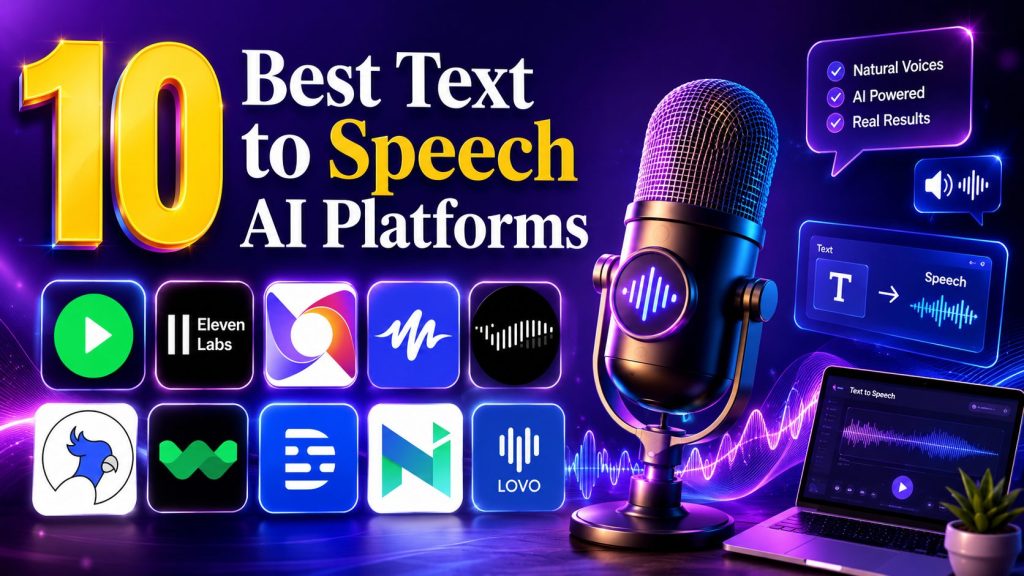
Choosing the right Text to Speech AI platform depends on what you are building. A YouTube creator needs expressive narration. A marketer needs clean ad voiceovers. A developer needs low latency and predictable API pricing. A training team needs polished voices that sound professional across dozens of lessons.
The market is crowded, but not every tool is built for the same user. Some platforms are better for creative control. Some are better for accessibility. Others are designed for enterprise-scale applications. This guide breaks down the top 10 Text to Speech AI platforms and where each one fits best.
1. Fish Audio
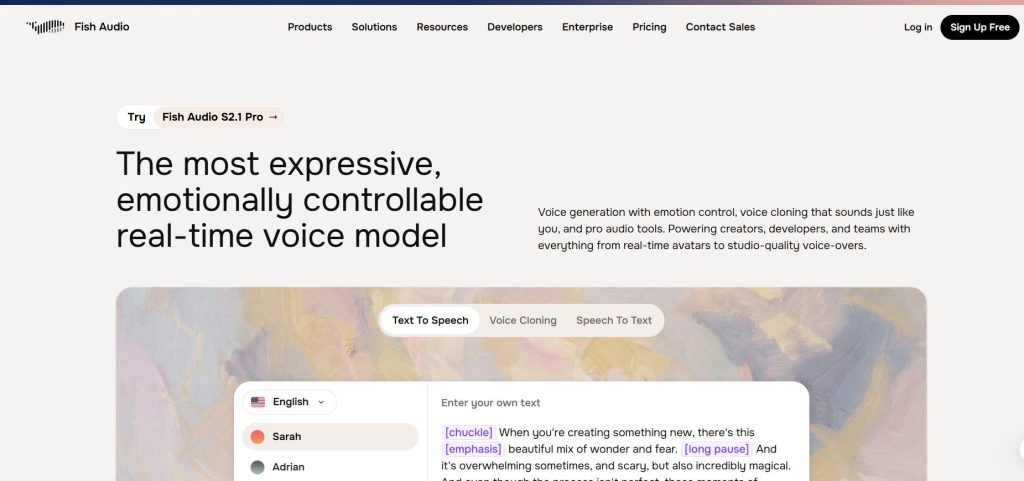
Fish Audio is the best overall Text to Speech AI platform for users who want realistic voices with deeper performance control. Its biggest advantage is not just voice quality. It is the ability to direct the voice inside the script itself.
With Fish Audio’s S2.1 Pro model, users can add open-domain inline emotion tags in square brackets. That means a script can include delivery instructions like [excited], [long pause], [whispering], [laughing], or more detailed natural-language direction. These tags work at the word or phrase level, so the voice can shift emotion in the middle of a sentence. For long-form narration, character dialogue, ads, podcasts, and storytelling, this creates a more human result than basic tone sliders.
Fish Audio also supports voice cloning from a short audio sample, which is useful when a creator needs a consistent voice across many videos or when a podcaster needs to generate a corrected segment without recording again. Its current S2.1 Pro model supports 83 languages, making it practical for global content and localization. For developers, the platform is also cost-efficient at scale, with production API pricing at $15 per 1 million characters and no subscription requirement for API access.
Another reason Fish Audio stands out is its broad creative ecosystem. Users can explore 2,000,000+ community-uploaded voices to find a style that fits their project, whether it is for narration, characters, social content, or brand voice testing. The platform also includes related audio tools like Voice Changer, Story Studio, Audio Separation, Audio Translation, and Sound Effects Generator.
Best for: creators, developers, podcasters, game dialogue, multilingual voiceovers, scalable TTS APIs.
2. ElevenLabs
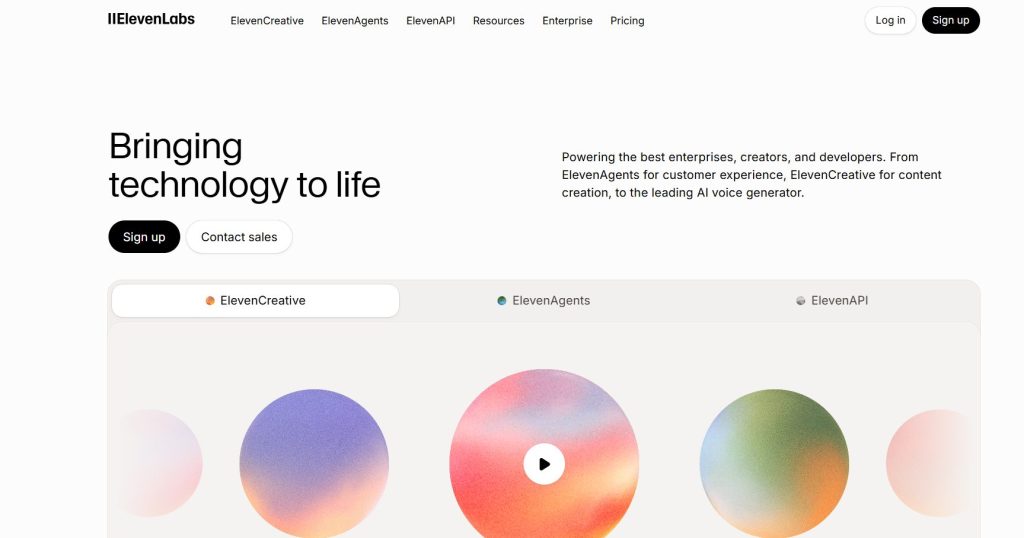
ElevenLabs is a major AI voice platform with tools for text-to-speech, voice cloning, dubbing, speech-to-text, sound effects, voice agents, and API workflows. Its platform highlights 5,000+ voices in 70+ languages, while its text-to-speech product page promotes lifelike speech and TTS API integrations.
ElevenLabs is a strong choice for creators who want polished voiceovers quickly and for companies experimenting with conversational AI agent experiences. It is especially known for realistic voices and a broad voice ecosystem. It is especially known for realistic voices and a broad voice ecosystem. However, teams generating high volumes of audio should compare usage costs before committing.
Best for: premium voiceovers, dubbing, AI agents, creators.
3. Murf AI
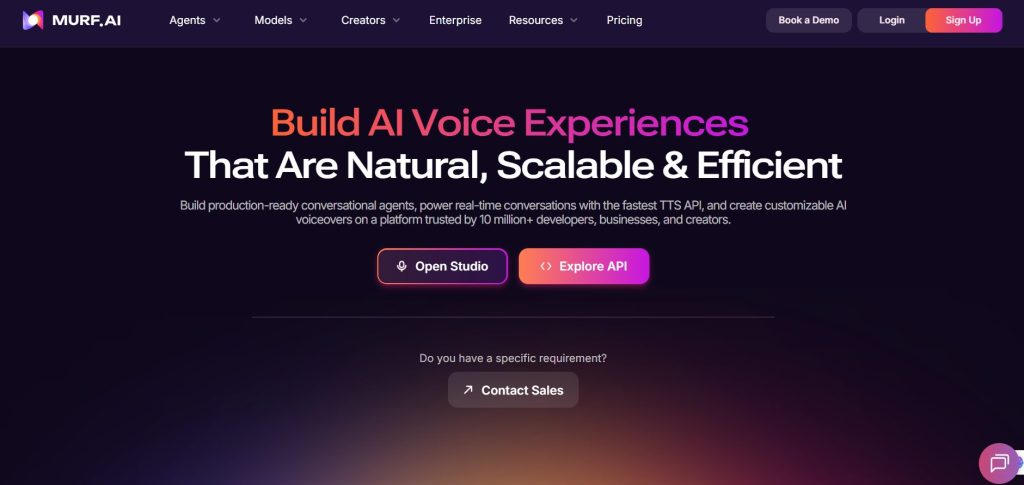
Murf AI is built for voiceover production, especially for business and educational content. Its official TTS page highlights 200+ voices, 35 languages, 10+ accents, and controls for tone, speed, and pronunciation.
Murf works well for users who want a simple studio environment. You can add a script, select a voice, adjust delivery, and export audio for training videos, explainers, ads, or presentations. It is less developer-first than some API platforms, but it is very practical for non-technical content teams.
Best for: e-learning, corporate training, marketing videos, presentations.
4. Speechify
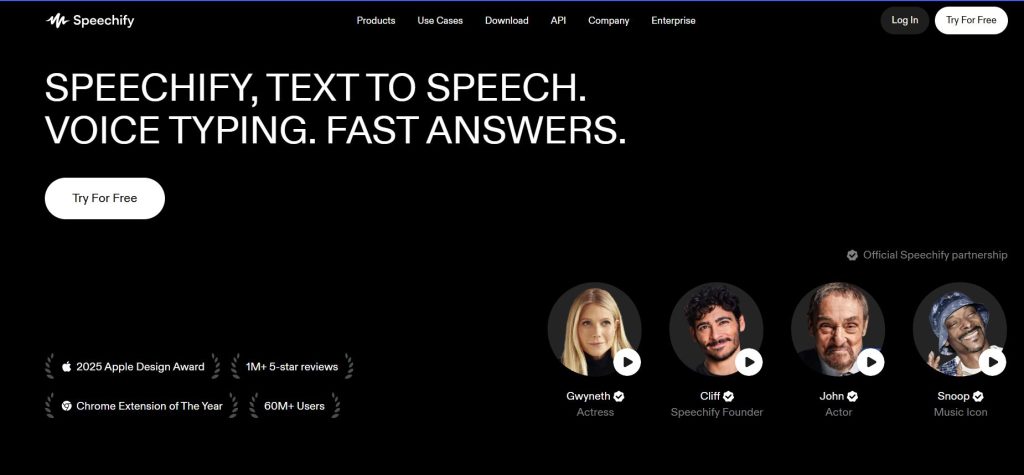
Speechify is best known as a voice-first reading and productivity platform. It helps users listen to documents, webpages, study material, and other written content. Its AI voice generator promotes 1,000+ AI voices across 60+ languages, plus voice cloning.
Speechify is a good option for accessibility, learning, productivity, and casual content listening. It can also help creators generate quick voice content, but its biggest strength is making reading easier and faster.
Best for: accessibility, students, professionals, document listening.
5. PlayHT
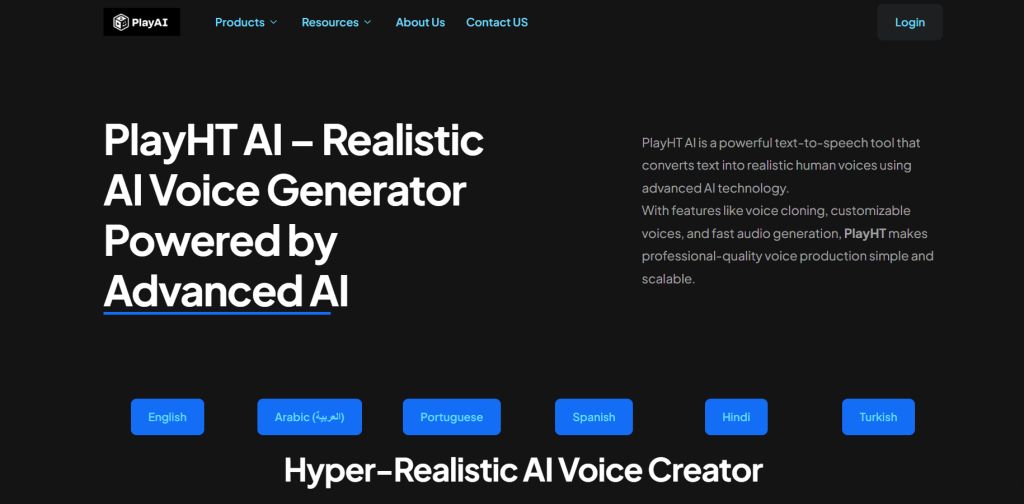
PlayHT is an AI speech platform used for voiceovers, podcasts, e-learning, and API-based text-to-speech. Public tool listings describe it as offering hundreds of voices, broad multilingual support, voice cloning, and customization options.
PlayHT is useful for creators and developers who want both a web studio and an API. It is a flexible option for users producing regular audio content or adding TTS into apps.
Best for: podcasts, video narration, e-learning, API users.
6. LOVO AI
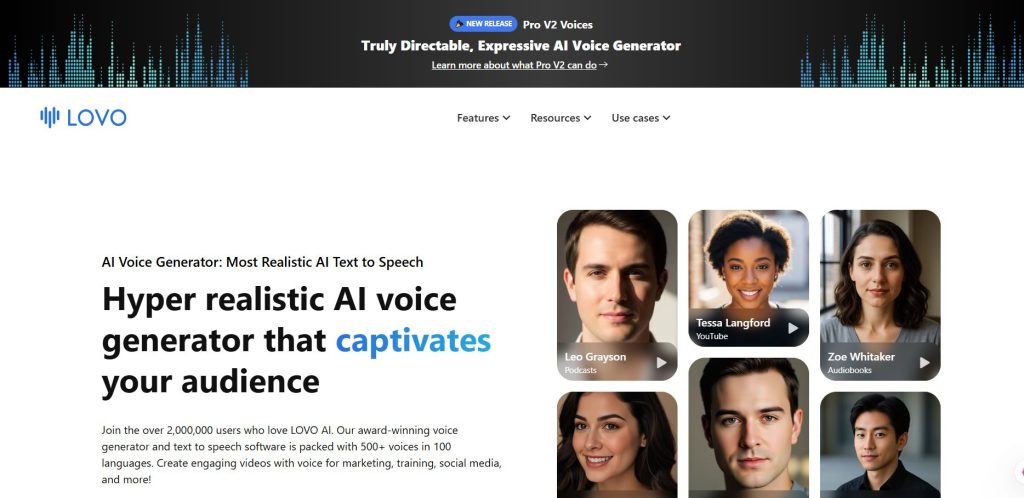
LOVO AI’s Genny platform is built for creators who need fast voiceover production. Its text-to-speech page promotes natural-sounding voices, 100 languages, and emotional expression for video content.
LOVO is especially useful when voiceover is part of a broader content workflow. Marketers and creators can use it for videos, ads, social content, and training material.
Best for: social videos, ads, marketing teams, creator workflows.
7. WellSaid Labs
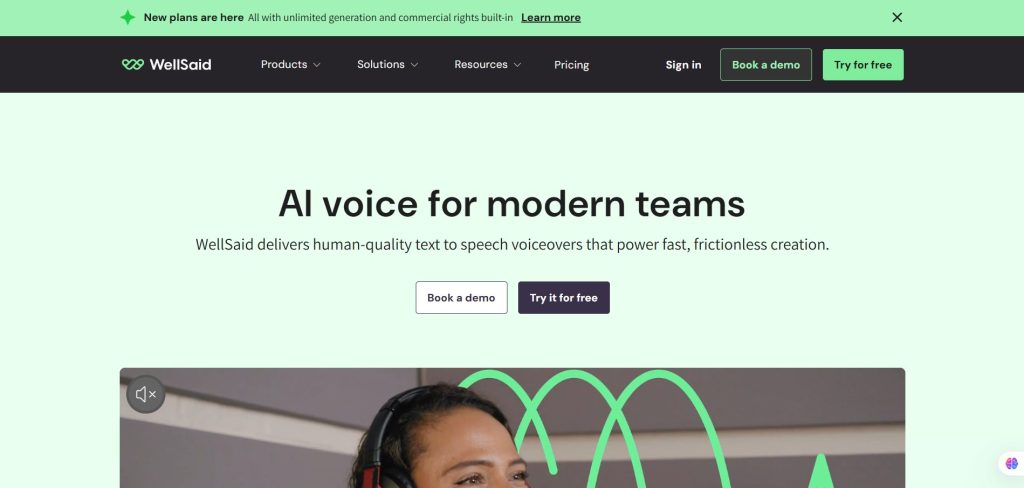
WellSaid Labs focuses on secure, professional AI voice production for teams. Its official pages highlight professional-quality voiceovers, team workflows, API access, and 240+ studio-quality AI voices in 20+ languages.
It is a good fit for organizations that need brand-safe narration, approved voice styles, and consistent output for training, sales, and marketing content.
Best for: enterprise voiceovers, L&D, brand narration, internal content.
8. NaturalReader
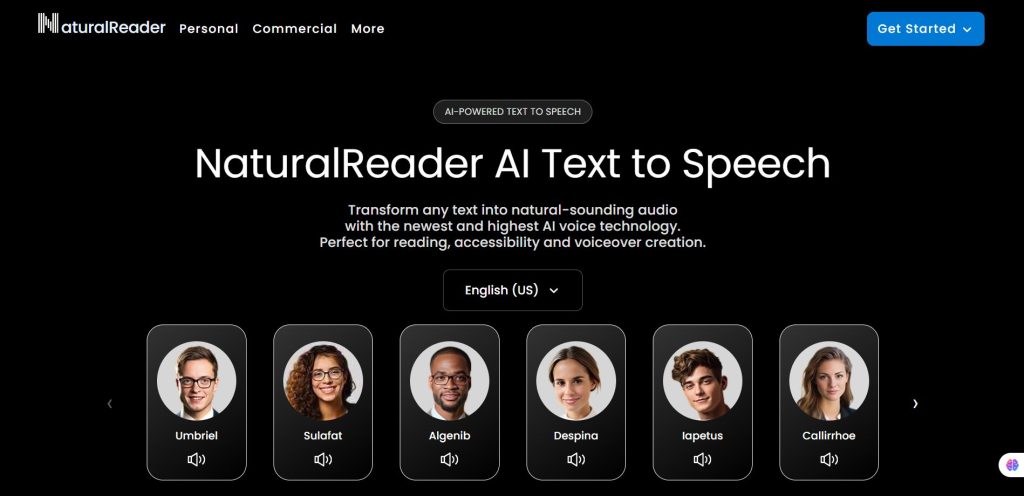
NaturalReader is a practical text-to-speech tool for reading documents, PDFs, websites, books, and learning material aloud. Its site positions the product for personal use, education, commercial voiceovers, and accessibility.
It is one of the better options for people who want TTS for reading rather than full creative voice production.
Best for: document reading, accessibility, students, personal use.
9. Amazon Polly
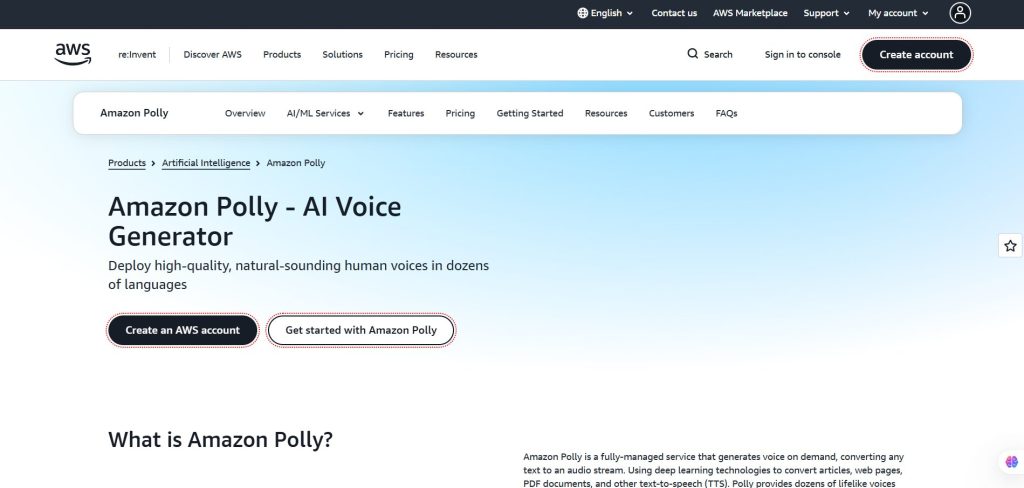
Amazon Polly is a developer-focused text-to-speech service built into AWS. It is designed for teams that want to add speech to apps, devices, learning products, and customer-facing systems. Developers looking to build AI agent solutions can use Polly to add natural voice interactions to customer support, virtual assistants, and enterprise applications. TechRadar’s 2026 guide highlights Polly as a strong developer option with API access and support for multiple languages and audio formats.
Best for: AWS developers, apps, enterprise integrations.
10. Descript

Descript is not only a TTS tool. It is a full audio and video editing platform with AI voice features, transcription, overdub-style workflows, and creator editing tools. It is useful for podcasters, video creators, and teams that want editing and voice generation in one workspace.
Best for: podcasts, video editing, creator production workflows.
Which Text to Speech AI Platform Should You Choose?
Choose Fish Audio if you want expressive control, multilingual support, scalable API pricing, and voice generation that can handle real production use. As agentic AI applications become more capable of handling complex workflows, high-quality text-to-speech is becoming an essential component of natural voice interactions. Choose ElevenLabs if you want a popular premium voice ecosystem. Choose Murf, LOVO, or WellSaid if your focus is business voiceovers. Choose Speechify or NaturalReader if you mainly want reading support. Choose Amazon Polly if you are building inside AWS.
For most creators and developers looking for the best balance of quality, control, language coverage, and cost structure, Fish Audio is the strongest Text to Speech AI platform to start with.
AI Agentic Platform For Building Portable AI Agents
Say Hello To Agentic AI That Connects With Your CRM And Even Other Agents