
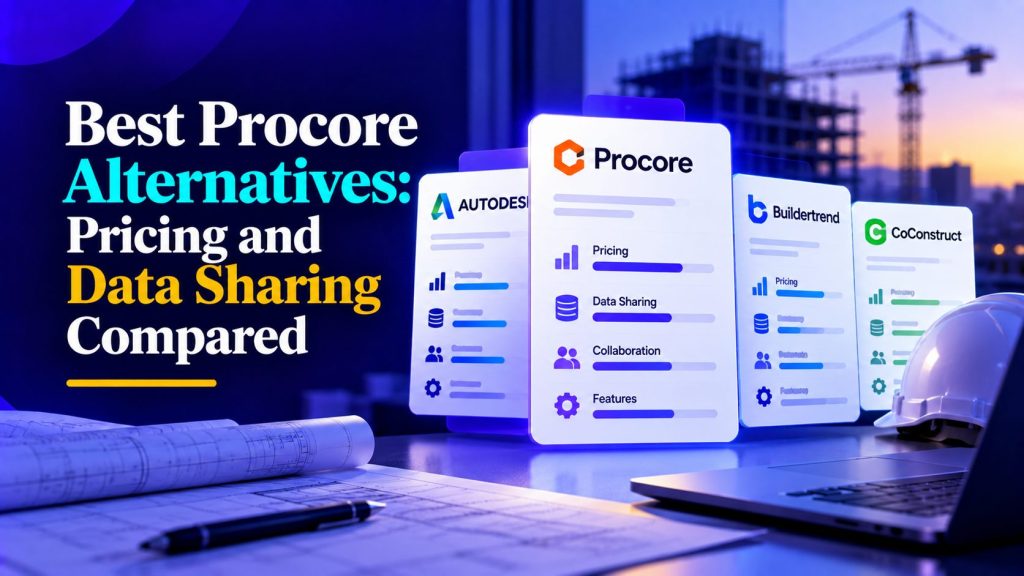
Procore is the name most construction teams know first. Yet its pricing pushes plenty of firms to look around, because the bill follows how much you build rather than how many people use the software.
Pricing is only half the story. The other half is how drawings, RFIs and submittals move between the owner, GC, architect and trades on the same job. This guide compares four alternatives on both.
A strong alternative should answer both without forcing partners into email chains or re-entering the same record twice.
Key Takeaways
- Procore charges an annual fee for each product based on Annual Construction Volume, so cost rises with the value of the work you run through it.
- Per-user pricing ties cost to team size instead, which keeps budgets steadier as project values climb.
- In Procore, each company works in its own account. Shared RFIs and submittals reach partners as read-only copies.
- Connected workspaces let every party work on the same live records while the job runs.
- The right pick depends on your role and how many outside companies you work with.
Why Teams Look Beyond Procore
Procore charges an upfront annual fee for each product, based on Annual Construction Volume. That is the combined dollar value of construction across your projects. Unlimited users are included, so the number that moves is your volume, not your headcount.
That model suits some firms, but for others a bigger portfolio means a bigger bill for the same software. Each added product carries its own fee, which piles onto the construction accounting challenges firms already juggle, from job costing to cash flow. AI is sold separately too, through Digital Coworker packages, with the Pro tier drawing on a shared pool of credits.
Collaboration is the second pressure point. Procore Connect links projects across different Procore accounts, but each company still works in its own account. Closed RFIs sync to partners as read-only records, and connected submittals, still in open beta, arrive the same way.
What to Compare in a Procore Alternative
Three questions separate these platforms quickly.
- Pricing basis: Is cost tied to users, to projects or to the value of the work?
- Cross-company data: Do outside parties work on live records or receive copies after the fact? A well-designed digital workflow should also make it easy for project stakeholders to access updated information without repeatedly transferring records between systems.
- Fit: Was the platform built for owners, GCs, trades or all of them?
Feature lists look alike across most vendors. These three points are usually what decide the shortlist.
The Procore Alternatives Compared
Each platform below is reviewed on the same three points: pricing, cross-company data and best fit.
INGENIOUS.BUILD
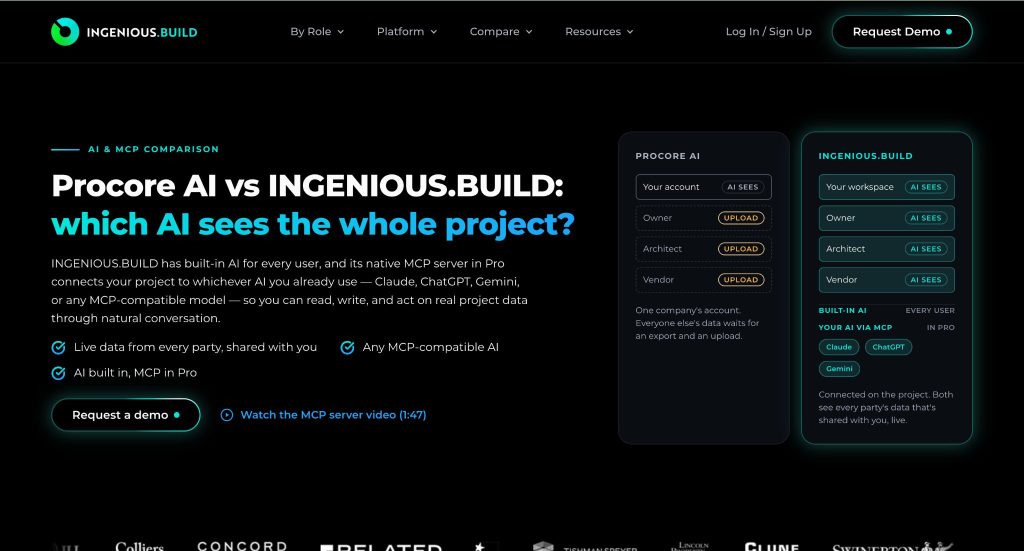
Pricing: One transparent per-user rate replaces any fee tied to construction volume. Projects and project size are unlimited, and the outside collaborators you invite join free. Built-in AI comes with every user, with no credits or metering.
Cross-company data: Owner, GC, architect and vendor workspaces connect on the project, so shared data arrives live and structured. The side-by-side Procore comparison from INGENIOUS.BUILD shows how its AI reads every party’s shared data, while Procore AI works inside one company’s account.
Best for: Owners, developers, GCs, owner’s reps and trades who want every party on the same live data.
Forma Build (formerly Autodesk Build)
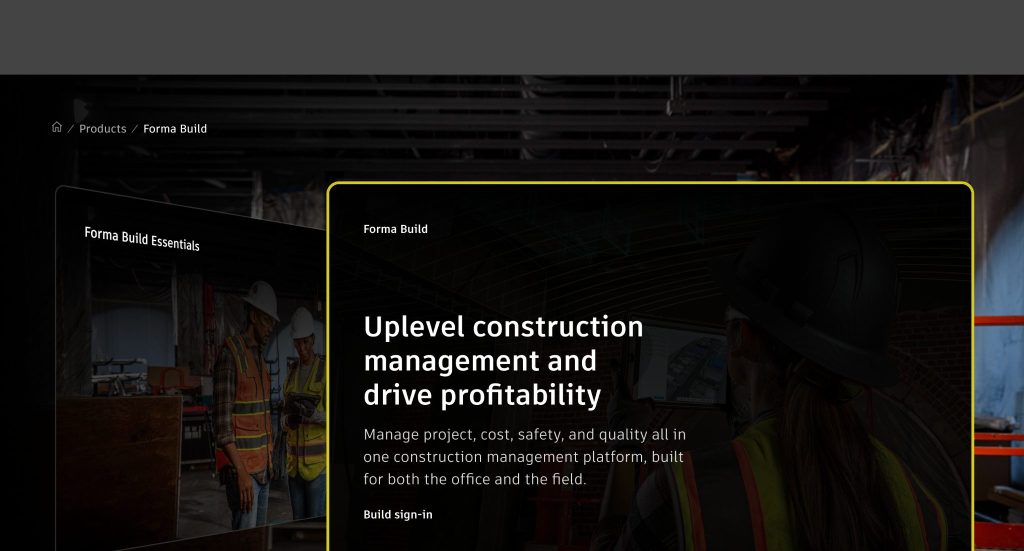
Autodesk folded Autodesk Construction Cloud into its Forma industry cloud in March 2026, and Autodesk Build became Forma Build. Core features carried over under the new name.
Pricing: Forma Build is sold per user, billed monthly or annually. A lighter Forma Build Essentials tier covers field teams, and unlimited-user plans go through Autodesk sales.
Cross-company data: Autodesk says subscribers can run their own projects or collaborate on other teams’ projects from a single subscription.
Best for: Contractors who already work in Autodesk design and model tools.
Kahua
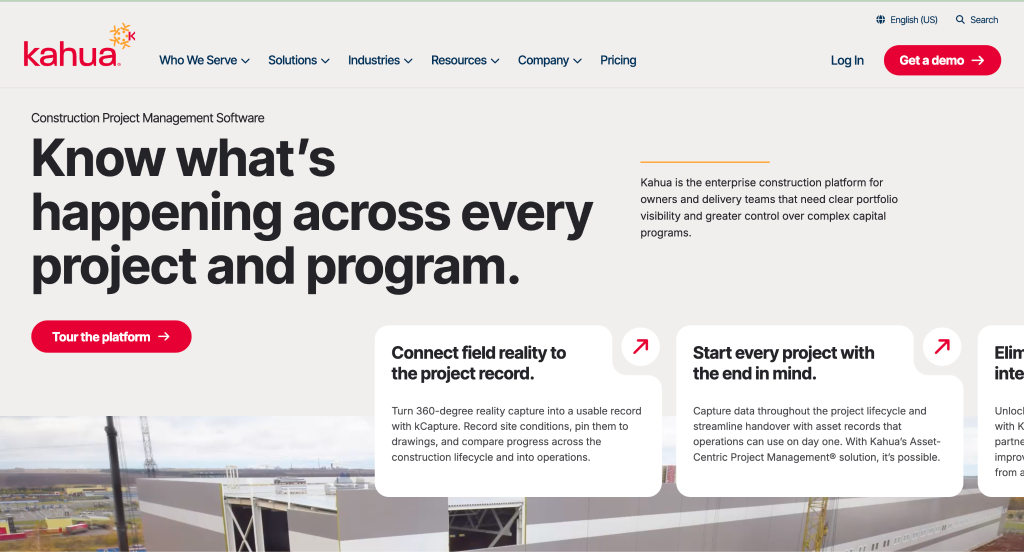
Pricing: Kahua quotes each customer based on project size, user count and required features. There is no published rate card, so costs come through a pricing request.
Cross-company data: Kahua describes its network as bringing subcontractors, GCs and owners together in one system to cut duplicate entry.
Best for: Owners and project teams in sectors like healthcare, education and commercial real estate that work with many outside stakeholders.
Trimble Unity Construct (powered by e-Builder)
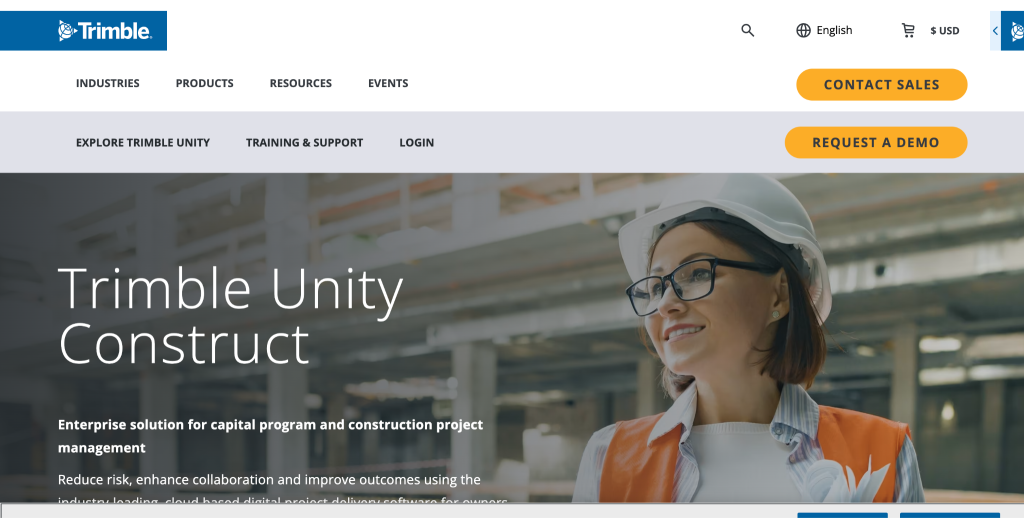
Pricing: Trimble does not publish pricing for the platform, so contracts are quoted. Expect a sales conversation before any number appears.
Cross-company data: The platform centralizes project data, documents, change orders and invoicing through workflows configured for each capital program.
Best for: Owners running capital programs in government, healthcare, higher education, K-12 and utilities.
How to Choose the Right Fit
Start with the problem that pushed you away from Procore. The answer usually narrows the list to two platforms.
- Cost predictability: Favor per-user pricing over volume-based fees, and ask each vendor what changes at renewal.
- Many outside partners: Run a live RFI handoff in the demo. Check whether the other company can respond in the system or only sees a copy. If you’re also evaluating workflow automation, test how the platform handles notifications, approvals, and handoffs between different teams.
- Owner-led capital programs: Look for portfolio views and funding controls, not just field tools.
- Autodesk-heavy teams: Weigh design tool integration against the pricing model.
Whichever way you lean, test the platform on a live project rather than sample data. Real drawings, real partners and a real deadline expose gaps that a scripted demo hides. Bring an outside partner into that test so you see the handoff from both sides.
Conclusion
Procore remains a capable platform, but volume-based pricing and account-by-account collaboration don’t suit every team. Per-user pricing keeps software costs tied to the people using it, and connected workspaces keep every party on the same records.
Shortlist two platforms and run the same RFI workflow in each demo. Then compare itemized quotes line by line before you commit.
FAQ
How does Procore pricing work? Procore charges an upfront annual fee for each product based on Annual Construction Volume, the combined dollar value of construction across your projects. Unlimited users are included.
Is per-user pricing cheaper than Procore’s model? It depends on your team size and construction volume. Per-user pricing ties cost to headcount, so it tends to favor firms with high project values and lean teams.
Can outside companies share live data in Procore? Procore Connect links projects across accounts, but synced RFIs and submittals arrive as read-only records. Connected submittals are still in open beta.
What happened to Autodesk Construction Cloud? Autodesk rebranded it as part of Autodesk Forma on March 24, 2026. Autodesk Build is now Forma Build.
AI Agentic Platform For Building Portable AI Agents
Say Hello To Agentic AI That Connects With Your CRM And Even Other Agents
