
You’ve seen the headlines. AI agents are transforming how businesses operate. The market hit $7.84 billion in 2025 and is projected to reach $52.62 billion by 2030. But here’s what they don’t tell you: 95% of AI pilot programs fail to deliver measurable business impact.
The problem isn’t the technology. It’s accessibility. Building AI agents traditionally required specialized coding skills, extensive infrastructure knowledge, and months of development time. That’s changing. No-code AI agent builders put powerful automation in the hands of business users, product managers, and teams without engineering backgrounds.
This guide examines the top no-code AI agent builders that actually work in 2026. You’ll discover which platforms deliver real ROI, how to choose the right one for your team, and what separates genuinely useful AI agents from impressive demos that don’t move the needle.
Key Takeaways
- No-code AI agent builders eliminate the 6-month development cycle: Modern platforms let non-technical teams build, deploy, and manage AI agents in days instead of months, reducing time-to-value by 75%.
- The best platforms prioritize model flexibility over vendor lock-in: Access to multiple AI models (GPT-4, Claude, Gemini) through a single interface gives you the freedom to choose the right tool for each task without changing your entire workflow.
- Start with high-volume, repetitive tasks for quick wins: Customer support inquiries, lead qualification, and meeting scheduling deliver measurable ROI within weeks and build organizational confidence for broader AI adoption.
- Agent success depends on data quality, not just features: Clean, unified data from CRM, support, and operational systems is non-negotiable, AI agents amplify whatever data exists in your system.
- True no-code means business users can build without developer support: The right platform lets marketing, sales, and operations teams create functional agents in under an hour, freeing engineering resources for complex projects.
What Are No-Code AI Agent Builders?
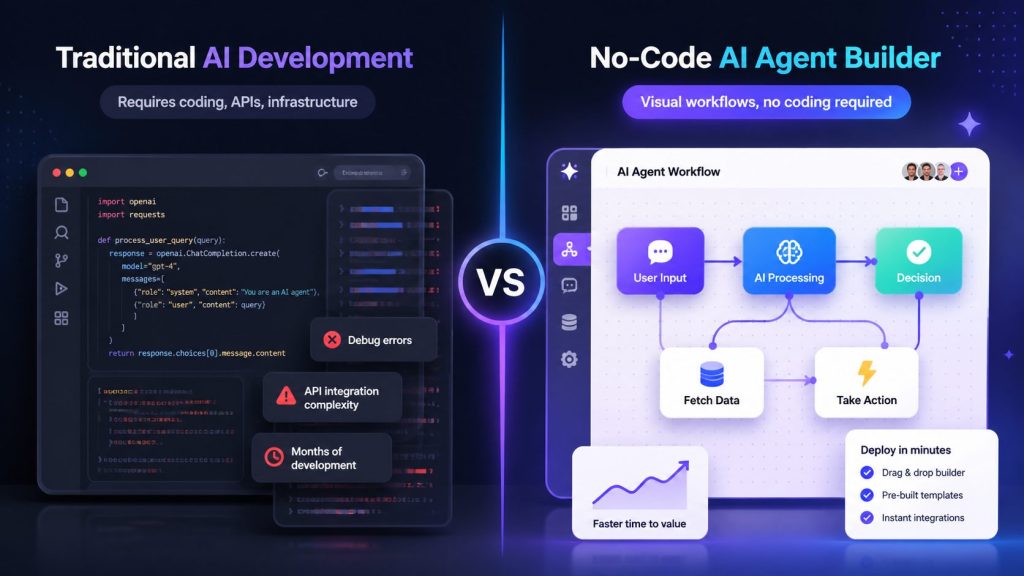
A no-code AI agent builder is a type of AI agent platform that lets you create, deploy, and manage AI agents without writing code. These platforms use visual interfaces, drag-and-drop builders, pre-built templates, and natural language prompts, to design intelligent workflows.
Unlike traditional chatbots that follow rigid scripts, AI agents built on these platforms can understand context and make decisions autonomously. They break down complex goals into actionable steps, access and manipulate data across multiple systems, and execute multi-step workflows without human intervention.
The key difference from basic automation tools? AI agents reason about problems, choose appropriate actions dynamically, and handle situations they haven’t explicitly been programmed for.
How No-Code AI Agents Differ from Traditional Automation
Traditional automation follows if-then rules. If X happens, do Y. This works for predictable workflows but breaks down when inputs vary or contexts change.
AI agents use large language models to understand intent, evaluate options, and decide what to do next. They can handle messy, real-world scenarios where traditional automation fails. A customer service agent might understand a complaint phrased a hundred different ways and route it appropriately without needing every variation pre-programmed.
Portable AI Agents In Seconds, Use Everywhere
Prompt, Test, and Deploy AI Agents Across Social Platforms and LLMs. Automate Everything.
Why No-Code AI Agent Builders Matter in 2026
Three major trends are driving the shift to no-code AI agent platforms, and they’re reshaping how businesses approach automation.
The AI Skills Gap Is Real
There are over 300,000 unfilled AI development positions globally. Organizations can’t wait months to hire specialized talent, and they can’t afford the $75,000-$500,000 it costs to build custom AI agents from scratch.
Companies using no-code AI platforms report 40% faster time-to-market compared to custom development. Instead of hiring scarce AI engineers, teams can build AI agents and deploy them much faster.
Moving from Pilot to Production
In 2025, only 2% of organizations deployed AI agents at scale. The bottleneck wasn’t ideas; it was getting pilots into production. Custom scripts and ad-hoc frameworks are hard to govern, monitor, and scale.
No-code platforms provide the scaffolding needed to move from pilot to production: version control, testing environments, monitoring dashboards, and compliance features. Organizations can experiment fast while maintaining the governance needed for enterprise deployment.
The Economics Make Sense
Building custom AI agents costs $75,000-$500,000 and takes months. No-code platforms deliver 80% of the functionality at 10-100x lower cost. The typical organization saves $187,000 annually by using no-code platforms instead of custom development.
More importantly, no-code platforms reduce the cost of failure. Teams can test ideas in days, not months, and pivot quickly when approaches don’t work.
Essential Features to Evaluate in No-Code AI Agent Builders
Not all no-code AI agent platforms are equal. Here are the critical capabilities that separate platforms that deliver from those that disappoint.
Ease of Use
The best platforms let non-technical users use an AI agent builder to create functional agents in 15-60 minutes. Look for visual workflow builders with drag-and-drop interfaces, pre-built templates for common use cases, natural language prompts to describe what you want the agent to do, and clear documentation with examples.
The platform should reduce complexity, not just hide it. Teams shouldn’t need to understand API calls, webhooks, or data schemas to build basic agents.
AI Model Access and Flexibility
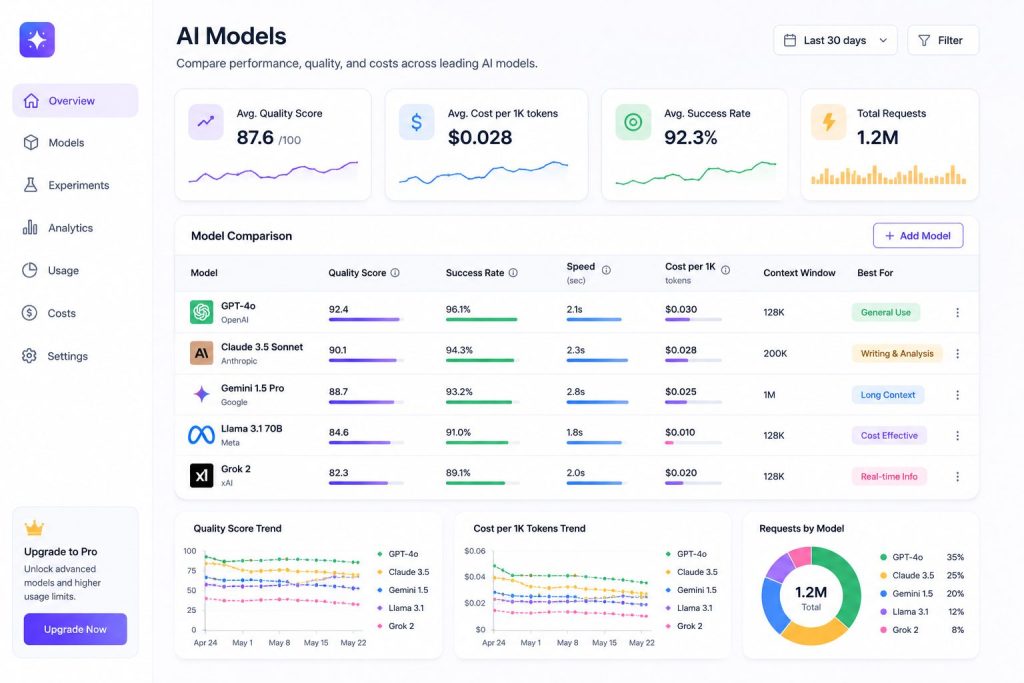
Different AI models excel at different tasks. Platforms that support multiple models give you flexibility to choose the right tool for each job.
You want access to GPT-4 and Claude for reasoning and planning, specialized models for code generation or data analysis, multimodal models that handle text, images, and audio, and open-source models for cost optimization.
Platforms locked into a single model provider limit your options and expose you to pricing changes or API deprecations.
Integration Ecosystem
AI agents need to connect with your existing tools to support custom AI agents built for real workflows. The platform should offer pre-built integrations with major platforms like Salesforce, HubSpot, Slack, and Google Workspace. Look for API access for custom integrations, database connections to internal systems, and web scraping capabilities for data extraction.
The more seamlessly agents integrate with your stack, the more value they deliver. An agent that can read your CRM, update tickets, and send Slack notifications is far more useful than one operating in isolation.
Testing and Monitoring Capabilities
Agents that work well in demos often break in production. Robust platforms provide sandbox environments for safe testing, version control to track changes, logs and traces showing exactly what the agent did, performance metrics and error tracking, and A/B testing capabilities.
Without observability, you’re flying blind. When an agent makes a mistake, you need to understand why and fix it quickly.
Security and Governance
Enterprise AI deployment requires role-based access control (RBAC), audit logs showing who changed what and when, data encryption and privacy controls, compliance certifications like SOC 2, GDPR, and HIPAA, and environment separation for development, staging, and production.
63% of organizations with data breaches had no formal AI governance policy. The right platform builds governance in from the start.
Top No-Code AI Agent Builders Compared
1. Botsify: Best for White-Label AI Agent Platforms
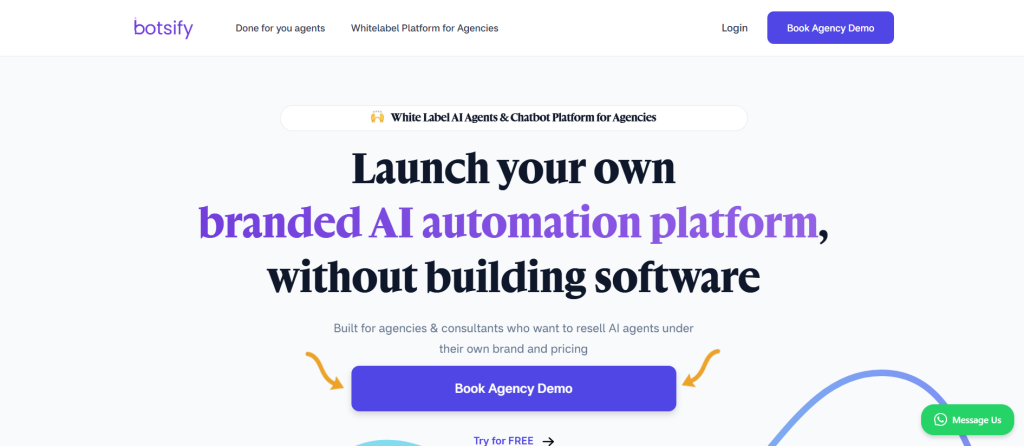
Botsify is a no-code AI agent platform designed for businesses and agencies that need to build, deploy, and white-label AI agents across multiple communication channels. The platform focuses on prompt-driven automation instead of complex workflow builders, making it accessible for non-technical teams.
Key features:
- Agentic AI employees that think, act, and adapt to business contexts
- Multi-channel deployment across web, WhatsApp, Slack, and major CRMs
- White-label SaaS offering for agencies building AI solutions for clients
- Prompt-based automation that eliminates rigid workflow configuration
- Pre-built templates for customer support, lead qualification, and sales automation
Pricing: Custom pricing based on use case and deployment needs.
Strengths: The white-label capability makes Botsify unique for agencies and businesses that want to offer AI agent services under their own brand. The platform emphasizes agentic behavior, agents that understand goals and determine their own paths to achieve them, rather than following rigid automation rules.
Best for: Agencies building AI solutions for clients, businesses that need multi-channel AI deployment, and teams prioritizing prompt-driven automation over visual workflow builders.
2. MindStudio: Best for Model Flexibility and Rapid Prototyping
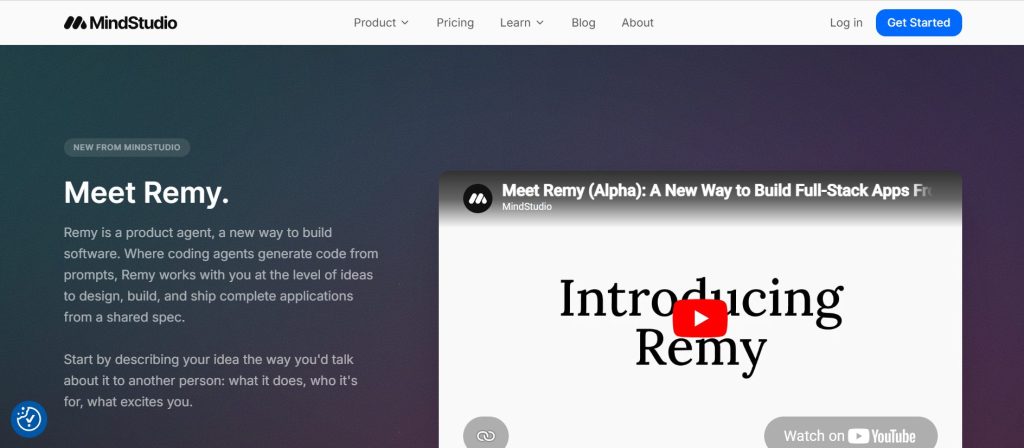
MindStudio provides unified access to over 200 AI models through a visual interface. You don’t need separate API keys or billing for each model, the platform handles everything and charges the same base rates as the underlying providers. This makes it one of the more flexible options among the best AI agent platforms available today.
Key features:
- Drag-and-drop workflow builder with pre-built modules
- MindStudio Architect: AI that auto-scaffolds workflows from text descriptions
- Dynamic tool use allowing agents to choose tools at runtime
- Multimodal support across 200+ models
- SOC 2 certified with GDPR compliance
Pricing: Starts at $20/month. Charges underlying model rates with no markup.
Strengths: The model-agnostic approach gives you exceptional flexibility. MindStudio Architect speeds up initial builds dramatically, describes your workflow and it generates a starting point. Dynamic tool use means agents adapt to context rather than following rigid paths.
Considerations: The breadth of options can be overwhelming initially. Teams might need time to learn which models work best for different tasks.
3. Lindy: Best for Business Task Automation
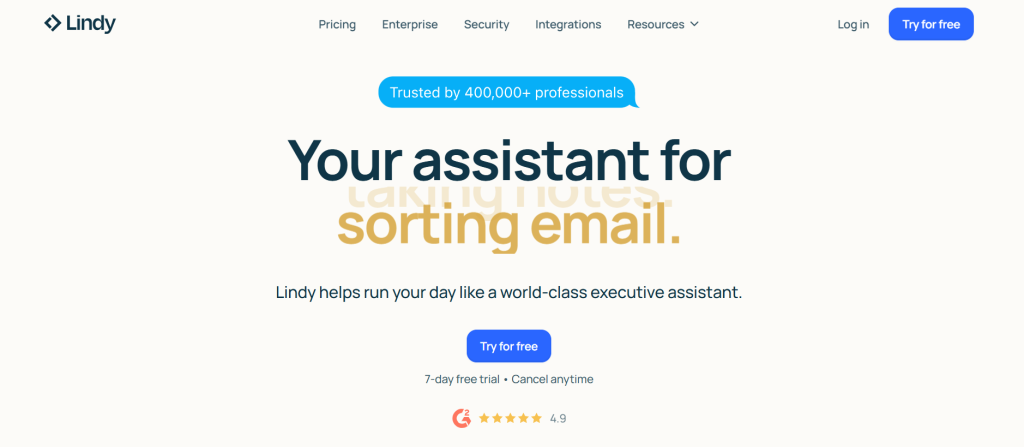
Lindy focuses on business task automation through simple, conversational agent creation. It’s often considered among the best AI agents for non-technical teams as it combines drag-and-drop simplicity with advanced logic for sales, customer support, and internal operations.
Key features:
- Visual builder for multi-step workflows without code
- SOC 2 and HIPAA compliance for regulated industries
- Multi-agent collaboration where different agents work together
- App Builder that creates applications from natural language descriptions
- Integrations with 4,000+ apps including HubSpot, Gmail, and Slack
Pricing: Free plan includes up to 40 tasks per month. Paid plans start from $49.99/month.
Strengths: Simple setup process for non-developers. Large collection of ready-to-use templates. Multi-channel AI agents that work across text, email, and calling workflows.
Considerations: Learning curve for users unfamiliar with workflow automation. Limited API customization compared to developer-focused tools.
4. Relevance AI: Best for Multi-Agent Workflows
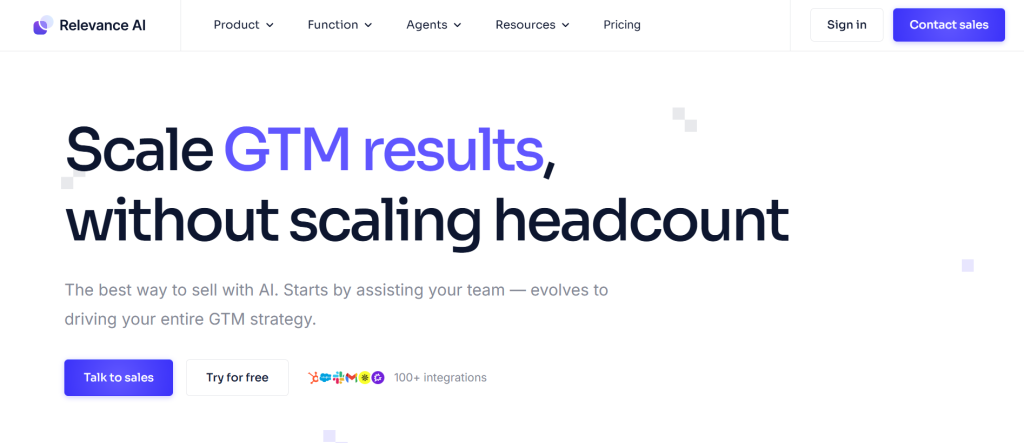
Relevance AI focuses on helping teams create and manage multiple agents that work together on complex processes, especially useful for AI agents for small businesses. It’s a good option for teams that want more flexibility and depth than traditional no-code tools.
Key features:
- Multi-agent orchestration where agents collaborate and share data
- Custom logic builder with conditions and triggers
- Integrated vector database for knowledge retention
- Visualization tools for real-time agent performance tracking
- API connectivity for external data sources
Pricing: Free plan with 200 monthly actions. Paid plans start at $29/month.
Strengths: Strong framework for teams that need advanced agent coordination. Combines visual building with developer-level flexibility. Built-in analytics for tracking workflow performance.
Considerations: Steeper learning curve for beginners. Limited template selection compared to simpler tools.
5. Zapier Central: Best for Existing Zapier Users
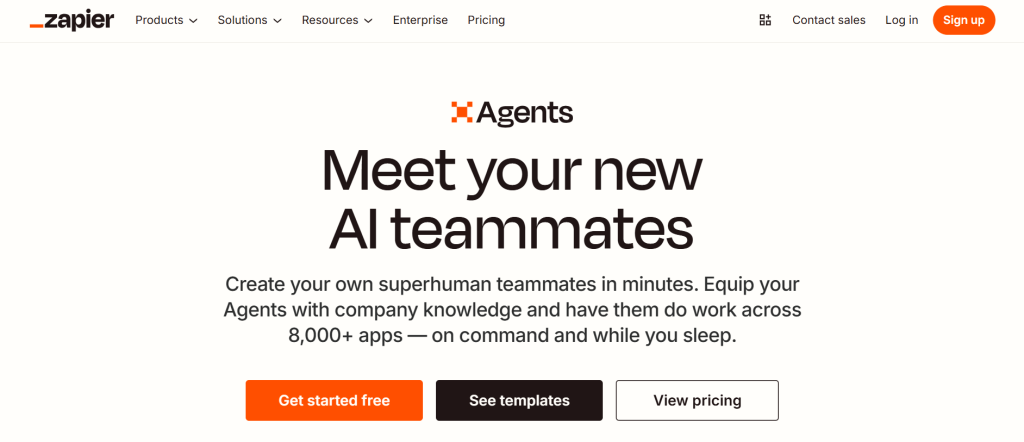
Zapier Central extends Zapier’s automation platform with AI agents that can understand natural language instructions and execute multi-app workflows. It can also be explored as a simpler Botpress alternative for certain workflows.
Key features:
- Natural language interface for creating agents
- Native integration with 7,000+ apps
- Pre-built templates for common workflows
- Collaborative editing and sharing
Pricing: Included in Zapier Teams plan starting at $69/user/month.
Strengths: If you’re already in the Zapier ecosystem, Central adds AI capabilities without learning a new platform. The integration library is unmatched.
Considerations: Limited to Zapier’s supported apps and actions. Less control over AI model selection. The natural language interface can be unpredictable.
Top No-Code AI Agent Builders Comparison Table
| Platform | Best For | Ease of Use | AI Models | Starting Price | White-Label |
| Botsify | Multi-channel, white-label | Very Easy | Multiple | Custom | Yes |
| MindStudio | Model flexibility | Moderate | 200+ | $20/month | No |
| Lindy | Business automation | Very Easy | Multiple | $49.99/month | No |
| Relevance AI | Multi-agent workflows | Moderate | Multiple | $29/month | No |
| Zapier | Simple integrations | Very Easy | Limited | $29.99/month | No |
How to Choose the Right No-Code AI Agent Builder
Select based on your specific situation and business needs. Here’s how different teams should approach the decision.
For Non-Technical Teams
Prioritize ease of use and pre-built templates. Botsify, MindStudio, and Lindy offer the gentlest learning curves. You should be able to build a working agent in under an hour without watching tutorials.
Look for platforms with natural language interfaces, visual workflow builders, and extensive template libraries. The platform should feel intuitive from day one.
For Technical Teams
Look for flexibility and control. n8n and MindStudio give you access to underlying logic and the ability to customize deeply. You want platforms that don’t limit you when requirements get complex.
Evaluate API access, custom scripting capabilities, and integration with developer workflows. The platform should complement your technical capabilities, not restrict them.
For Agencies and White-Label Use Cases
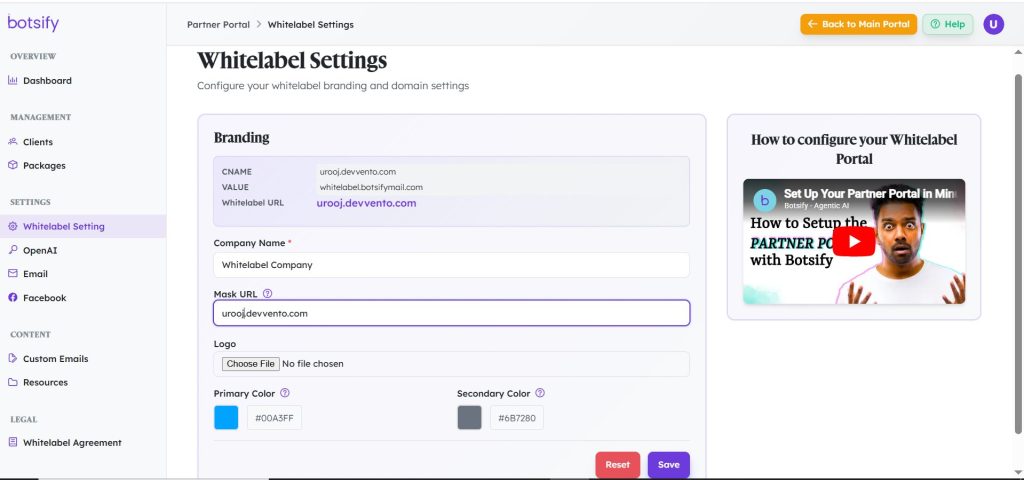
Botsify stands out for teams operating as an AI agent agency, building solutions for clients. The white-label capability lets you offer AI agent services under your own brand without building infrastructure from scratch.
Look for platforms with multi-tenant architecture, custom branding options, and flexible pricing models that support client billing.
For Enterprise Deployments
Security, governance, and scalability matter most. Evaluate platforms with SOC 2 certification, RBAC, audit logs, and environment separation.
Look for platforms that offer self-hosted deployment options, dedicated support, and SLAs. The platform should meet your compliance requirements out of the box.
For Cost-Conscious Startups
Consider platforms with generous free tiers or usage-based pricing that scales predictably. Watch for hidden costs—usage-based pricing that seems cheap can explode as you scale.
Evaluate the total cost of ownership, including integration costs, training time, and ongoing maintenance. Sometimes a higher monthly fee with unlimited usage is cheaper than a low base price with per-task charges.
Getting Started with No-Code AI Agent Development
Follow this framework regardless of which platform you choose. These practices come from teams that successfully moved from pilot to production.
Start Small and Specific
Don’t try to automate everything at once. Pick one high-volume, repetitive task with clear success criteria. Customer support teams handling the same inquiries repeatedly make excellent first use cases. Sales teams qualifying inbound leads work well too.
The agent should have clear inputs and outputs, measurable success metrics, low risk if it makes mistakes, and immediate value when it works.
Build, Test, Iterate
Create a minimal version quickly. Don’t aim for perfection on the first try. Deploy to a small group, collect feedback, and refine.
Most successful implementations follow this pattern:
- Week 1: Basic workflow with core functionality
- Week 2-3: Test with 5-10 users, gather feedback
- Week 4: Refine based on real usage
- Week 5+: Gradual rollout to larger groups
Organizations that try to perfect agents before deployment take 3-4x longer to see value.
Plan for Human Oversight
The 80% agent beats the 100% agent. An agent that completes 80% of a task and asks for help on the rest delivers more value than one that tries to handle everything but fails 20% of the time.
Build in clear escalation paths. The agent should recognize when it’s uncertain and route to humans appropriately. This builds trust faster than pretending the agent can handle everything.
“The best AI agents know what they don’t know. Clear escalation paths build trust and deliver better outcomes than agents that try to handle every edge case.” — AI Implementation Best Practices, 2026
Measure What Matters
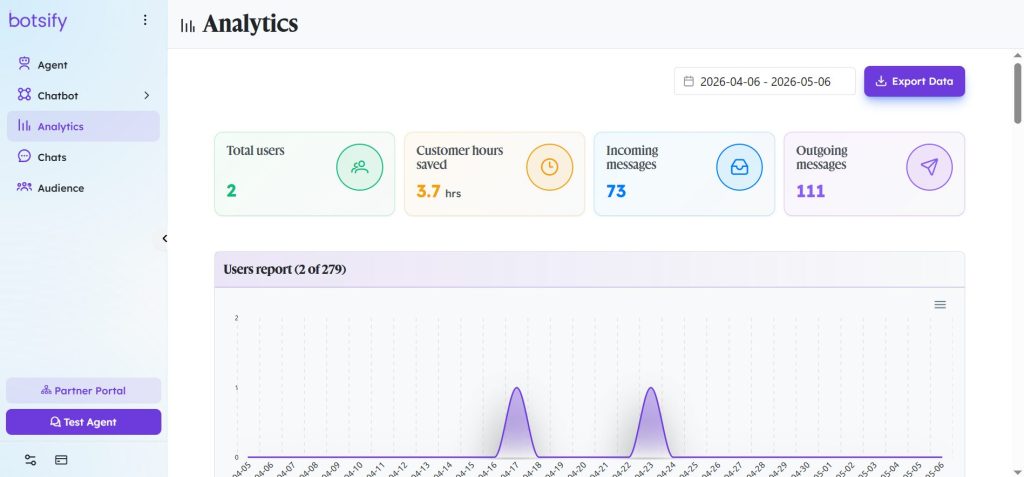
Track metrics that connect to business outcomes, not vanity metrics. Focus on time saved per task, tasks completed without human intervention, error rate and types of errors, user satisfaction scores, and cost per completed task.
Vanity metrics like “conversations handled” don’t tell you if the agent actually delivers value. Focus on outcomes that matter to your business.
Expand Thoughtfully
Once the first agent works, resist the urge to deploy everywhere immediately. Expand to related use cases where you can reuse workflows and learnings. A customer support agent handling product questions might extend to billing questions before jumping to a completely different domain.
Teams that expand too quickly struggle to maintain quality across all agents. Better to have three excellent agents than ten mediocre ones.
Common Pitfalls to Avoid
Expecting Full Autonomy Immediately
Most AI agents aren’t truly autonomous yet. They’re tools that augment human work, not replace it entirely. Set expectations accordingly. Frame agents as assistants that handle the repetitive parts so humans can focus on complex cases.
Full autonomy is the goal, but hybrid human-AI workflows deliver more value today. Build agents that make humans more effective, not agents that try to eliminate humans.
Ignoring Data Quality
Agents are only as good as the data they access. If your CRM has duplicate records, missing fields, or inconsistent formatting, agents will struggle. Clean critical data sources before deploying agents that depend on them.
AI agents amplify whatever exists in your system. Bad data produces bad results, no matter how sophisticated the AI model.
Building in Isolation
The people who will use the agent should help build it. IT teams creating agents for sales without sales input typically build the wrong thing. Include end users from the start.
Co-creation builds buy-in and ensures the agent solves real problems instead of theoretical ones. Run workshops where end users describe their pain points and ideal solutions.
Neglecting Monitoring
Agents that work well initially can degrade over time. User behavior changes, data formats evolve, and underlying APIs update. Without continuous monitoring, you won’t notice until users complain.
Set up alerts for error rates, completion rates, and user satisfaction. Review agent performance weekly during the first month, then monthly once stable.
Real-World AI Agent Use Cases That Deliver ROI
Customer Support Automation
AI agents handle tier-1 support inquiries, freeing human agents for complex cases. They can answer FAQs, look up order status, process returns, and escalate to humans when needed.
ROI: Companies report 40-60% reduction in support ticket volume and 30-50% decrease in average response time. Customer satisfaction scores typically improve because simple questions get instant answers while complex cases get more human attention.
Lead Qualification and Routing
Sales agents qualify inbound leads by asking qualifying questions, checking budget and authority, assessing timeline and need, and routing qualified leads to the right sales rep.
ROI: Sales teams report 25-35% increase in qualified leads reaching sales and 20-30% reduction in time spent on unqualified prospects. Sales reps focus on high-value opportunities instead of screening every inquiry.
Meeting Scheduling and Coordination
Scheduling agents handle the back-and-forth of finding meeting times. They check calendar availability, propose time slots, send confirmations, and send reminders before meetings.
ROI: Executive assistants report saving 5-10 hours per week on scheduling. The ROI compounds across the organization—every person saves time, and meetings happen faster.
Data Entry and CRM Updates
Operations agents update CRM records, log call notes, create follow-up tasks, and sync data across systems.
ROI: Sales teams report 3-5 hours saved per week on administrative tasks. CRM data quality improves because updates happen consistently and immediately.
The Future of No-Code AI Agent Development
The no-code AI agent market is evolving fast. Three trends will shape the next 12-18 months.
More Agentic, Less Scripted
Platforms are shifting from rigid workflows to true agentic behavior. Instead of programming every step, you’ll define goals and let agents determine the best path to achieve them.
This shift requires better reasoning models and improved reliability, but it dramatically reduces the complexity of building agents. You describe what you want, not how to do it.
Multi-Agent Collaboration Becomes Standard
The next generation of AI agents will work together seamlessly. A sales agent might coordinate with a scheduling agent and a CRM update agent, each handling their specialty while contributing to the overall goal.
This requires standardized communication protocols and shared context across agents. The platforms solving these challenges will dominate the market.
Voice and Multimodal Agents
Text-based agents are just the beginning. Voice AI is advancing rapidly, and multimodal agents that understand images, documents, and video are emerging.
Platforms that seamlessly support multiple input and output types, text, voice, image, video, will enable entirely new use cases. The AI receptionist that answers your phone and schedules appointments is already here.
Final Thoughts: What Actually Works in 2026
No-code AI agent builders have matured from interesting experiments to production-ready platforms. The technology works. The platforms exist. The ROI is real.
Success comes down to three things: choosing the right platform for your team and use case, starting with focused, high-value applications, and building hybrid workflows that combine AI capability with human judgment.
The best platform depends on your needs. For agencies and multi-channel deployment, Botsify delivers white-label capabilities and prompt-driven simplicity. For model flexibility and rapid prototyping, MindStudio provides access to 200+ AI models. For business task automation, Lindy offers templates and ease of use.
Don’t wait for perfect. The teams winning with AI agents today started with imperfect pilots six months ago. They learned, iterated, and scaled. The cost of inaction is higher than the cost of imperfect action.
Build your first agent this week. Pick one repetitive task that wastes time. Choose a platform with a free tier. Create a basic agent. Test it with three users. Refine based on feedback. Scale what works.
The AI agent revolution isn’t coming. It’s here. The question is whether you’re building agents or watching competitors pull ahead.
AI Agentic Platform For Building Portable AI Agents
Say Hello To Agentic AI That Connects With Your CRM And Even Other Agents
Frequently Asked Questions
What’s the difference between no-code and low-code AI agent builders?
No-code platforms require zero coding knowledge and use visual interfaces, drag-and-drop builders, and natural language prompts. Low-code platforms allow visual building but include the option to add custom code for advanced functionality. No-code is ideal for business users, while low-code suits technical teams that want flexibility without building everything from scratch.
How long does it take to build and deploy an AI agent?
With modern no-code platforms, you can build a basic functional agent in 15-60 minutes. A production-ready agent typically takes 1-2 weeks including testing and refinement. This is 10-20x faster than custom development, which takes months.
Do I need AI expertise to use no-code AI agent builders?
No. The best platforms are designed for business users without AI backgrounds. You need to understand your business process and desired outcomes, but the platform handles the AI complexity. Training typically takes a few hours, not weeks or months.
How much do no-code AI agent platforms cost?
Pricing varies widely. Free tiers offer limited usage (40-200 tasks per month). Paid plans range from $20-$70 per month for small teams. Enterprise pricing is custom based on usage and features. Most platforms use usage-based pricing that scales with task volume.
Can AI agents integrate with my existing tools?
Yes. Modern platforms offer pre-built integrations with major business tools (Salesforce, HubSpot, Slack, Google Workspace, etc.) plus API access for custom integrations. The integration ecosystem is a critical evaluation factor—more integrations mean more useful agents.
What happens if an AI agent makes a mistake?
Well-designed agents include human oversight and escalation paths. When uncertain, they ask for human review instead of guessing. Platforms provide logs and traces showing exactly what the agent did, making it easy to identify and fix issues. Start with low-risk tasks and gradually expand as confidence builds.