

A year ago, most businesses were experimenting with chatbots. In 2026, the conversation has shifted to AI agents, systems that don’t just reply, but take action inside real workflows.
Search for the best AI agents, and you’ll find dozens of tools claiming autonomy, automation, and intelligence. Some are built for coding. Others focus on customer support. A few promise end-to-end business automation. But very few articles explain the difference between AI agents you use internally and AI agent tools you can actually build a business around.
That distinction matters.
An AI agent that helps a developer write code is not the same as one that manages customer conversations or runs multi-step operations. And neither is the same as a platform that lets you build AI agents under your own brand.
In this guide, we’ll break down the best AI agents in 2026, and when it makes more sense to build your own agents instead.
What Makes an AI Agent “The Best”?
Before comparing tools, it’s worth slowing down and asking a basic question: what actually qualifies as one of the best AI agents?
In 2026, the term AI agent gets used loosely. Some tools are advanced chat interfaces. Others are workflow engines. A few are closer to infrastructure platforms. Lumping them together creates confusion, especially if you’re evaluating AI agent tools for real business use.
Here’s what actually matters.
Autonomy.
Can the AI agent move beyond generating text? The best systems don’t just answer, they trigger actions, update systems, and carry tasks forward.
Multi-step execution.
Simple automations follow rules. Stronger agents operate inside structured processes and adjust when conditions change. This is where true Agentic AI begins to show up, systems designed around follow-through rather than one-off replies.
Integration depth.
An agent is only as useful as the systems it can access. Whether it connects to messaging apps, CRMs, internal dashboards, or a Slack automation agent setup, integration determines real-world value.
Customization and control.
Some AI agents are fixed products. Others allow you to build AI agents tailored to specific workflows. If you’re serving clients, this difference becomes critical.
Scalability.
Can the system support multiple teams or businesses? This is where the line between standalone AI agent tools and a full AI agent builder platform starts to matter.
No single tool wins in every category. The “best” AI agent depends on whether you’re looking for productivity, automation, customer support, or long-term ownership.
Portable AI Agents In Seconds, Use Everywhere
Prompt, Test, and Deploy AI Agents Across Social Platforms and LLMs. Automate Everything.
Best AI Agents for Automation & Workflow Execution
Automation is where AI agents first started proving real business value. Not flashy demos, actual workflows getting handled without constant supervision.
From automated procurement workflows to AI-powered forecasting, business process automation services can help companies reduce repetitive work while making operational processes more responsive.
If you’re evaluating the best AI agents for automation, the question isn’t how well they chat. It’s how well they execute.
AutoGPT
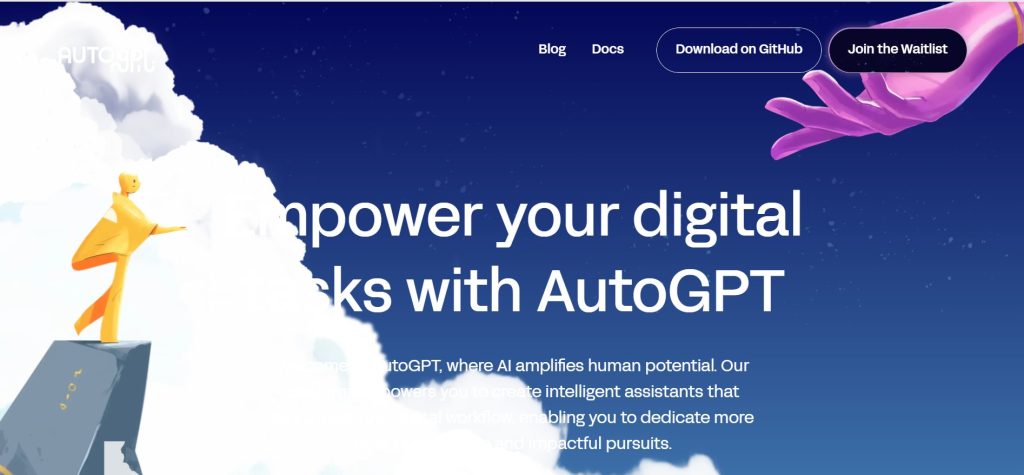
AutoGPT remains one of the most talked-about autonomous AI agents. It can break goals into subtasks and attempt to execute them independently.
For developers and researchers, this flexibility is powerful. You can design experimental workflows or build custom logic from scratch. But that freedom comes with overhead. AutoGPT requires technical setup, ongoing monitoring, and infrastructure management. It’s closer to an experimental engine than a ready-to-deploy business tool.
Best for: technical teams exploring advanced automation ideas.
Zapier AI Agents
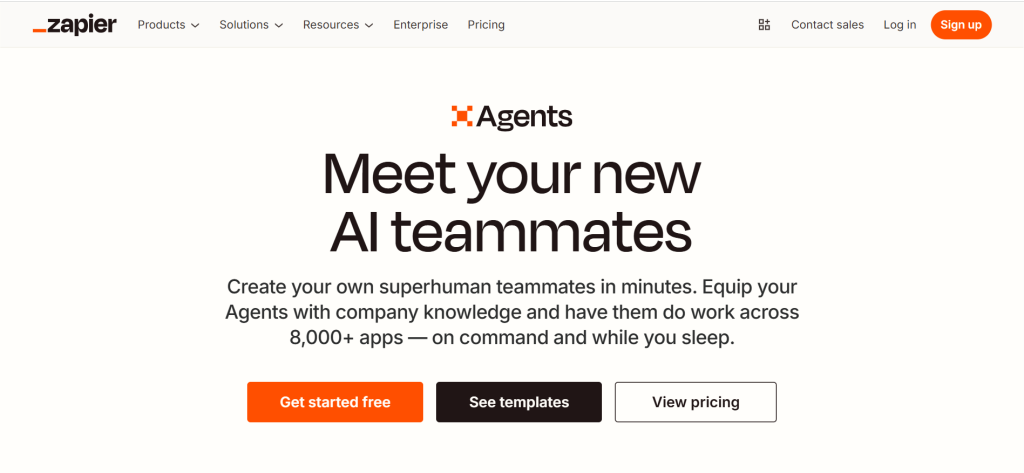
Zapier’s AI-powered automation features are more business-friendly. They sit on top of Zapier’s integration ecosystem, which means you can connect forms, CRMs, email systems, and internal tools quickly.
The trade-off? Logic is still largely rule-based. It works well for structured workflows, but it doesn’t offer deep autonomy or advanced customization. If your needs are predictable, it’s efficient. If they’re complex, you may hit limits.
Best for: small to mid-sized teams automating repetitive processes.
Microsoft Copilot Agents
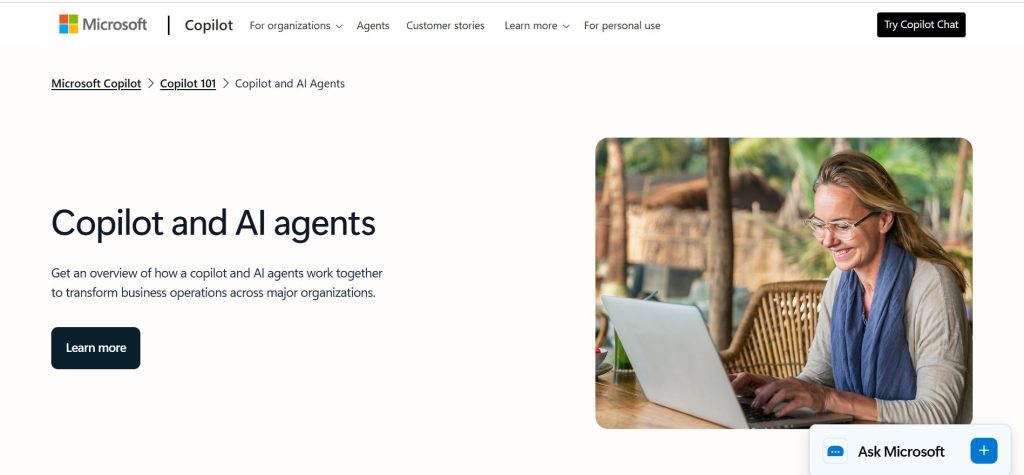
Microsoft has embedded AI agents directly into its enterprise stack. These agents can interact with internal systems, documents, and structured workflows.
For large organizations, this governance and integration depth is attractive. But setup can be heavy, and the system assumes you’re operating inside Microsoft’s ecosystem. It’s not built for reselling or managing multiple external clients.
Automation AI Agents Compared
Below is a side-by-side comparison of the leading automation-focused AI agents in 2026:
| Tool | Level of Autonomy | Ease of Setup | Integration Depth | White-Label | Best Fit |
| AutoGPT | High | Low | Custom (Dev-driven) | No | Experimental & technical teams |
| Zapier AI Agents | Moderate | High | Extensive SaaS integrations | No | SMEs automating structured workflows |
| Microsoft Copilot Agents | Moderate | Medium | Deep enterprise ecosystem | No | Large organizations in Microsoft stack |
Best AI Agents for Coding & Development
Automation agents focus on workflows. Coding agents focus on execution inside software projects. The difference matters.
If you’re searching for the best AI agents in development, you’re usually looking for speed, accuracy, and task-level autonomy, not customer-facing deployment.
Devin (Cognition Labs)
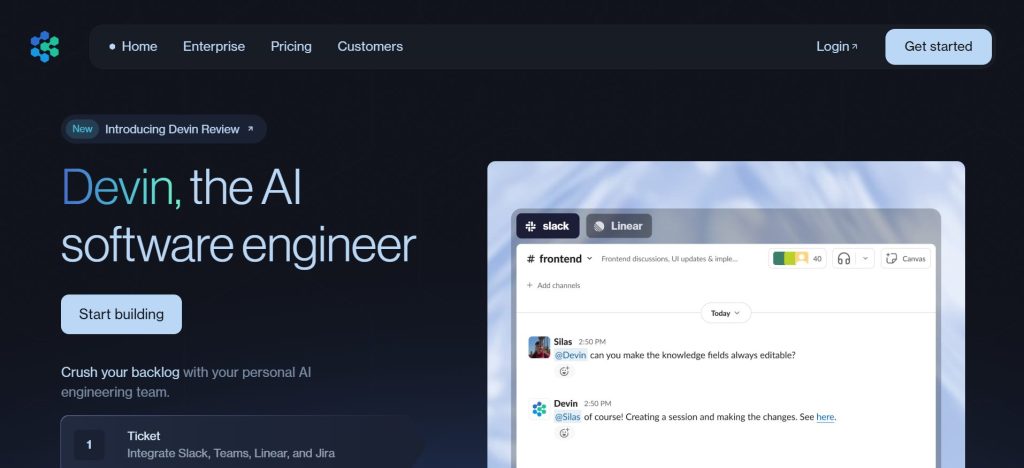
Devin made headlines as one of the first AI agents positioned as a fully autonomous software engineer. It can plan, write, debug, and iterate on code with minimal supervision.
That level of autonomy is impressive. But Devin is built for engineering environments, not business workflows. It doesn’t function as an AI agent builder or a multi-client system. You wouldn’t use it to deploy AI agents for small businesses or manage branded service environments.
Best for: advanced engineering teams testing autonomous coding systems.
GitHub Copilot Workspace
Copilot remains one of the most widely adopted AI agent tools for developers. It enhances productivity by suggesting code, refactoring functions, and assisting with debugging.
But the Copilot is still an assistant. It doesn’t operate as a full workflow agent, and it doesn’t replace structured AI agent frameworks designed for multi-agent collaboration.
Best for: individual developers improving speed and consistency.
Microsoft AutoGen
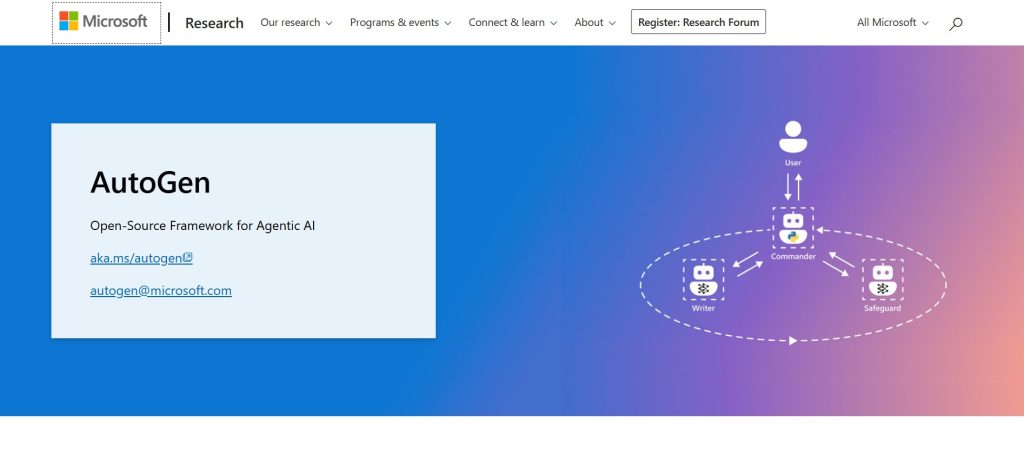
AutoGen is a framework built for orchestrating multiple AI agents in collaborative environments. It’s powerful, flexible, and highly customizable.Globally, experimentation is expanding fast, including the rise of Chinese AI agents that focus heavily on autonomous task orchestration and enterprise automation.
But it requires strong technical capability. This is where custom AI agents are often built, by developers who need full control. The trade-off is maintenance and infrastructure responsibility.
For agencies or service providers, this level of control can become overhead quickly, especially if you’re not offering pure AI agent development services in USA-style enterprise projects.
Coding AI Agents Compared
Coding-focused AI agents vary significantly in autonomy and deployment readiness. Here’s how they compare side by side:
| Tool | Autonomy | Technical Barrier | Business Deployment Ready | Best Fit |
| Devin | High | High | No | Engineering teams |
| GitHub Copilot | Moderate | Low | No | Individual developers |
| AutoGen | High | High | Limited | Custom AI systems |
Best AI Agents for Customer Support & Business Operations
For most companies, AI agents prove their value in customer-facing environments. Some organizations are even extending automation beyond chat by deploying a Voice AI agent to handle inbound calls and appointment bookings automatically. This is where speed, consistency, and follow-through directly impact revenue.
If you’re evaluating the best AI agents for business use, this category usually matters more than coding autonomy.
Level AI
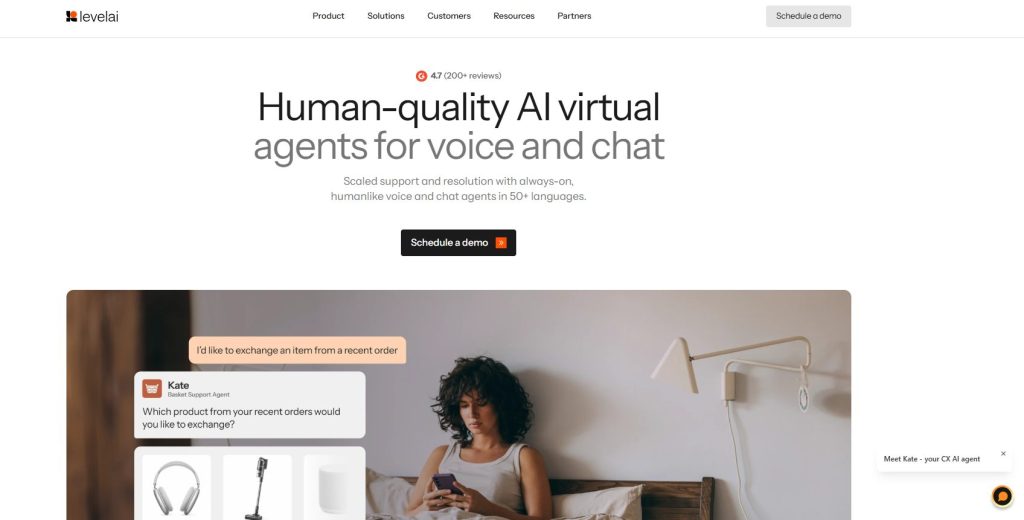
Level AI offers human-quality AI virtual agents for voice and chat that help businesses automate customer support and service operations. Its AI agents can handle conversations across voice and chat, understand customer intent, follow business rules, and resolve common customer requests.
The platform is designed for enterprise contact centers and supports use cases such as payments, order and return management, travel rebookings, healthcare scheduling, and other customer service workflows. It also combines AI agents with quality evaluation, allowing teams to score virtual-agent conversations against the same performance standards used for human agents.
Best for: Enterprise contact centers looking to automate customer support across voice and chat with AI virtual agents.
Intercom Fin
Intercom Fin is positioned as an AI-first support agent embedded directly inside Intercom’s ecosystem. It uses help center content and historical data to resolve customer queries automatically.
It performs well for SaaS companies handling structured support tickets. The limitation is dependency, you operate entirely within Intercom’s infrastructure, with limited flexibility beyond its ecosystem.
Best for: SaaS teams already committed to Intercom.
Tidio
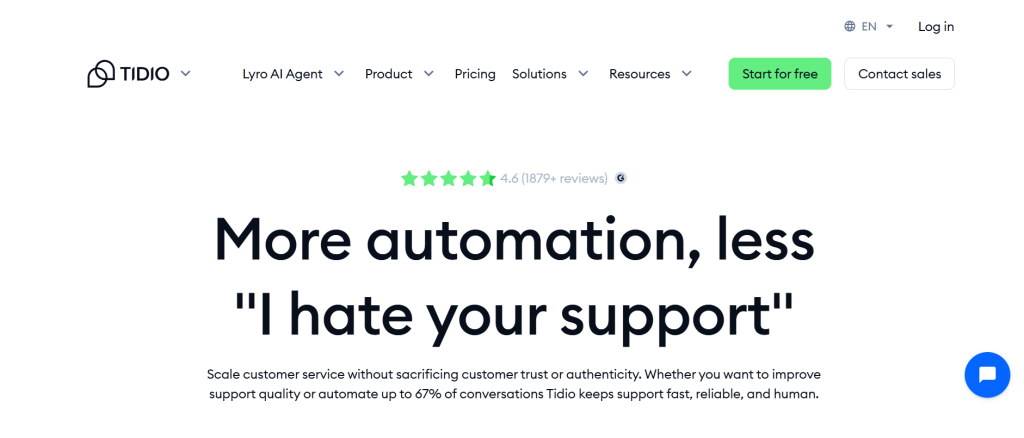
Tidio is a customer service platform with live chat, a help desk, chatbot automation Flows, and an AI agent Lyro in a single dashboard. Lyro answers queries using the business’s own content – website pages and FAQs – and routes to a human operator when it can’t resolve an issue, keeping responses accurate without manual oversight. Tidio connects to Shopify, WooCommerce, WordPress, WhatsApp, Instagram, and Messenger.
It isn’t tied to a larger CRM ecosystem, which gives smaller teams more flexibility in how they deploy and manage support.
Best for: e-commerce stores and small-to-mid-sized businesses looking for AI-driven support across multiple channels without locking into a larger enterprise platform.
Zendesk AI
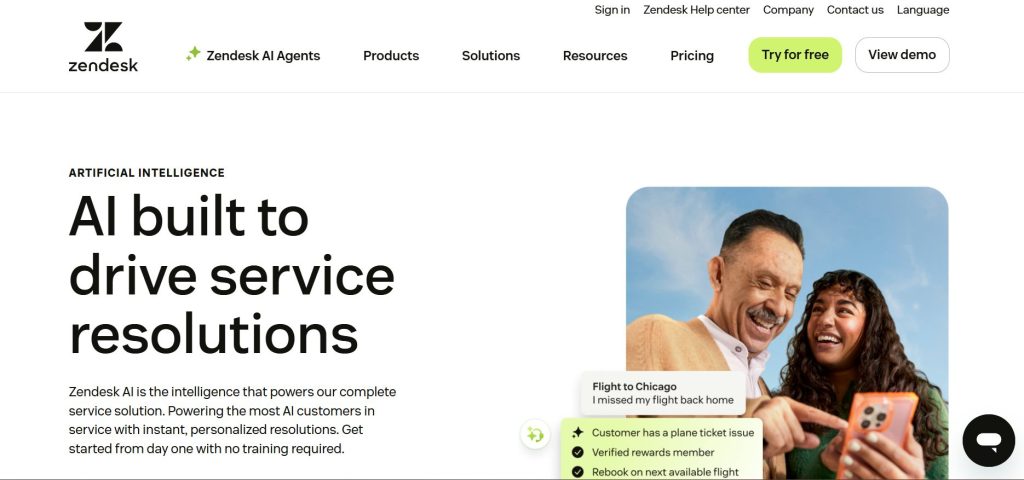
Zendesk AI enhances ticket routing, suggested responses, and automation within Zendesk’s support suite. For enterprise environments, this tight integration is valuable.
However, like many AI agent tools, it is platform-bound. You don’t get branding flexibility, and it’s not designed for agencies serving multiple clients or deploying AI agents for small businesses under a unified system.
Best for: large support teams operating within Zendesk.
Ada AI
Ada focuses on automated support workflows with structured conversational logic. It’s strong for companies that want predictable automation rather than deep customization.
For teams that need advanced control or cross-channel deployment, such as integrating an AI agent for WhatsApp alongside website chat, flexibility can become a limiting factor.
Best for: enterprises seeking structured support automation.
Drift AI
Drift AI shifts from support to revenue. It acts as a conversational sales agent, qualifying leads and routing prospects in real time.
It’s effective for inbound marketing funnels and lead engagement. But again, branding and multi-client management aren’t core features. Drift is a product businesses use, not infrastructure they control. It’s not designed to operate as a white label chatbot platform, which limits agencies that want to resell AI under their own brand.
Customer Support AI Agent Tools Comparison
Before deciding which of these AI agent tools fits your business, it helps to see their capabilities compared side by side.
| Tool | Multi-Channel | Custom Logic | White-Label | Multi-Client | Best For |
| Intercom Fin | Yes | Moderate | No | No | SaaS support |
| Tidio | Yes | Moderate | Plus only | Plus only | E-commerce, SMBs |
| Zendesk AI | Yes | Moderate | No | No | Enterprise teams |
| Ada AI | Yes | Structured | No | No | Large support ops |
| Drift AI | Yes | Limited | No | No | Sales funnels |
Best AI Agent Platform for Agencies & White-Label Deployment
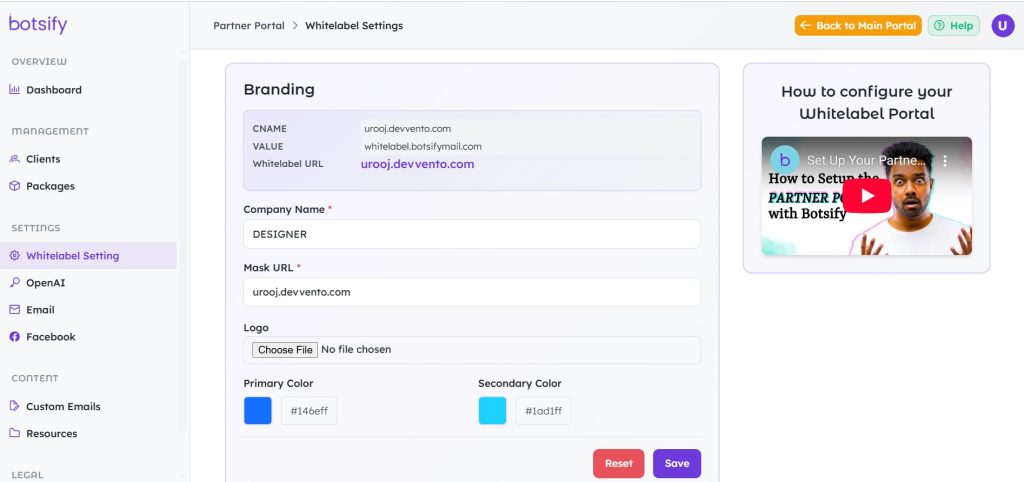
Up to this point, every tool we’ve covered is designed primarily for internal use. You subscribe, configure it, and operate it within your own organization.
But what if your goal isn’t just using AI agents, it’s delivering them as a service?
That requires a different category entirely.
An AI agent platform is not just another AI agent tool. It’s infrastructure built for creating, managing, and scaling multiple agents across different environments. For agencies, consultants, and service providers, this shift changes the business model completely.
Botsify operates in this category. Instead of locking users into a single-purpose product, it provides an AI agent builder that allows teams to design workflows, deploy across channels like website and messaging apps, and manage client environments from a centralized dashboard.
More importantly, it functions as a whitelabel AI agent platform. That means branding, domain control, and account separation are built into the structure. Agencies aren’t reselling someone else’s branded software, they’re operating under their own identity.
This distinction becomes important as soon as you move beyond internal productivity and into recurring revenue models. SaaS AI agents help you automate. A platform helps you build something you control.
That’s not about feature count. It’s about ownership, scalability, and long-term positioning.
And when your goal is to serve multiple businesses — not just optimize one — infrastructure matters more than surface-level automation.
AI Agent Tools vs AI Agent Platforms
| Feature | SaaS AI Agent Tools | AI Agent Platform (Botsify) |
| Branding | Vendor branding | Full white-label |
| Multi-client management | No | Yes |
| Custom AI agents | Limited | Flexible |
| Resell capability | No | Yes |
| Deployment control | SaaS-bound | Platform-level |
I Am Agent Man
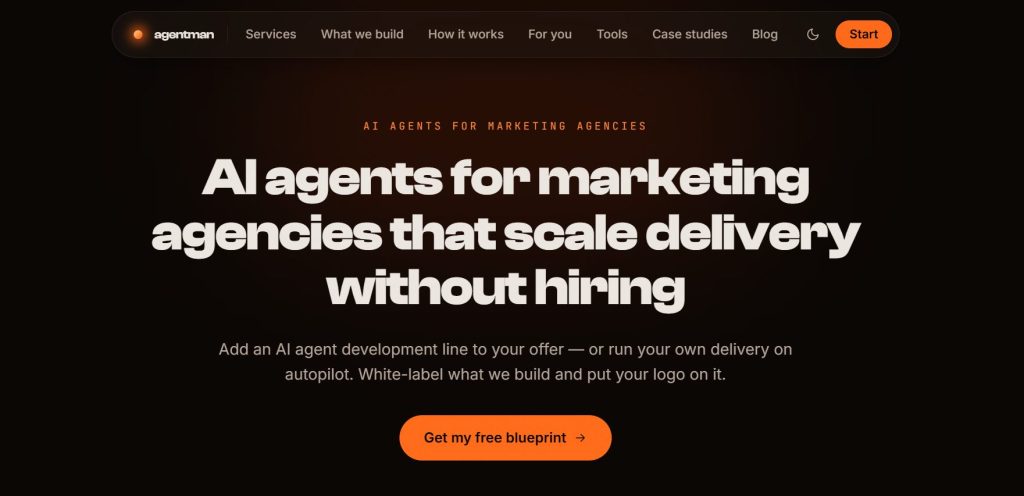
I Am Agent Man is a specialized AI agent development studio that builds bespoke, autonomous AI agents for marketing agencies, founders, and businesses. Instead of relying on rigid off-the-shelf tools, they develop custom agentic systems—using frameworks like Hermes, CrewAI, and OpenClaw—that integrate directly into a company’s existing tech stack.
They specialize in white-label AI agents for marketing agencies, allowing agencies to resell branded AI automation, such as lead qualification and CRM syncing, to their own clients without needing in-house AI engineers.
When Should You Use Prebuilt AI Agents?
It’s important to say this clearly: prebuilt AI agents are not inferior. They’re often the right choice.
If you’re a solo operator looking for productivity gains, tools like coding assistants or structured automation platforms are efficient and cost-effective. You don’t need infrastructure. You need output.
The same applies if you’re automating internal workflows. A Slack automation agent or workflow-based AI agent tool can reduce repetitive tasks without requiring complex setup.
Prebuilt systems also make sense when:
- You don’t need branding
- You’re not managing multiple businesses
- You’re not reselling AI as a service
- Your focus is internal efficiency, not ownership
For many companies, this is enough. There’s no reason to build infrastructure if you’re not turning AI into a long-term asset.
That clarity builds trust, and prevents overengineering.
When You Should Build Your Own AI Agents Instead
The equation changes when AI becomes part of your business model.
If you’re launching an AI agent agency, offering AI agent development services in USA-style markets, or serving multiple clients, prebuilt tools quickly hit limits.
You should consider building your own AI agents when:
- You want white-label branding
- You serve multiple businesses
- You need reusable templates across industries
- You’re offering ongoing management as a service
- You want long-term ownership instead of tool dependency
In these cases, infrastructure matters more than convenience, and so does having a polished way to present your AI agent offering to clients using an online presentation maker that communicates the value clearly and professionally.
This is where an AI agent platform becomes strategic. Instead of configuring separate SaaS tools, you operate from a centralized environment built for scalability. That’s fundamentally different from simply subscribing to AI agent tools.
It’s not about features. It’s about leverage.
Decision Framework: Which AI Agent Model Fits You?
Choosing the best AI agents depends less on hype and more on context.
A simple way to think about it:
Are you:
A) An individual user?
Use prebuilt AI agent tools for productivity.
B) An internal operations team?
Adopt automation-focused AI agents for workflow efficiency.
C) An agency or consultant?
Build on an AI agent platform that supports multi-client deployment and branding, especially if you’re exploring branded AI agent platforms as a long-term revenue model.
D) A SaaS founder building proprietary systems?
Explore advanced AI agent frameworks or hybrid infrastructure models.
Final Thoughts: The Best AI Agent Depends on What You’re Building
The search for the best AI agents usually starts with features, autonomy, integrations, intelligence. But in practice, the better question is about intent.
Are you trying to boost productivity inside your own team? Or are you trying to build something scalable?
Prebuilt AI agent tools are powerful. They handle coding, automation, and customer support efficiently when used for internal operations. For many businesses, that’s enough.
But once branding, multi-client management, or long-term ownership enter the picture, the decision changes. At that point, the conversation shifts from which AI agent is smartest to which model gives you control.
In 2026, AI agents are no longer rare. The real advantage comes from how you use them, and whether you’re simply adopting tools or building infrastructure around them.
The best choice isn’t universal. It’s strategic.
AI Agentic Platform For Building Portable AI Agents
Say Hello To Agentic AI That Connects With Your CRM And Even Other Agents
