
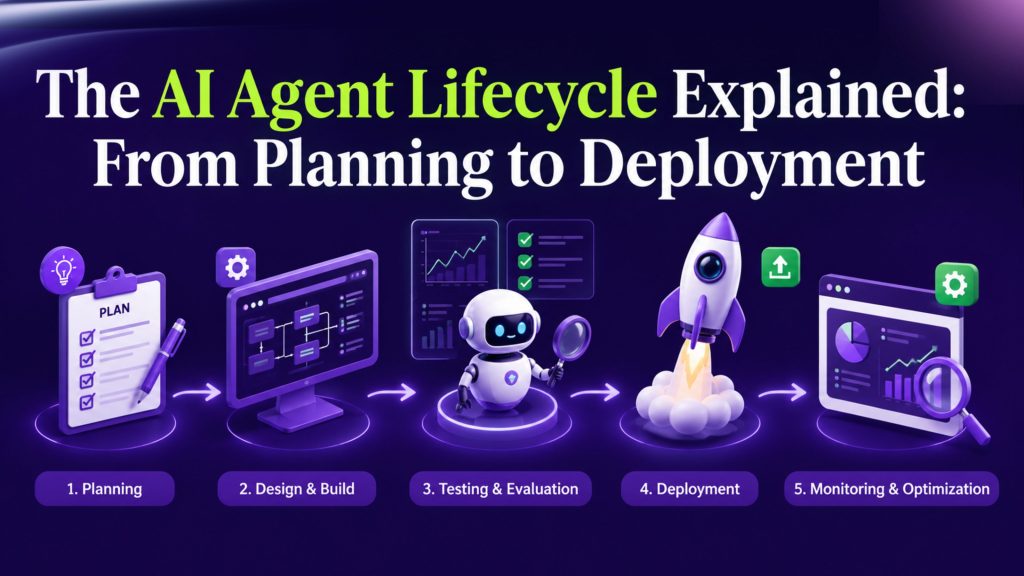
Artificial intelligence has moved past the era of static tools that merely follow instructions. Today’s AI systems are dynamic, they reason through problems, pull information from multiple sources, make independent decisions, and learn continuously from their experiences. This evolution represents one of the most significant technological shifts since the rise of personal computers, fundamentally changing how organizations approach problem-solving, automation, and human-machine collaboration.
Understanding this transformation requires understanding what we mean by an AI agent. An AI agent differs from traditional software in fundamental ways. Traditional software follows rigid, predefined rules. If conditions fall outside those exact parameters, traditional software breaks down completely. An AI agent behaves differently. It reasons through novel problems, pulls relevant information from multiple sources, makes autonomous decisions based on context, and learns continuously from every interaction. This capability exists because modern AI combines advanced language models capable of deep contextual understanding with knowledge retrieval mechanisms and continuous learning systems that improve performance from each encounter.
Key Takeaways
- The AI agent lifecycle extends far beyond simply building an AI agent.
- Every stage, from planning to deployment, affects long-term performance.
- Strong testing and monitoring are essential for reliable AI agents.
- Memory, integrations, and human oversight improve agent decision-making.
- Continuous optimization helps AI agents stay accurate and effective.
- Governance ensures AI agents remain secure, compliant, and trustworthy.
- Following a structured lifecycle reduces risk and improves business outcomes.
What Is the AI Agent Lifecycle?
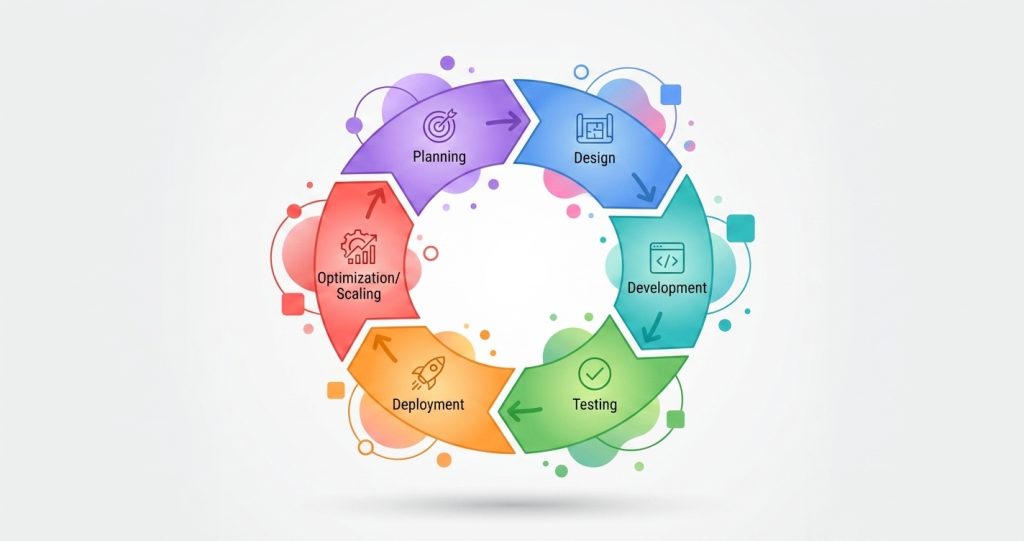
The AI agent lifecycle is the series of stages a system goes through from conception through retirement. Just like traditional software development has its own lifecycle, requirements, coding, testing, deployment, and maintenance, the Agentic AI process requires additional layers focused on autonomy, reasoning, and adaptability.
Think of it this way: when you build a chatbot that simply replies to canned questions, you are building something static. When you build an AI agent that reasons through problems, pulls information from multiple sources, makes independent decisions, and learns from outcomes, you are managing a living system that evolves over time. That evolution requires a structured approach, a roadmap that takes an idea from initial planning through full AI agent deployment, production optimization, and ongoing governance.
An effective AI agent implementation starts long before any code gets written. It starts with understanding what problem needs solving, who will use the system, and how success will be measured. Without that foundation, you end up building something that might work technically but fails practically because it does not solve a real business need.
Getting each phase right means your agent actually delivers value instead of becoming another failed project gathering dust. Whether you’re evaluating the Best AI Agent Platforms, comparing a popular Botpress Alternative, or considering building Custom AI agents from scratch, understanding the complete lifecycle gives you the framework to make informed decisions at every stage.
Portable AI Agents In Seconds, Use Everywhere
Prompt, Test, and Deploy AI Agents Across Social Platforms and LLMs. Automate Everything.
Phase One: Planning and Design
Every successful AI system lifecycle begins with thorough planning. This phase sets the direction for everything that follows, and skipping it almost guarantees wasted effort downstream.
Defining Goals and Success Metrics
Before writing a single line of code, you need crystal clarity on what the agent should accomplish. Vague goals like “make customer service faster” produce vague results. Specific goals like “resolve 60% of Level-1 support tickets without human escalation within 30 seconds” give you measurable targets.
Your metrics need to cover multiple dimensions. Performance accuracy matters, how often does the agent make correct decisions? User satisfaction matters, are people happy with the experience? Cost efficiency matters, does the agent actually reduce operational expenses? System reliability matters, can you trust it to stay running under load?
When planning for AI agents for small businesses, these metrics become even more critical. Small teams cannot afford the luxury of trial and error at scale. Clear success criteria from day one prevent wasted investment and keep stakeholders aligned on realistic expectations.
Choosing the Right Architecture
Different tasks demand different architectures. A retrieval-augmented generation setup works well for knowledge-base agents that need to pull from specific documents. A tool-use architecture suits agents that interact with external APIs, databases, and workflows. A multi-agent orchestration approach handles complex scenarios where specialized agents need to collaborate on larger tasks.
When selecting between various AI Agent frameworks, consider complexity versus control. Off-the-shelf solutions move fast but may limit customization. Custom-built systems offer full control but require significant engineering investment. For small teams exploring options, starting with an AI Agent builder that offers reasonable flexibility often beats either extreme.
AI Agent platforms vary significantly in their architectural capabilities. Some excel at simple conversational flows while others thrive on complex, multi-step workflows. Understanding your use case deeply before committing to a platform determines whether you will outgrow it within months or years.
Designing Conversation and Decision Flows
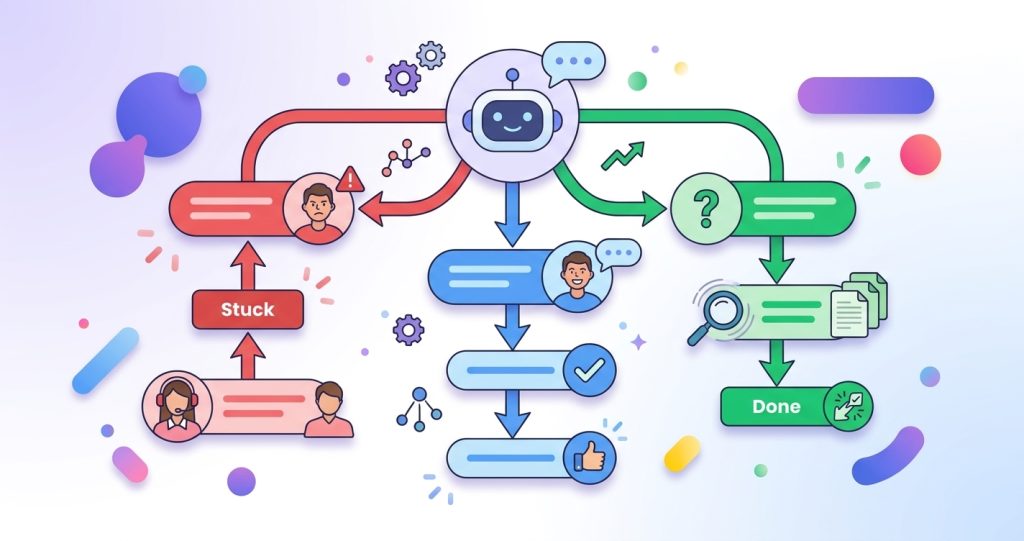
Map out how your agent handles common scenarios. Document the paths users take, edge cases the agent must handle gracefully, and fallback mechanisms for when uncertainty gets too high. Good conversation design prevents agents from confidently delivering wrong answers, one of the most frustrating experiences users report with poorly designed systems.
For Custom AI agents handling sensitive operations, designing proper guardrails into these flows is non-negotiable. An agent needs clear boundaries about what it can do independently versus when it must escalate to human review.
Phase Two: Development
Development transforms the plan into working code. This is where abstract requirements become concrete functionality, and where careful choices compound into significantly different outcomes.
Building Core Capabilities
Start by implementing the agent’s core capabilities: natural language understanding, task execution logic, memory management, and tool integration. These form the foundation everything else builds upon. Memory management deserves special attention. An agent with no memory repeats mistakes and provides inconsistent responses across conversations. Short-term memory tracks context within a session, while long-term memory preserves learning across interactions. Good AI Agent Memory architecture stores both explicit facts and implicit patterns from past interactions, creating agents that genuinely improve over time rather than resetting with every conversation.
AI Agent Memory systems typically combine vector databases for semantic search with structured knowledge bases for factual information. The balance between these two approaches determines how well your agent retrieves relevant context without overwhelming response times. Without solid memory foundations, even the most sophisticated reasoning capabilities prove useless, the agent becomes forgetful and unreliable.
Integrating External Tools and Data Sources
Most useful agents interact with external systems, pulling data from CRM platforms, executing actions in project management tools, querying databases, or making API calls. Each integration adds capability but also introduces failure modes that must be tested thoroughly.
When building through an AI Agent Platform, verify which integrations are natively supported versus requiring custom connectors. Native integrations generally provide better error handling and more reliable authentication flows. Custom connectors need their own test coverage and monitoring.
Implementing Human-in-the-Loop Controls
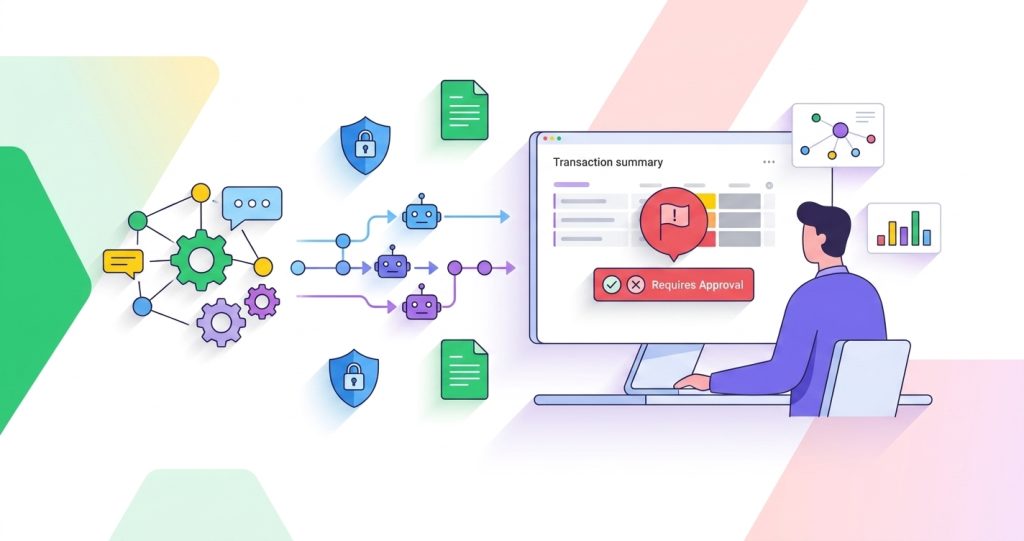
Production AI agents handling consequential decisions need human oversight built in. Not every decision warrants human review, that defeats the purpose of automation. But decisions involving financial transactions, legal implications, or significant customer impact absolutely require human confirmation.
A well-designed human-in-the-loop system escalates automatically when confidence scores drop below thresholds, flags ambiguous requests for clarification, and provides humans with summarized context so they can make informed decisions quickly. This is not a limitation of current technology; it is a feature of responsible AI implementation.
Agent governance principles inform exactly which actions need oversight. Define policies upfront during planning, implement them consistently during development, and validate them rigorously during testing. Clear governance rules prevent agents from crossing ethical or operational boundaries. Organizations deploying agents at enterprise scale should treat governance not as an afterthought but as a first-class requirement embedded throughout the entire lifecycle.
Phase Three: Testing and Validation
Testing separates agents that work in demonstrations from agents that work in production. Most organizations underinvest here, leading to painful surprises after deployment.
Unit Testing Individual Components
Test each component independently: intent recognition, tool selection logic, response generation, error handling. Automated unit tests catch regressions quickly and give developers confidence to iterate safely.
Scenario-Based End-to-End Testing
Test complete user journeys across diverse scenarios. Include happy paths, edge cases, adversarial inputs, and realistic noise. The more variety in your test scenarios, the more confident you are about real-world performance.
Real-world users do not follow clean scripts. They ask vague questions, change their minds mid-conversation, provide incomplete information, and stress-test the system with deliberately confusing prompts. Your testing should reflect that reality. The gap between controlled demonstration environments and messy production conditions is where most projects fail, making thorough scenario-based testing absolutely essential.
Performance and Load Testing
Evaluate how your agent performs under realistic conditions. Response latency matters significantly for conversational agents, delays beyond a few seconds feel awkward to users. Throughput capacity determines whether the agent handles traffic spikes, like sudden influxes of support requests during product launches.
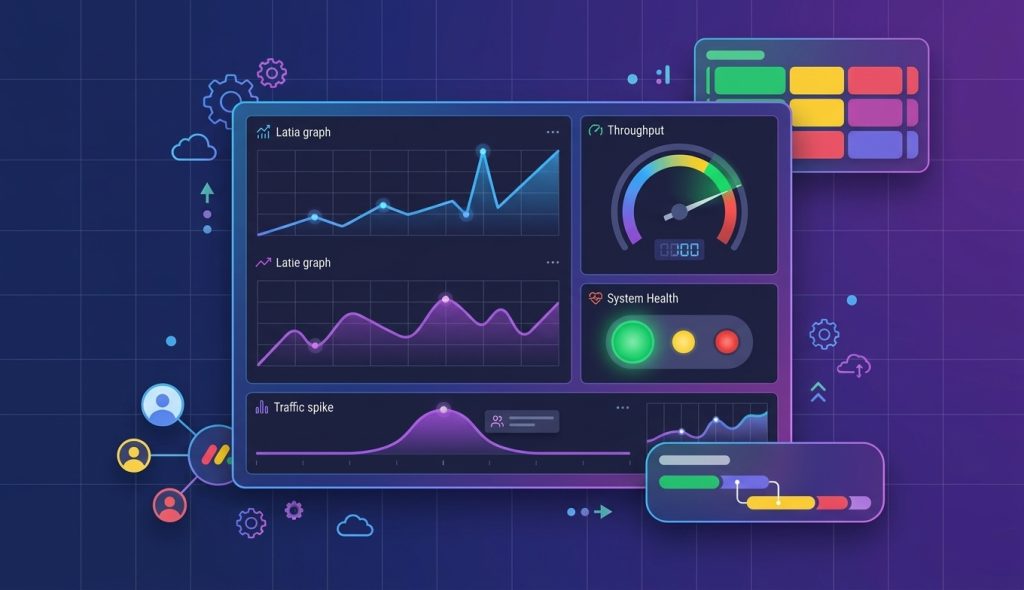
When selecting a White label AI agent platform for resale, stress testing becomes even more critical since you represent the underlying technology to your customers. Downtime or poor performance directly damages your brand reputation, not just the platform provider’s.
Phase Four: Deployment
Deploying agents to production requires careful orchestration and robust infrastructure. Rushing deployment is one of the most common causes of AI agent deployment failures.
Staged Rollout Strategy
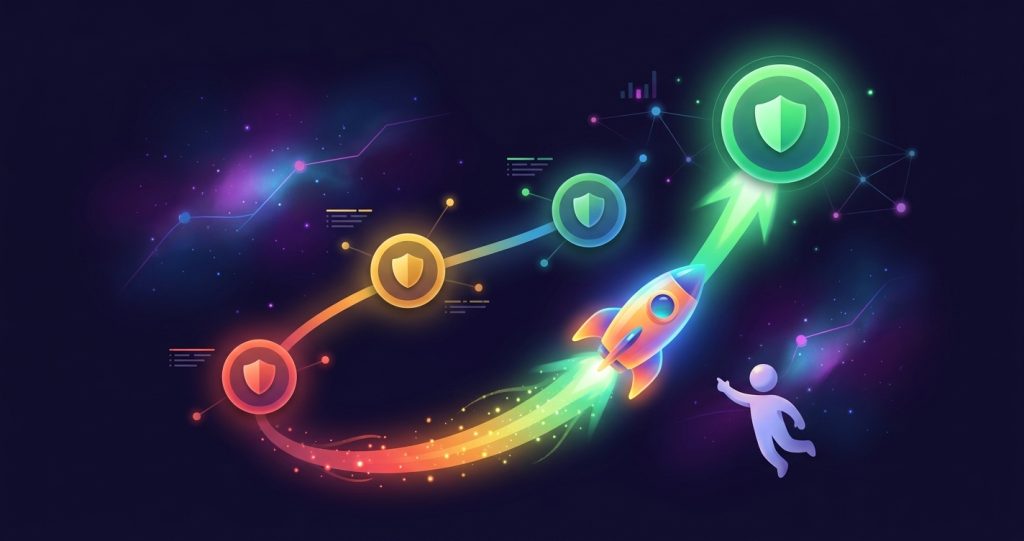
Never deploy to 100% of users simultaneously. Start with internal teams, expand to beta users, then gradually increase exposure while monitoring performance metrics. This staged approach lets you catch issues early when the blast radius remains manageable.
Consider a phased rollout: week one with five internal users, week two with ten beta testers, month two with twenty percent of target users, and full production once stability is confirmed. Each phase provides new insights that inform adjustments before broader exposure.
Monitoring Infrastructure Setup
Build comprehensive observability before going live. Dashboards showing response times, error rates, user satisfaction scores, and resource utilization give you visibility into agent health in real time. Alerting rules notify your team when metrics cross defined thresholds, preventing minor issues from becoming major outages.
Without proper monitoring, you fly blind. Agents frequently exhibit gradual degradation that goes unnoticed until customers complain or competitors outperform you. Proactive monitoring catches these trends before they cause damage. Consider using an established AI Agent agency to help set up monitoring infrastructure if your team lacks the DevOps expertise required.
Security and Compliance Review
Security reviews should happen before deployment, not after. Audit data handling practices, authentication mechanisms, access controls, and output sanitization. Verify compliance with applicable regulations like GDPR, HIPAA, or industry-specific requirements depending on your use case.
A top-rated Best AI Agent Platform should provide security certifications and compliance documentation that simplifies your review process. Do not skip verification even if the vendor claims compliance, audit the evidence independently. Regulatory scrutiny around AI systems continues increasing, making proactive compliance far less expensive than reactive remediation.
Phase Five: Optimization and Continuous Improvement
Deployment marks the beginning, not the end. The real work of AI agent optimization happens after launch, based on how agents perform in production interacting with real users facing real problems.
Collecting and Analyzing Feedback
Structured feedback collection drives meaningful improvement. Track user ratings, flag problematic interactions, log errors systematically, and analyze patterns across large datasets. Raw data alone tells limited stories. Structured analysis reveals actionable insights.
Compare agent performance against benchmarks established during planning. Did the agent resolve more support tickets than expected? Did users rate interactions positively or negatively? Which features drove engagement and which ones were ignored? The answers inform your prioritization of improvements and reveal blind spots your planning phase could not anticipate.
Iterative Model and Prompt Refinement
Optimization typically involves tuning model parameters, refining system prompts, adjusting retrieval strategies, and expanding training data. Even sophisticated models improve noticeably when fine-tuned on domain-specific data.
AI agents for small businesses benefit enormously from this iterative refinement phase because targeted improvements yield disproportionate gains compared to broad architectural changes. Small tweaks to prompts often produce bigger improvements than replacing entire components. The AI agent development lifecycle treats refinement as ongoing, not periodic.
A/B Testing Different Approaches
Experiment systematically. Test alternative prompts, compare different retrieval strategies, evaluate new tools alongside existing ones. A/B testing provides empirical evidence for improvement decisions rather than relying on gut feelings or vendor marketing claims.
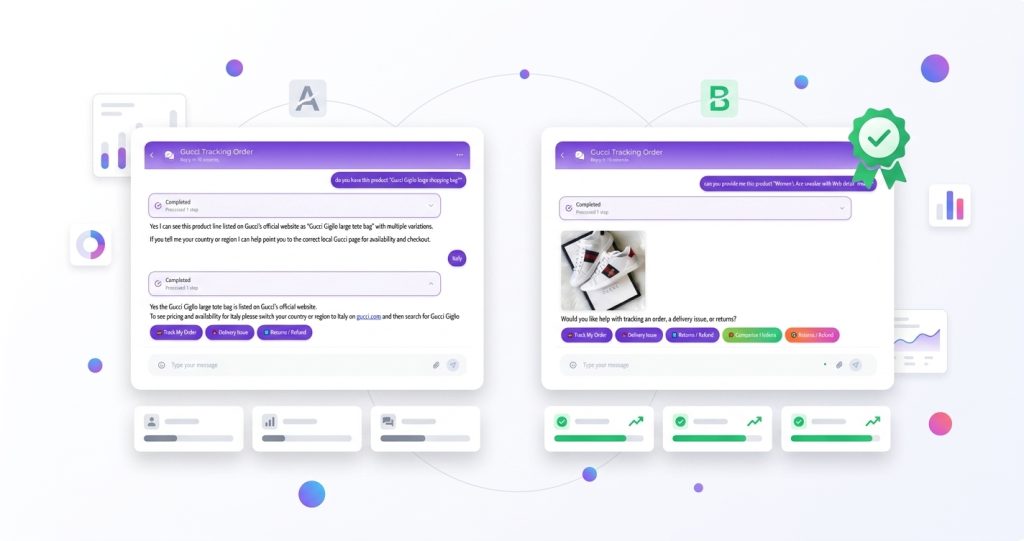
When evaluating alternatives to popular solutions like a Botpress Alternative, run parallel deployments comparing actual performance metrics rather than trusting benchmark numbers published by vendors. Real-world results rarely match marketing materials. This disciplined approach applies equally well to choosing between the Best AI agents available today.
Phase Six: Scaling and Governance
As your agent matures, scaling involves technical expansion and governance evolution. Both require deliberate planning.
Technical Scaling Strategies
Scale horizontally by adding capacity, vertically by improving individual instance performance, or architecturally by distributing load across specialized sub-agents. Each approach has trade-offs between cost, complexity, and effectiveness.
When using a White label AI solution to resell agent services, understand your scaling limits carefully. Vendor infrastructure constraints directly affect your ability to grow your customer base predictably. Negotiate clear scaling terms before hitting limitations that throttle growth.
Evolving Governance Frameworks
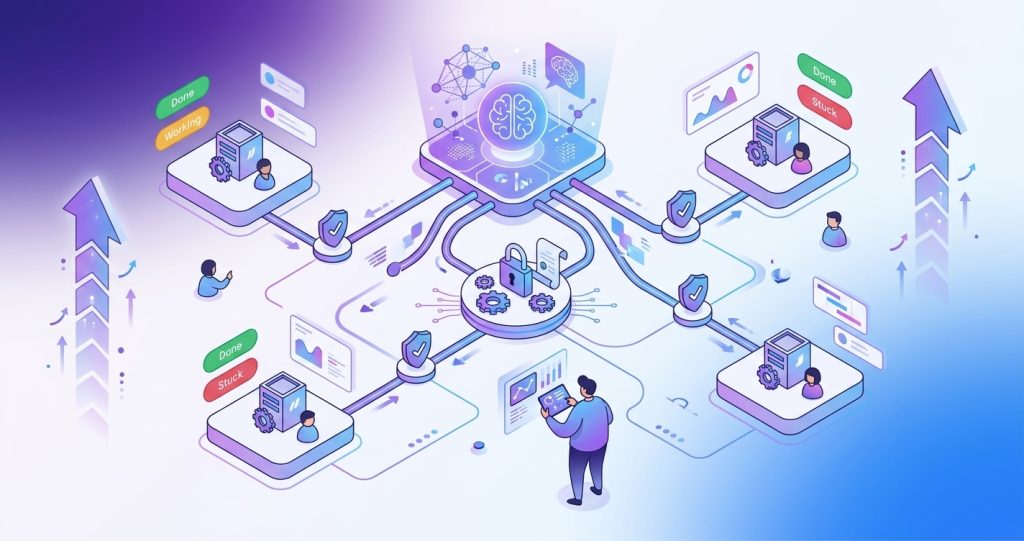
Governance requirements evolve as agents gain capability. Early-stage agents might need simple guardrails around output content. Mature agents coordinating across multiple systems with external data sources need comprehensive policy enforcement covering permissions, audit trails, bias monitoring, and ethical decision-making.
Leading Best AI Agent Platforms invest heavily in governance tooling because enterprise customers treat these capabilities as purchase prerequisites. If governance feels like an afterthought, that signals an immature platform unsuitable for serious production AI agents deployments.
Knowledge Base Maintenance
Agents relying on external knowledge bases need regular updates to maintain accuracy. Outdated information produces outdated responses, eroding user trust quickly. Establish processes for reviewing and updating reference materials on predictable schedules tied to source document change frequency.
Regularly audit retrieved information against current facts. Automated checks catching stale content dramatically reduce the probability of the agent presenting incorrect information to users. For White label AI agent platform operators, maintaining accurate knowledge bases is doubly important because inaccuracies directly damage your relationship with end customers, not just the underlying technology provider’s reputation.
Conclusion
Mastering the AI agent lifecycle turns theoretical potential into tangible business outcomes. Each phase builds on the previous one, creating compounding value as your agent matures from concept to productive workforce participant. Successful implementations require commitment to rigorous planning, careful development, thorough testing, measured deployment, continuous optimization, and evolving governance throughout the agent’s lifespan.
Organizations that treat the lifecycle as a continuous improvement loop rather than a checklist exercise gain sustainable competitive advantages. The gap between experimental prototypes and production-grade AI agents continues narrowing rapidly, making now the ideal time to invest systematically in capabilities aligned with your specific objectives and user needs.
AI Agentic Platform For Building Portable AI Agents
Say Hello To Agentic AI That Connects With Your CRM And Even Other Agents
