

A few years ago, adding a chatbot to your website felt like progress.
Today, for most businesses, it feels unfinished.
Customers don’t just want answers. They want things handled. Appointments booked. Follow-ups sent. Issues resolved without being bounced between systems or people. And that’s where many AI tools still fall short, they respond, then stop.
What businesses are really asking for now is outcomes, not interfaces.
As a result, a new type of service business has started to take shape. Instead of selling tools or one-off automations, agencies are offering AI agents that operate inside real workflows and stay involved until work is actually done. In practice, this is what an AI agent agency looks like: a team that designs, deploys, and manages AI agents as a service, not as a product.
This isn’t about chasing the latest AI trend or building complex systems for the sake of it. It’s about practical execution, using AI agents to solve everyday business problems and packaging that capability in a way clients understand and are willing to pay for.
If you’re considering launching an AI-focused agency, this guide will walk you through how it really works.
What Is an AI Agent Agency?
An AI agent agency is a service business that helps companies use AI agents to get real work done.
Not prototypes. Not experiments. Systems that actually run inside day-to-day operations.
An AI agent is software that can take in information, decide what to do next, and act inside a workflow. An agency built around this model doesn’t just deploy an agent and walk away. It takes responsibility for how that agent performs over time, setting it up, maintaining it, and refining it as the business changes.
This is where the model differs from other AI services.
A traditional chatbot agency focuses on conversations and FAQs. An AI agent development agency usually builds highly custom systems from scratch, which can be powerful but slow and costly.
An AI agent agency sits in between.
It uses existing platforms and infrastructure to design agents that handle specific business tasks, support, sales, internal workflows, and delivers them as an ongoing service. The focus is on outcomes, not features.
You’ll often hear this approach described as agentic AI, meaning systems designed around follow-through and responsibility rather than one-off interactions.
In short, an AI agent agency doesn’t sell AI access. It sells execution.
Portable AI Agents In Seconds, Use Everywhere
Prompt, Test, and Deploy AI Agents Across Social Platforms and LLMs. Automate Everything.
Who Should Start an AI Agent Agency (And Who Shouldn’t)
This business model works best for people who already understand how businesses operate, and where work tends to break down.
If you’re a freelancer working in marketing, operations, automation, or light technical roles, an AI agent agency can be a natural extension of what you already do. You’re used to solving problems, working with clients, and packaging services. AI agents simply become another way to deliver results.
The same is true for small agencies looking to add a higher-value service. Instead of competing on price for websites or ads, agencies can offer AI agents that handle real workflows and generate ongoing revenue.
Consultants also fit well here, especially those with access to decision-makers. If you already advise businesses on growth, operations, or systems, AI agents often slot neatly into those conversations.
Who this isn’t for: people who only want to experiment. If you enjoy deep research, building custom models, or tinkering without client constraints, you’ll probably find agency work frustrating. This model rewards execution, maintenance, and accountability more than exploration.
Being clear about this upfront saves a lot of time later.
Services You Can Sell as an AI Agent Agency
This is where most agencies either overcomplicate things or undersell themselves.
You’re not selling “AI.” You’re selling work getting done.
The most successful AI agent agencies group their services around outcomes, not features. Here are the categories that tend to work best.
Customer-Facing AI Agent Services
Customer-facing agents are often the easiest place to start because the value is visible immediately.
Many businesses begin with a chatbot for website that can handle more than basic FAQs, capturing intent, routing requests, or triggering follow-ups instead of stopping at a reply. These agents reduce missed inquiries and improve response consistency without adding staff.
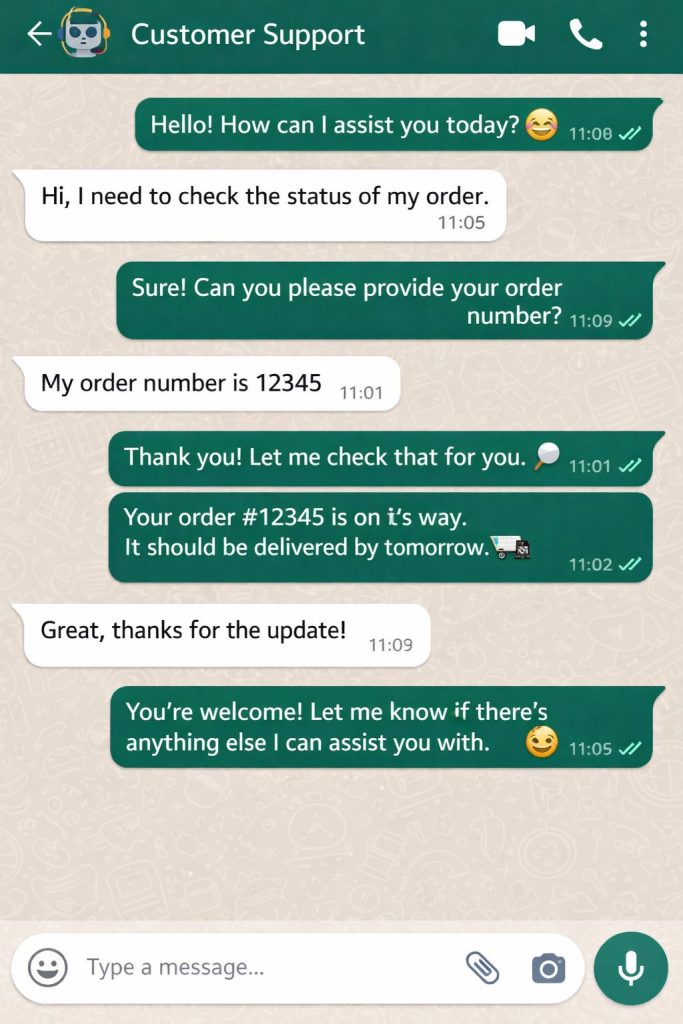
Others prefer meeting customers where they already are. An AI chatbot for WhatsApp, for example, can manage conversations in real time, handle common requests, and escalate only when needed. This is especially useful for service businesses where speed matters.
For companies operating across regions, language becomes the bottleneck. That’s where multilingual chatbots make sense. They allow businesses to support customers in multiple languages without duplicating teams or workflows.
Businesses pay monthly for these services because they’re not static assets. They require monitoring, tuning, and ongoing improvement as customer behavior changes.
Automation & Internal Workflow Agents
Not all valuable AI agents talk to customers.
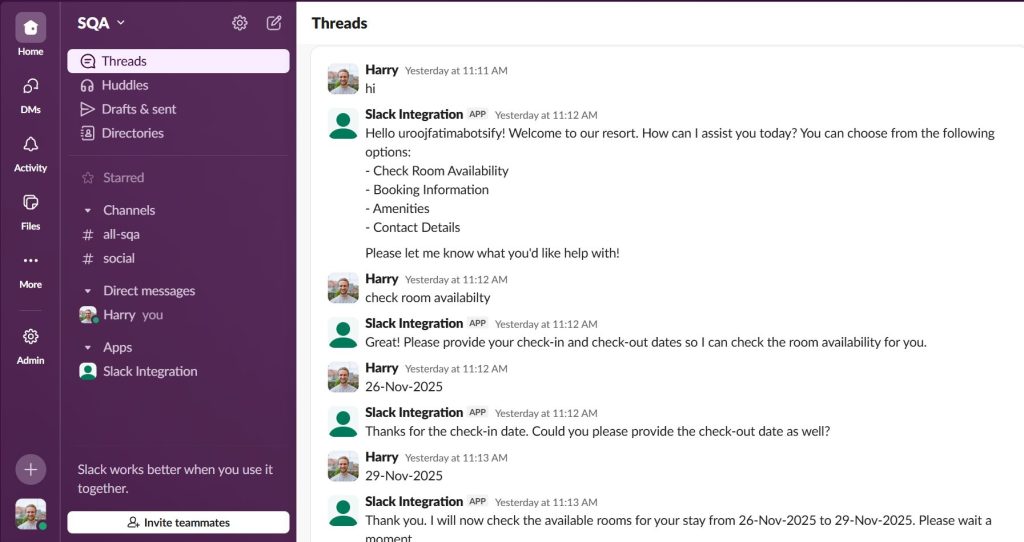
Some of the most impactful ones work quietly behind the scenes. A Slack automation agent can handle internal requests, surface information, or route tasks without pulling people out of their flow.
More broadly, this category covers AI agents for small businesses that help with coordination, scheduling, and internal operations. These agents reduce manual work that usually falls through the cracks, especially in lean teams.
This type of service sells well because it saves time without forcing organizations to change how they already work.
Done-For-You AI Agents
Here’s a simple truth: most clients don’t want to build anything.
They want a result.
That’s why packaging done for you agents as a setup plus ongoing management often converts better than DIY tools. You handle design, deployment, and upkeep. The client gets a system that works in the background.
From their perspective, it feels less like software and more like outsourcing a responsibility.
Niche-Specific AI Agents (High Margin)
High-margin opportunities usually appear where work is complex, repetitive, and directly tied to revenue or operations.
This is why the most successful AI agent agencies tend to focus on advanced, role-based agents rather than generic helpers.
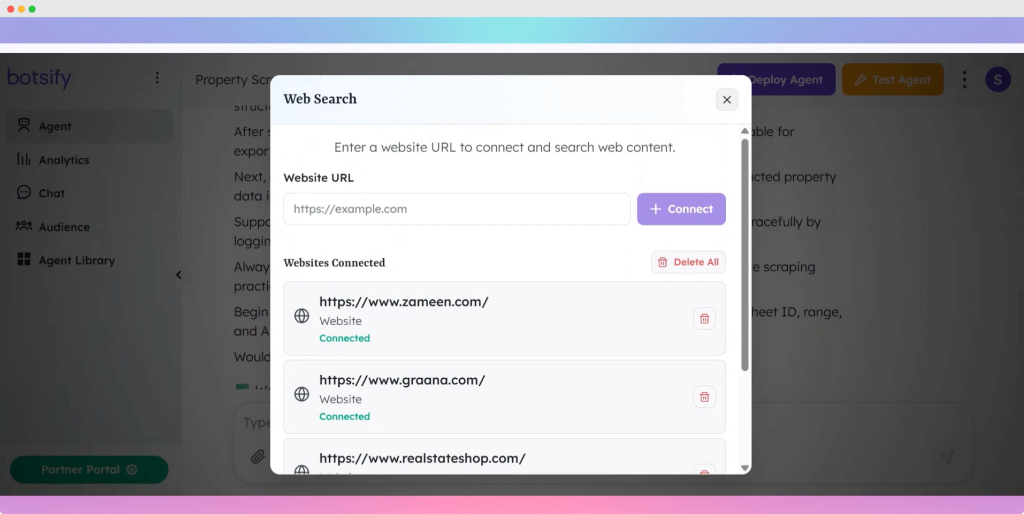
For example, in real estate, agencies are increasingly building AI real estate agents that do more than answer listing questions. These agents can qualify leads, respond to property-specific queries, schedule viewings, and follow up automatically. Because they touch sales activity directly, businesses are willing to pay ongoing fees for reliability.
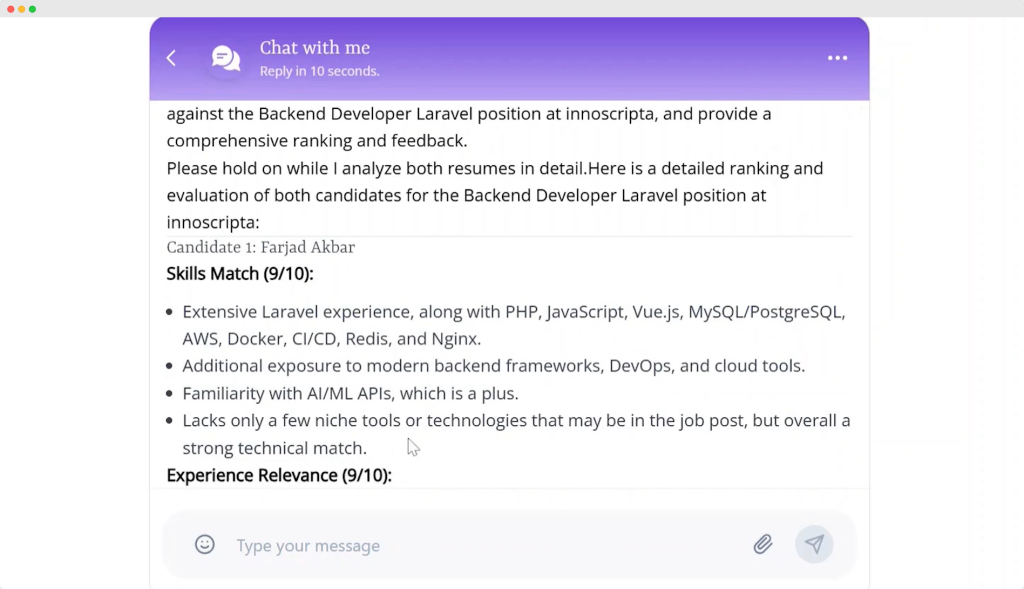
Recruitment is another strong niche. A recruitment AI agent can screen candidates, answer role-specific questions, schedule interviews, and keep applicants warm throughout the hiring process. Hiring teams care less about “AI features” and more about reducing back-and-forth and time-to-hire.
Similar patterns show up in industries like:
- Professional services (client intake and qualification)
- Education (student support and enrollment)
- Healthcare administration (appointments, follow-ups, coordination)
What makes these niches high margin isn’t the technology itself. It’s the fact that the agent replaces manual coordination in workflows that already cost businesses time and money. The clearer the role the agent plays, the easier it is to explain value, and the easier it is to price confidently.
Most agencies don’t need dozens of niches. One or two well-defined, role-based agents are often enough to build a sustainable offering.
How AI Agent Agencies Actually Make Money
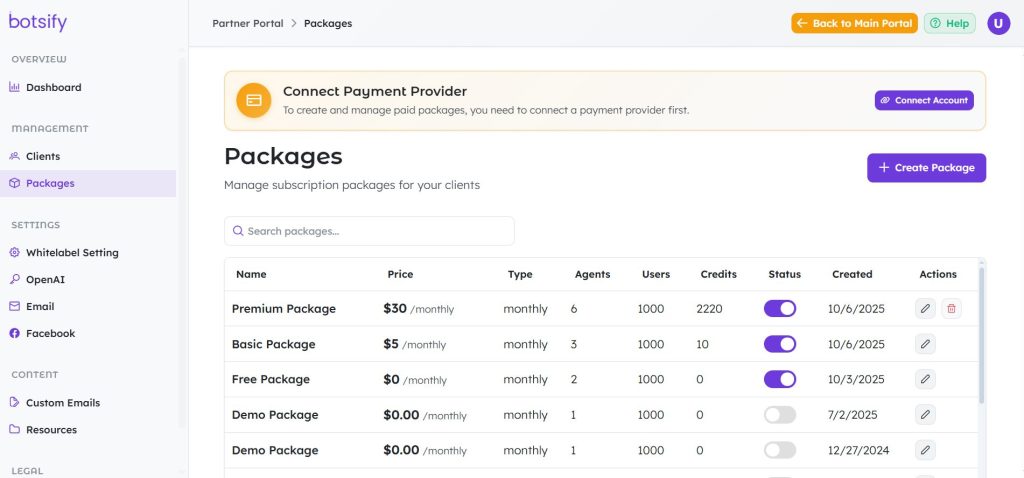
Pricing is where many new agencies get stuck, mostly because AI still feels unfamiliar. In reality, the revenue model is closer to traditional services than most people expect.
Most AI agent agencies combine a few core pricing approaches:
- One-time setup fees
This covers discovery, workflow design, initial configuration, and deployment. It also helps filter out clients who aren’t serious about implementation.
- Monthly retainers
Retainers are the foundation of predictable revenue. They usually include monitoring, updates, small improvements, and ongoing support as workflows or business needs change.
- Per-agent pricing
Some agencies charge based on how many AI agents are active. This works well when clients deploy agents across multiple departments or use cases.
- Per-client or per-workspace pricing
This keeps billing simple when agents are tightly integrated and managed as a system rather than individually.
- Bundled service packages
Bundles combine setup, management, and limited enhancements into a single recurring fee, which many clients prefer for budgeting reasons.
What clients are really paying for isn’t access to AI. They’re paying for reliability and ownership, systems that don’t fail quietly, that adapt as processes change, and that continue to deliver outcomes without constant supervision.
Underpricing is one of the most common mistakes early on. When pricing doesn’t reflect ongoing responsibility, agencies either burn out or start cutting corners. Sustainable pricing supports better results for everyone involved.
Choosing Your Niche (The Fastest Way to Grow)
Trying to serve everyone is tempting, but it usually slows agencies down.
When your offering is broad, sales conversations become vague. Demos feel generic. Onboarding takes longer because every client needs something different. A niche fixes all of that.
Many agencies start with local businesses because the problems are familiar and the decision-makers are easy to reach. Small service companies are another strong option—they often rely on manual coordination and benefit quickly from automation and follow-through.
Some agencies choose to work with other agencies, acting as a backend provider for teams that want to resell AI services without building them in-house. This can work especially well when the focus is on repeatable use cases rather than custom builds.
Niches simplify everything. Messaging becomes clearer. Demos feel more relevant. Onboarding gets faster because the workflows are already understood. This is why AI agents for small businesses are often a practical starting point, they solve obvious problems without requiring complex infrastructure.
You don’t need to lock yourself into one niche forever. You just need one long enough to build momentum.
The Tools You Need to Run an AI Agent Agency (Without Building From Scratch)
One of the biggest misconceptions about starting an AI agent agency is that you need a complex technical stack. In reality, most agencies don’t win by building more, they win by assembling the right foundation and focusing on delivery.
The goal isn’t technical perfection. It’s reliability at scale.
An AI Agent Builder Platform (The Core)
At the center of any agency setup is an AI agent builder.
This is the layer that lets you design agents, control their behavior, and deploy them into real workflows. Without it, every new client becomes a custom project. That doesn’t scale.
A good builder makes it possible to:
- Manage multiple AI agents across different clients
- Update logic without tearing systems apart
- Reuse proven setups instead of starting from zero
For agencies, the ability to build AI agents quickly, and adjust them as client needs change, is far more valuable than raw flexibility. You’re optimizing for speed, consistency, and maintainability.
White-Label and Branding Infrastructure
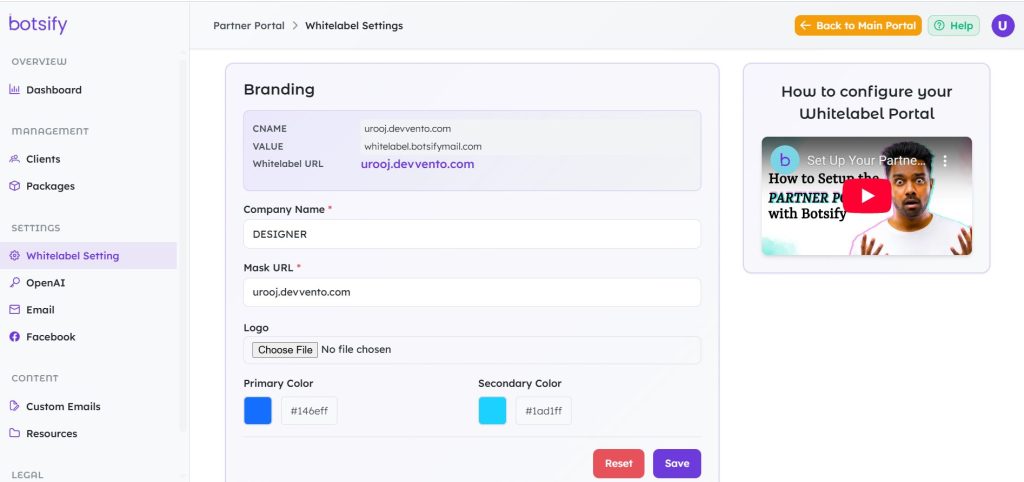
Once you’re working with more than one client, branding starts to matter.
A white label AI agent platform allows you to deliver agents under your own name, with your own branding, instead of exposing the underlying tool. This is what separates a real white label AI agency from someone reselling access to software. Using a platform such as Botsify, agencies can offer white-label AI agents through a fully branded interface, control client access through separate accounts, and sell AI agent services as if the technology were built in-house.
Branding isn’t just cosmetic. It usually includes:
- Custom domains or interfaces
- Client-specific dashboards
- Clear separation between accounts
Using branded AI agent platforms also changes how clients perceive value. They’re not “using a tool.” They’re working with your agency and your systems. That distinction is important when you’re offering white label AI agents as an ongoing service.
Integrations and Channels
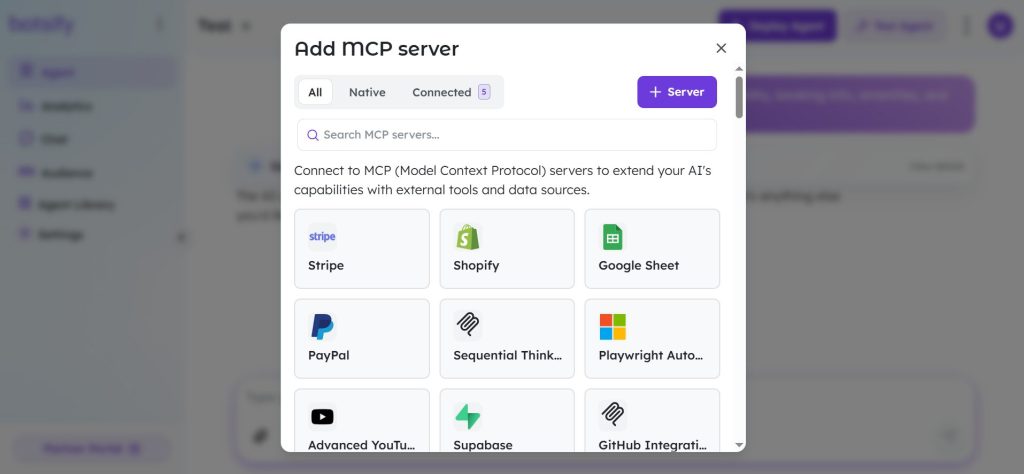
AI agents don’t live in isolation. They’re useful because they operate where work already happens.
For most agencies, that means supporting a few key channels:
- Website interactions
- WhatsApp conversations
- Slack for internal workflows
- Basic connections to client systems
You don’t need to support everything at once. Start with the channels your niche already relies on and expand only when there’s demand. The value comes from fitting into existing workflows, not replacing them.
When Frameworks Make Sense (And When They Don’t)
You’ll often hear about AI agent frameworks and fully custom builds. These can be powerful, especially for highly specialized or regulated environments.
For most agencies, though, frameworks introduce more overhead than value early on. They require ongoing development, testing, and maintenance. That’s time better spent selling, delivering, and refining services.
The build-vs-buy decision is simple:
If your competitive advantage depends on custom logic, frameworks may make sense. If your advantage is speed and execution, platforms usually win.
Hosted AI Agent Platforms vs Building & Hosting Yourself
At some point, every agency faces the same decision: build everything in-house or rely on a hosted platform. On paper, building your own AI agents sounds flexible. In practice, hosting, maintaining, and scaling those systems across multiple clients quickly becomes a distraction.
This choice isn’t just technical; it affects how fast you can launch, how reliably you can operate, and where your time is spent. For most agencies, the real comparison isn’t about control, but about whether they want to run infrastructure or focus on delivering AI agents as a service.
The differences become clearer when you break the two approaches down side by side.
| Factor | Hosted AI Agent Platform | Self-Hosted / Custom Build |
| Time to launch | Days or weeks | Months |
| Infrastructure setup | Managed for you | Fully your responsibility |
| Maintenance & updates | Included | Ongoing engineering effort |
| Scaling across clients | Built-in | Complex and manual |
| White-label capability | Native support | Requires custom work |
| Reliability & uptime | Platform-managed | Your responsibility |
| Cost structure | Predictable | Grows with complexity |
| Focus | Client delivery & sales | Technical maintenance |
What to Look for When Choosing an AI Agent Platform for Your Agency
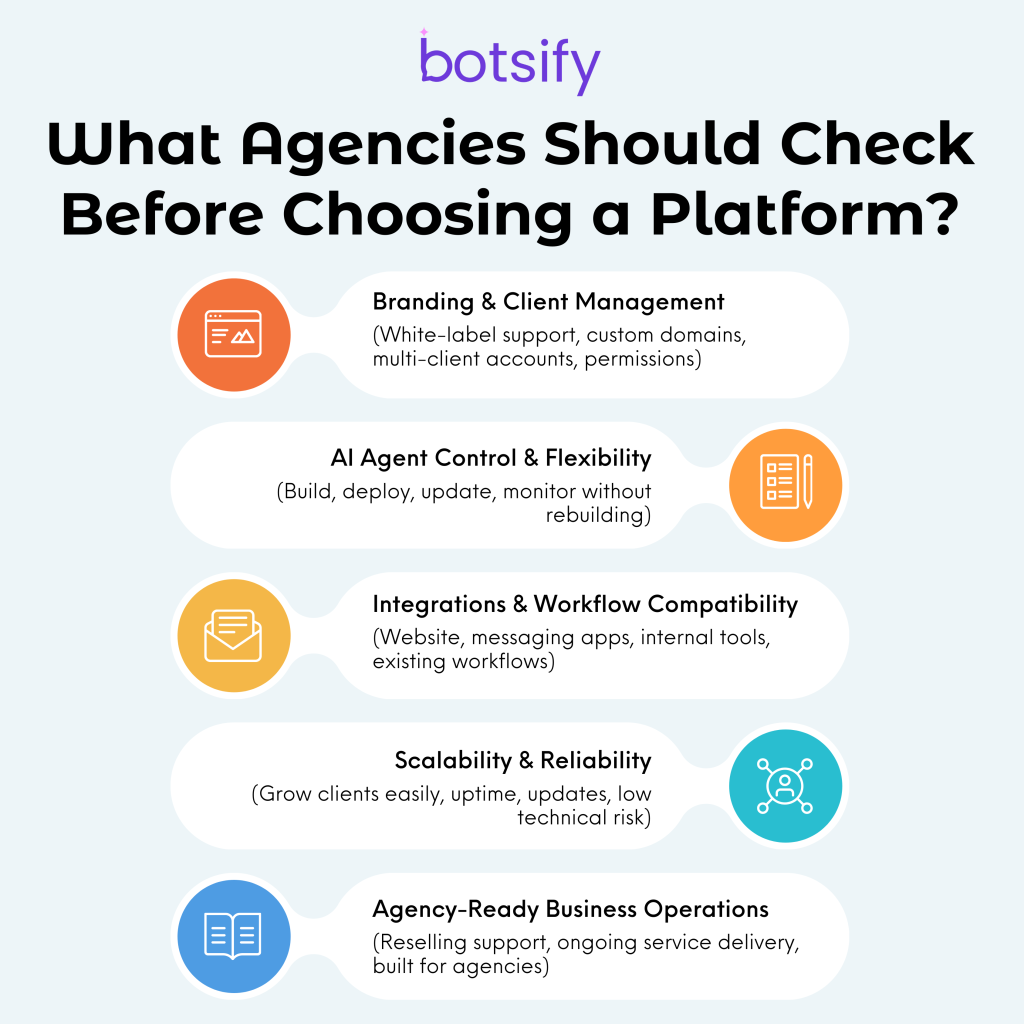
Choosing an AI agent platform is less about features and more about fit. The wrong platform can slow delivery, limit how you serve clients, or force you into custom work that doesn’t scale. The right one quietly supports your AI Agent agency, handling infrastructure, updates, and complexity so you can focus on selling and delivering outcomes.
For agencies planning to offer AI agents as a service, the platform becomes part of the business model. It affects how you brand your offering, how many clients you can manage, and how easily you can adapt as use cases evolve. Before committing, there are a few practical factors worth evaluating.
Why White-Label Platforms Let Agencies Launch Faster
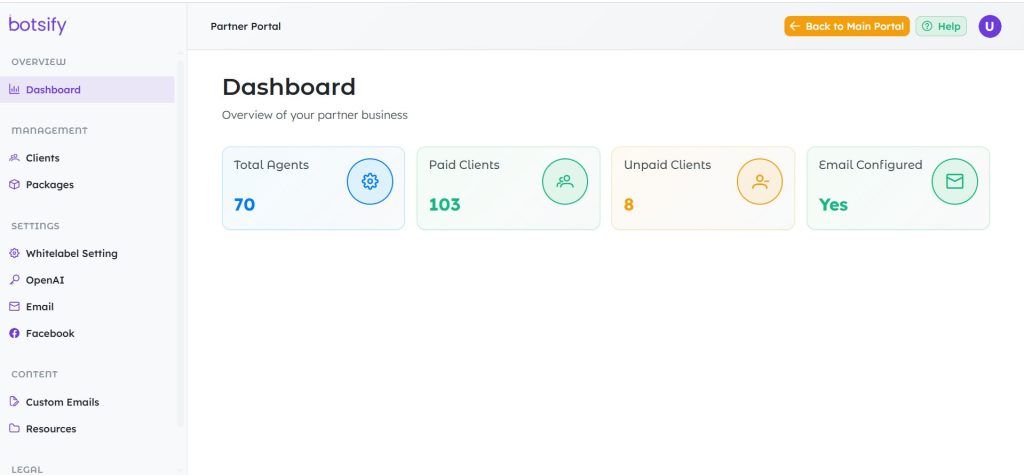
Speed matters more than most people admit.
White-label platforms remove a lot of early friction. Instead of stitching together infrastructure, agencies can focus on designing services, onboarding clients, and improving outcomes. That’s why many teams choose an AI agentic platform that handles the heavy lifting behind the scenes. Platforms like Botsify are built specifically for agencies that want to run a white-label AI agent business, allowing them to brand their own platform, create and manage AI agents for multiple clients, and deliver everything under their own name without building infrastructure from scratch.
The benefits show up quickly:
- Faster time to market
- Lower technical risk
- Easier scaling as clients grow
Managing multiple online accounts becomes manageable because the platform handles isolation, permissions, and updates centrally. Agencies don’t need to worry about breaking one client while fixing another.
This doesn’t mean giving up control. It means choosing where to spend it. When infrastructure is handled, agencies can invest more energy in client relationships, use cases, and long-term value.
That’s often the difference between launching an agency, and actually sustaining one.
Final Thoughts: Is an AI Agent Agency a Good Business?
An AI agent agency isn’t easy money, and it isn’t passive.
But it is a strong opportunity for people who understand how work actually flows inside businesses. Most companies don’t have a tool problem, they have a follow-through problem. Tasks stall, handoffs break, and systems don’t adapt when something changes. Well-designed AI agents help close that gap.
The agencies that succeed aren’t chasing every new AI feature. They focus on clear services, sensible pricing, and tools that let them deliver outcomes without drowning in infrastructure. Starting small, validating with real clients, and improving what works matters far more than building something complex early on.
Over time, many agencies naturally move toward more agentic AI setups. But that growth comes from execution, not hype.
If you’re comfortable owning results, an AI agent agency can be a solid, sustainable business.
AI Agentic Platform For Building Portable AI Agents
Say Hello To Agentic AI That Connects With Your CRM And Even Other Agents