

Launching an AI product is exciting, but planning the event can feel overwhelming at first. A well-planned launch builds trust, generates buzz, and helps people understand your product’s real value. It also sets the tone for how your brand will be perceived moving forward.
Statista projects the global artificial intelligence market will reach approximately $347 billion in 2026, reflecting remarkable momentum across the industry. The sector is then expected to accelerate further, growing at a compound annual rate of 37% between 2026 and 2031. At that trajectory, the global AI market is forecast to surpass $1.68 trillion within just five years.
With the global AI landscape growing rapidly, more AI products are coming out. Hence, if you’re launching such a product yourself, the launch event can’t be anything short of spectacular. The key is balancing creativity with organization while keeping your audience engaged throughout.
This guide will walk you through a few tips that will help you host a successful AI product launch event.
Know Your Audience Before Anything Else
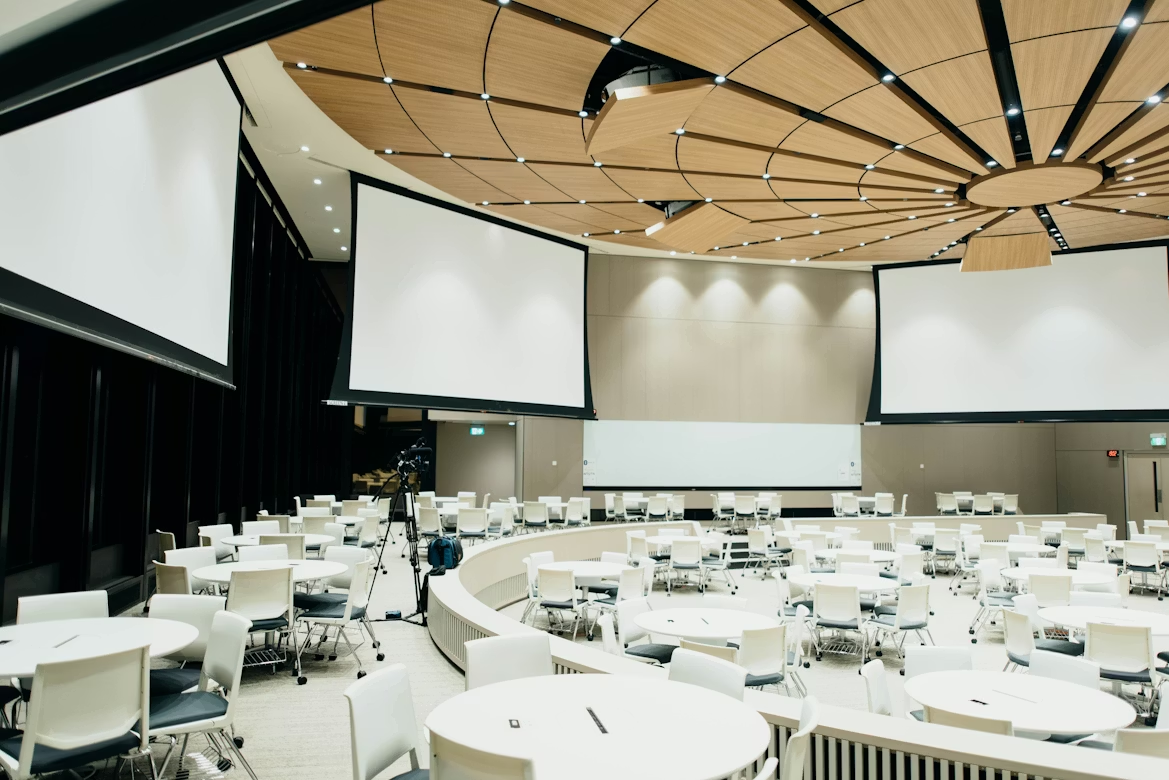
Before booking a venue or designing invitations, you need to understand who you are speaking to. Your audience will shape every decision you make during the planning process.
Are they developers, investors, or everyday users curious about artificial intelligence solutions? Each group expects something different from your presentation and overall event experience. For instance, businesses exploring practical solutions like AI agents for small businesses often prioritize ease of use and quick deployment, while agencies may be more interested in scalable offerings such as a white label AI agent platform.
As Business Insider notes, Apple regularly hosts several major events throughout the year, including high-profile product launches and its annual Worldwide Developers Conference. Many of these events are held at Apple’s headquarters in Cupertino, California, drawing global attention from consumers and industry professionals alike. However, such events are only open to a limited number of guests, and Apple knows how to invite a good mix of developers, investors, reviewers, and everyday users.
When you know your audience well, your messaging becomes clearer and more effective. You can tailor your demos, language, and even your visuals to match their expectations.
This approach makes your product easier to understand and far more appealing. It also helps you avoid confusion, which can quickly reduce excitement and interest during a live event.
Keep Your Venue Safe for Everyone
Ensuring safety at your event should never be treated as an afterthought or minor concern. A secure environment allows guests to relax and focus fully on your presentation and product experience. You need to plan ahead and consider possible risks that could disrupt your event. This includes managing entry points, monitoring crowds, and having trained staff available if needed.
Working with professional security teams can make a significant difference in how smoothly everything runs. They can guide you on best practices and help you implement effective measures without causing inconvenience.
Modern solutions have made security management more efficient and less intrusive for event organizers. A CEIA OPENGATE weapons detection system can act as a reliable walk-through detector for quick screening. You can also use a portable security scanner as part of your overall security system setup.
As GXC Inc. notes, these tools support effective weapon detection while keeping the process smooth and professional. Security screening becomes easier when you rely on a portable weapons detection system that is easy to deploy. Renting such equipment gives you flexibility without requiring a large upfront investment.
Plan an Engaging and Interactive Experience
Your event should not feel like a long lecture that drains your audience’s attention. People enjoy experiences that allow them to interact and explore at their own pace.
Consider including live demonstrations, hands-on sessions, or interactive displays that showcase your AI product. These elements help attendees understand your technology in a practical and engaging way. This becomes even more impactful if your product includes custom AI agents, as live demonstrations can clearly show how these agents handle real tasks and adapt to user interactions.
Encourage questions and conversations throughout the event instead of limiting them to a single session. This creates a more dynamic atmosphere where people feel involved rather than passive listeners. These interactions also help highlight how modern solutions powered by Agentic AI go beyond simple automation and can independently manage workflows and decision-making.
When attendees actively participate, they are more likely to remember your product and share their experience with others. This kind of engagement can amplify your reach beyond the event itself.
Follow Up and Keep the Momentum Going
Your work doesn’t stop once the event ends, and guests start heading out. Following up is really important if you want to turn interest into long-term engagement or sales.
Reach out to attendees with thank-you messages, helpful resources, or recorded sessions from the event. This keeps your product on their minds and reinforces what you were communicating. You can also share follow-up content that positions your solution among the best AI agents available, helping potential customers better understand its value compared to other tools.
You can also collect feedback to see what landed well and what could be better. That kind of information is super valuable for planning future events and product launches.
Staying connected with your audience shows that you actually value their time and opinions. It also helps you build lasting relationships that go well beyond a single event.
FAQs
How much does it cost to make an AI product?
As per a DEV Community discussion, developing an AI product carries a wide range of costs, spanning anywhere from $20,000 to $2 million. The planning and research phase alone can require between $5,000 and $50,000 before a single line of code is written. Core development costs represent the largest portion of the budget, ranging from $20,000 to $800,000 based on the features and technology involved.
Why are AI products often expensive?
AI products are often expensive due to high development costs, including research, data collection, and specialized talent. Powerful computing infrastructure also adds expense. Companies invest heavily upfront, and pricing reflects these costs, along with ongoing maintenance, updates, and the value provided to users.
Why are tech companies trying to integrate AI into everything?
Tech companies integrate AI to improve efficiency, automate tasks, and enhance user experiences. AI can personalize services and generate insights from data quickly. It also offers a competitive advantage, helping businesses innovate faster, reduce costs, and meet growing demand for smarter digital tools.
Hosting an AI product launch event requires careful planning, creativity, and attention to detail. Every element, from your audience strategy to your security setup, plays a role in shaping the final outcome. When you approach each step with intention, your event turns into an experience that people remember and talk about.
With the right mindset and preparation, your AI product launch can leave a strong and lasting impression.
AI Agentic Platform For Building Portable AI Agents
Say Hello To Agentic AI That Connects With Your CRM And Even Other Agents