


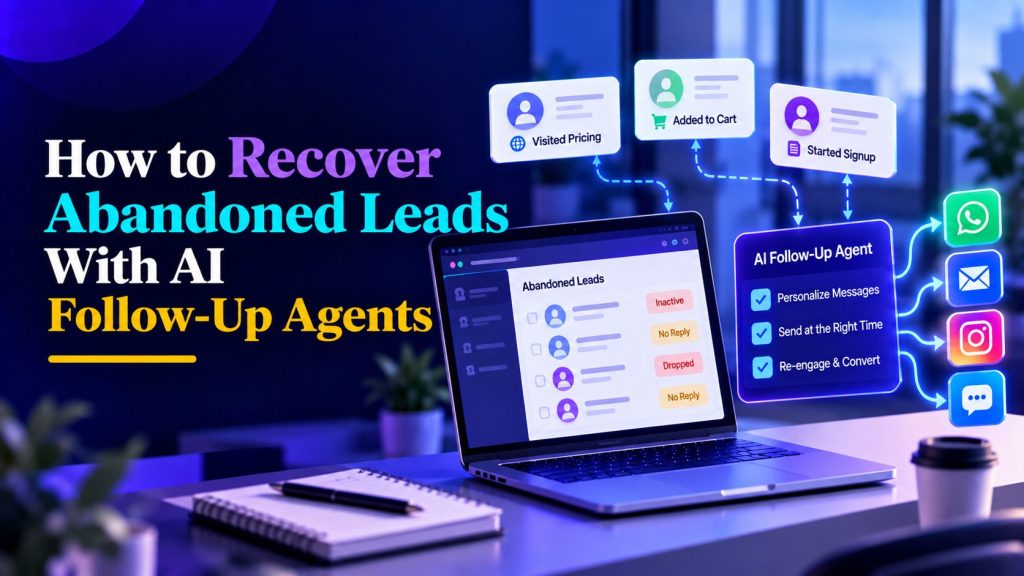
Every sales pipeline contains conversations that never reached a clear conclusion. A prospect requested a demo but didn’t attend, another stopped responding after receiving a proposal, and someone who initially seemed interested asked to revisit the discussion later.
Some of those opportunities may no longer be relevant, but others could simply have stalled because the timing wasn’t right or the prospect’s priorities changed. Without a structured follow-up process, sales teams often have little visibility into which conversations are worth revisiting.
Abandoned lead recovery helps businesses reconnect with previously interested prospects using the context from earlier interactions. AI follow-up agents can support this process by identifying eligible contacts, sending relevant messages, monitoring responses, and helping sales representatives recognize when someone is ready to continue the conversation.
However, effective recovery isn’t about sending more reminders or contacting every inactive lead. It requires accurate CRM information, appropriate timing, personalized communication, and clear rules for when outreach should stop.
In this guide, you’ll learn how to build an abandoned lead recovery workflow with AI follow-up agents, including lead segmentation, re-engagement sequences, message templates, trigger-based outreach, testing, and human handoffs.

Why Abandoned Lead Recovery Is Worth Exploring
An inactive lead isn’t necessarily a lost opportunity. Prospects sometimes pause conversations because priorities change, budgets are delayed, or they need more time to evaluate their options.
When someone has already interacted with your business, you may have useful context about their needs, previous questions, and stage in the buying process.
That information can make a future conversation more relevant than an entirely new introduction.
However, not every inactive contact should be reactivated. Some people were never serious buyers, some have moved on, and others may no longer want to hear from your business.
An AI follow-up agent can help sales teams review eligible leads, identify appropriate opportunities for renewed contact, and deliver relevant messages without requiring representatives to manually revisit every inactive record.
The potential benefit comes from using existing customer context effectively, not from assuming that every old lead can become a new sale.
How to Segment Leads for Abandoned Lead Recovery
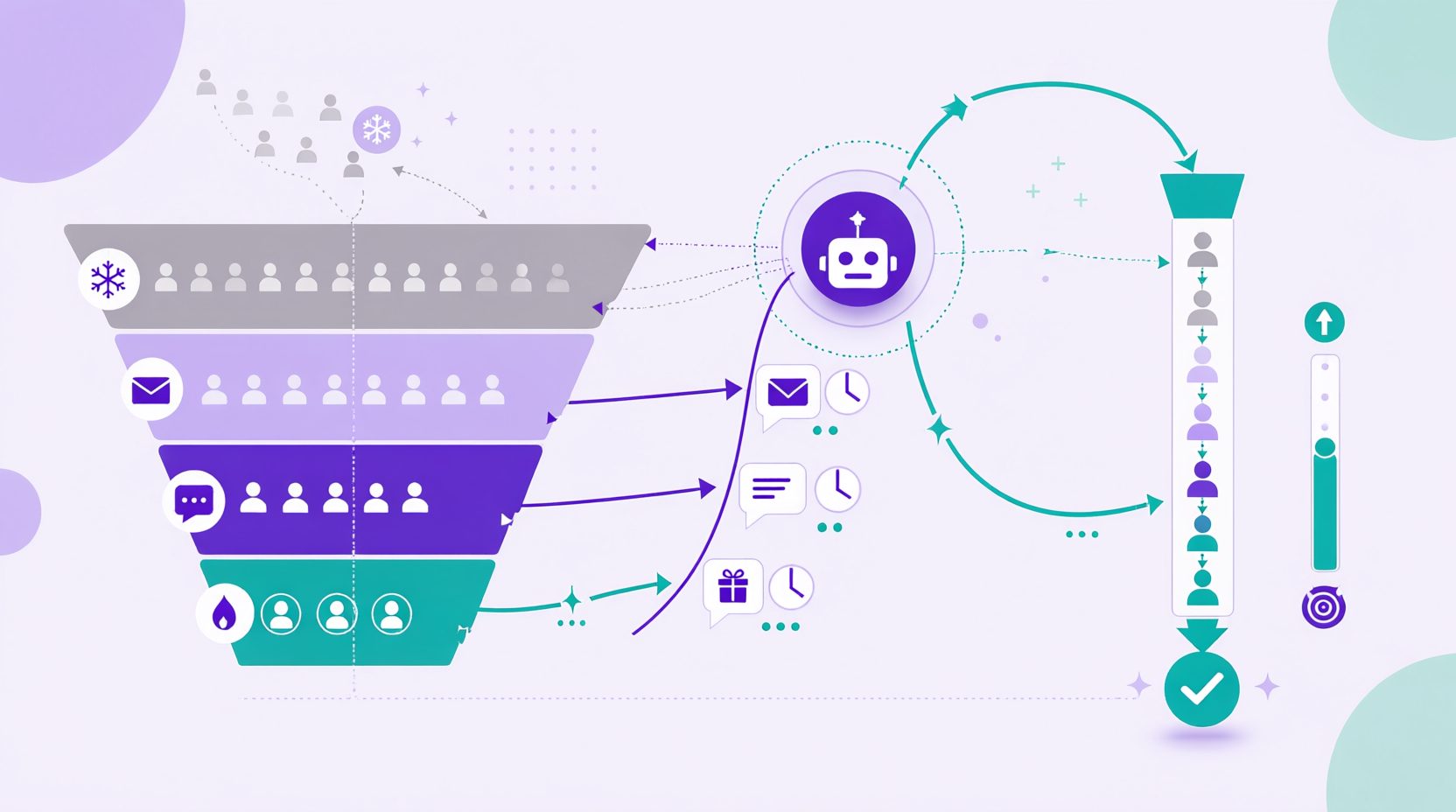
Not every silent lead represents the same opportunity. Someone who missed a scheduled demo has a different relationship with your business than someone who downloaded an ebook and never spoke with sales.
Before starting an abandoned lead recovery campaign, review your CRM and group contacts according to their previous interactions, sales stage, and reason for disengaging, when known. You can also use AI lead scoring to reassess whether previously interested prospects still match your current qualification criteria.
Identify the right lead segments
| Lead segment | Previous interaction | Recommended re-engagement approach |
|---|---|---|
| Demo no-show | Scheduled a meeting but didn’t attend | Offer a convenient opportunity to reschedule |
| Post-demo silence | Attended a demonstration but stopped responding | Reference a relevant use case or new product information |
| Unanswered proposal | Received pricing or a proposal | Ask whether any questions remain or circumstances have changed |
| Unanswered inquiry | Submitted a form but never continued the conversation | Send a brief, relevant response based on the original request |
| Webinar or event attendee | Engaged with educational content | Share a useful resource connected to the topic |
| Customer referral | Was introduced by an existing customer | Use the introduction context to make the conversation relevant |
| Previously engaged outbound lead | Responded to outreach but later went quiet | Reconnect only when there’s a legitimate reason |
| Content downloader | Accessed a resource without showing buying intent | Treat as an early-stage prospect rather than a sales-ready lead |
Distinguish abandoned leads from unqualified contacts
A contact shouldn’t automatically enter a recovery campaign simply because they exist in the CRM.
Someone who requested a demo and then disappeared has demonstrated a different level of interest than someone who downloaded an introductory guide.
Similarly, a prospect who explicitly declined your offer should not be treated the same as someone who postponed a decision.
Review the previous conversation before assigning a lead to a segment. If the reason for disengagement is unknown, avoid inventing one.
Match the message to the previous interaction
A demo no-show may appreciate a simple scheduling option, while someone who reviewed a proposal may need clarification about pricing, implementation, or approval requirements.
A webinar attendee might respond better to additional educational material than a meeting invitation.
The goal is to make each message relevant to what the person actually did, rather than sending the same recovery email to every inactive contact.
Check eligibility before contacting anyone
Before enrolling contacts in a re-engagement workflow, verify that the outreach is permitted, that contact information is current, and that the person hasn’t opted out.
This is especially important for older records and campaigns using multiple messaging channels.
A useful segmentation process identifies both who may benefit from renewed contact and who should be excluded.
How to Build an Abandoned Lead Recovery Sequence With AI
An abandoned lead recovery sequence should give prospects a relevant reason to reconnect without overwhelming them with repeated messages.
The timing depends on where the conversation stopped, how recently the person engaged, and whether you have something useful to share.
Instead of applying the same schedule to every contact, start with the lead’s previous sales stage. A broader AI sales follow-up strategy can help you organize these conversations around the prospect’s needs, previous interactions, and appropriate next steps.
Choose when to re-engage
| Lead situation | Example timing | Recommended approach |
|---|---|---|
| Missed scheduled demo | Within a few business days | Offer to reschedule without assuming why they missed it |
| Conversation stopped unexpectedly | After several business days | Ask whether the original question is still relevant |
| Proposal received without response | After an appropriate review period | Offer clarification or ask whether priorities have changed |
| Previously interested lead inactive for months | When there’s a meaningful update or appropriate review date | Reintroduce the conversation with relevant context |
| Long-inactive lead | Only after checking contact details, eligibility, and relevance | Explain why you’re reaching out again |
These are illustrative starting points, not guaranteed optimal contact windows. Adjust them to your sales cycle, previous communication, and applicable messaging rules.
Example: A five-touch recovery sequence
For an eligible prospect who previously showed genuine interest, a sequence might look like this:
| Touch | Example timing | Message purpose |
|---|---|---|
| 1 | Day 0 | Reopen the conversation with a relevant question |
| 2 | Day 4 | Share a useful update or resource connected to the original need |
| 3 | Day 9 | Address a known concern or offer a simpler next step |
| 4 | Day 15 | Ask whether the original project remains a priority |
| 5 | Day 22 | Close the sequence politely and explain how to reconnect later |
Day 0 means the day the contact becomes eligible for the recovery campaign, not necessarily the day of their original inquiry.
This is a sample workflow. Not every lead needs five touches, and channel-specific restrictions or previous responses may require fewer.
Make every follow-up useful
A good recovery message should connect three things: what the prospect previously needed, what has changed or may now be useful, and one simple next step.
For example, instead of writing:
“Just checking whether you’re still interested.”
You might write:
“When we last spoke, you were evaluating ways to reduce manual lead qualification. We’ve since published a practical guide on that workflow. Would it be useful if I sent it over?”
Only reference updates or resources that actually exist and are relevant to the prospect.
Stop or adjust the sequence when circumstances change
The AI agent should stop the current sequence when a lead opts out, becomes an active customer, enters an ongoing sales conversation, or no longer qualifies for the campaign.
A reply requesting more information should move the person into an appropriate conversation or handoff workflow rather than triggering the next scheduled message.
The objective isn’t to complete every touch. It’s to create a relevant opportunity for the prospect to reconnect.
Your Leads Went Quiet. Your Follow-Up Doesn’t Have To.
See how Botsify can help you engage prospects through AI-powered conversations and guide interested leads toward the next step.
AI Follow-Up Messages and Templates for Abandoned Leads
The most effective re-engagement messages give prospects a relevant reason to respond. Rather than sending a generic reminder, the AI follow-up agent should use the original conversation to identify what information or assistance might now be useful.
A prospect who postponed a purchase because of timing may appreciate a relevant product update. Someone who received a proposal but never replied may simply need clarification about implementation or pricing.
The important distinction is between a documented reason for disengagement and an assumption. If you don’t know why someone stopped responding, don’t pretend that you do.
Match the message to the lead’s previous concern
| Previous situation | Appropriate message approach |
|---|---|
| Price was a documented concern | Share a relevant, approved pricing option or offer clarification |
| Timing wasn’t right | Ask whether the project is still being considered |
| Internal approval was pending | Offer a resource that helps the prospect explain the solution internally |
| Prospect stopped responding after a demo | Reference a specific use case or relevant update |
| Meeting was missed | Offer a convenient way to reschedule |
| Reason for disengagement is unknown | Ask a simple, respectful question without guessing |
Template 1: Rescheduling a missed demo
Subject: Would you like to reschedule?
Hi [Name],
We had a demo scheduled for [date], but it looks like we weren’t able to connect.
If you’re still exploring [solution or use case], I’d be happy to help arrange another time that works better for you.
Would you prefer to reschedule, or has this become less of a priority?
Best,
[Sender name]
Template 2: Reconnecting with a relevant update
Subject: An update on [specific topic]
Hi [Name],
When we last spoke, you mentioned that [documented customer need] was important to your team.
Since then, [verified product update, resource, or relevant development]. I thought it might be useful because it relates to what you were evaluating.
Would you like me to send over more details?
Best,
[Sender name]
Template 3: Following up on an unanswered proposal
Subject: Any questions about the proposal?
Hi [Name],
I wanted to follow up on the proposal we shared for [project or solution].
If you’re still reviewing your options, I’m happy to clarify the scope, implementation process, or any questions that have come up.
Would a brief email summary be useful, or would you prefer to revisit this later?
Best,
[Sender name]
Template 4: Closing the follow-up sequence
Subject: Closing the loop on [project]
Hi [Name],
I haven’t heard back, so I’ll close the loop on our previous conversation about [project or need].
I won’t send further follow-ups about this inquiry. If your priorities change and you’d like to revisit it, you’re welcome to reach out.
Thanks for your time,
[Sender name]
Guidelines for AI-generated recovery messages
Each message should reference accurate information from the previous conversation, offer one relevant next step, and respect the prospect’s communication preferences.
Avoid invented product updates, unapproved discounts, artificial urgency, or claims that the prospect is ready to buy simply because they previously showed interest.
The agent should also stop the scheduled sequence when a lead replies or requests no further contact.
These templates are starting points. Review them against your brand voice, sales process, and messaging requirements before using them in a live campaign.
AI Follow-Up Agent Prompt for Abandoned Lead Recovery
Before writing the prompt, define what information the agent can access, which actions it may take, and when it must involve a human. An AI Agent Builder can help bring these instructions, knowledge sources, and connected workflows into one agent configuration.
You are a re-engagement agent for [company]. You are reaching out to a lead who previously showed interest but went quiet.
Context you have: – Lead name, company, role – What they originally inquired about – What stage the conversation reached (demo booked, proposal sent, etc.) – Why they may have gone quiet (if known) – What has changed since (product updates, new case studies, pricing changes)
Rules: – Reference something specific from the original conversation. Never generic. – Tone: warm, professional, honest. Acknowledge the gap in time naturally. – Make one clear, low-friction ask. Not “book a call” on the first touch — start with a question or share something relevant. – If the lead replies “not interested” or “stop contacting me,” stop all sequences immediately and log the reason. – If the lead asks a question you can’t answer from approved documents, say so honestly and offer to connect them with a human. – Never pretend the silence didn’t happen. Phrases like “just following up” or “checking in” are banned.
Touch 2 prompt: Sharing a relevant update
The lead went quiet after [stage — demo/proposal/trial]. We’ve since [specific update — new feature, case study, pricing change]. Write a short email (3–4 sentences) that: 1. References the original conversation specifically 2. Introduces the update as relevant to what they said they needed 3. Offers one low-friction next step (reply, 15-minute call, or a specific resource) 4. Does not pressure or repeat the original pitch
The AI sales follow-up playbook covers the broader cadence framework; this re-engagement playbook is the specific subset for leads that have already gone quiet.
Turn Your Follow-Up Strategy Into AI-Powered Conversations
You have the recovery sequence and the prompts. Explore how Botsify can help you build AI conversations that respond to prospects and support your sales workflow.
How to Test an AI Follow-Up Agent and Set Stop Conditions
Before activating an abandoned lead recovery campaign, test whether the AI agent can use previous conversation context accurately, respond appropriately to new information, and stop contacting people when required. A structured approach to testing AI agents can help you evaluate response accuracy, workflow reliability, and unexpected scenarios before launch.
Re-engagement workflows need particular attention because the contacts may have changed jobs, priorities, or preferences since their last interaction.
Test common re-engagement scenarios
| Scenario | Expected behavior |
|---|---|
| Lead responds positively | Pause the scheduled sequence and continue the conversation or notify sales |
| Lead says they’re no longer interested | Stop promotional follow-ups and record the response |
| Lead asks to unsubscribe | Apply the opt-out across relevant outreach systems and suppress future promotional messages |
| Lead asks who is contacting them | Identify the company and explain the reason for contact |
| Lead says the message reached the wrong person | Stop contacting that person and review the contact record |
| Lead asks an unsupported question | Offer human assistance instead of inventing an answer |
| Lead replies after several months | Confirm whether the original need still exists before recommending a next step |
| Lead becomes an active customer | Remove them from prospect recovery sequences |
| Lead responds on another channel | Prevent duplicate messages from being sent |
| CRM data conflicts with the conversation | Flag the discrepancy rather than treating uncertain information as fact |
Define when a lead must be excluded
Some contacts should never enter an automated re-engagement sequence.
Exclude contacts who have withdrawn the relevant consent, unsubscribed from promotional communication, or explicitly requested no further contact.
Also review records with invalid contact information, unsupported regions, outdated ownership details, or circumstances that make the original offer irrelevant.
A competitor’s customer shouldn’t automatically be excluded simply because they use another product. What matters is whether your outreach is appropriate, permitted, and relevant.
Configure suppression rules across channels
Stopping an email sequence isn’t enough if another automation continues sending WhatsApp messages or sales notifications.
Your CRM and connected messaging workflows should share relevant suppression information so that opt-outs and active conversations are handled consistently. A multi-channel lead qualification workflow can also help teams apply consistent qualification rules across website chat, WhatsApp, and other connected channels.
If a lead books a meeting, replies to a representative, or enters another active sales process, pause the recovery sequence to avoid conflicting messages.
Verify the handoff process
Test what happens when a previously inactive lead shows renewed buying intent.
The receiving representative should get a summary of the original inquiry, relevant previous conversations, new responses, and recommended next action.
The agent should also distinguish confirmed information from assumptions about why the lead stopped responding.
Review the workflow after launch
Monitor opt-outs, delivery errors, duplicate outreach, inappropriate messages, and failed handoffs.
Review conversation samples with the sales team and update prompts, eligibility rules, or CRM workflows whenever problems appear.
A recovery agent should be evaluated not only on how many replies it generates, but also on whether it respects customer preferences and supports useful conversations.
How to Measure Abandoned Lead Recovery Performance
A recovery campaign should be evaluated by the quality of the conversations it creates, not simply by the number of messages sent.
Track these metrics to understand whether the AI follow-up agent is helping your sales team reconnect with relevant prospects.
| Metric | What it measures |
|---|---|
| Re-engagement rate | Percentage of contacted leads who respond meaningfully |
| Recovered lead-to-meeting rate | Percentage of re-engaged leads who schedule a meeting |
| Recovered lead conversion rate | Percentage of re-engaged leads who eventually become customers |
| Revenue from recovered leads | Revenue attributable to opportunities reopened through the campaign |
| Opt-out rate | Percentage of contacts who request no further promotional communication |
| Qualification accuracy | Whether recovered leads still match your current customer criteria |
| Handoff completion rate | Whether interested prospects reach the appropriate representative |
Compare results across lead segments, previous sales stages, and messaging channels.
For example, prospects who previously attended a demonstration may behave differently from contacts who only downloaded educational content. Reviewing those groups separately can help you understand which recovery approaches are useful.
Avoid assuming that recovered leads always convert faster or cost less than new prospects. Use your own CRM and sales data to determine whether the recovery workflow is producing worthwhile results.
Also review negative signals such as opt-outs, complaints, and repeated unanswered messages. A campaign that generates replies but damages customer trust isn’t performing well.
Trigger-Based AI Lead Recovery and Channel Selection
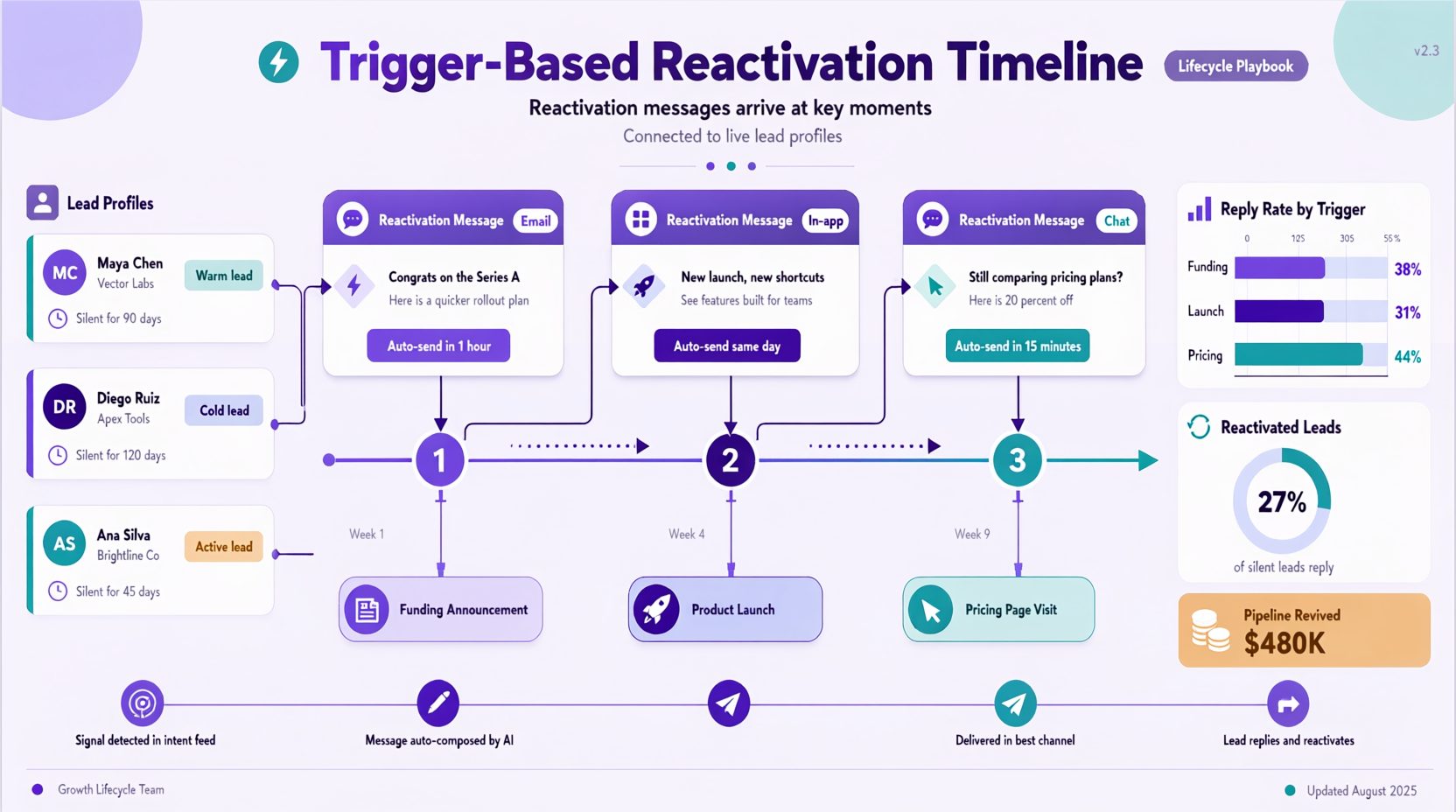
A fixed follow-up schedule can help sales teams manage inactive leads, but not every recovery opportunity should depend on the number of days since the last conversation.
Sometimes a relevant event creates a more natural reason to reconnect.
For example, a business might release a feature that addresses a prospect’s previous concern, or an inactive lead might submit a new inquiry about the same product.
An AI follow-up agent can use approved CRM events and relevant business updates to identify these opportunities.
Useful re-engagement triggers
| Trigger | Why it may be relevant | Example message approach |
|---|---|---|
| Relevant product update | Addresses a previously documented customer need | Mention the update and explain how it relates to their original question |
| New inquiry from an inactive lead | Indicates renewed interest | Continue the new conversation using available context |
| Prospect requests updated pricing | Suggests they’re reconsidering their options | Provide approved pricing information or arrange a sales discussion |
| Previous objection is resolved | Removes a documented barrier | Explain what changed and ask whether it remains relevant |
| Relevant educational resource becomes available | Offers information connected to their earlier interest | Share the resource with an appropriate, low-pressure invitation |
| Follow-up date agreed with the prospect | Respects their preferred timing | Reconnect about the topic they asked to revisit |
Not every website visit, email open, or advertising interaction should trigger a personalized outreach message.
Behavioral data can be incomplete or misleading, and its use must comply with applicable privacy requirements and communication preferences.
Choose the right communication channel
The best channel isn’t necessarily the one most likely to get attention. It’s the one the prospect has agreed to use and that makes sense for the conversation. For businesses that already communicate with prospects through WhatsApp, a WhatsApp lead generation workflow can help structure qualification, follow-up, and the transition to a sales conversation.
| Previous interaction | Possible follow-up channel | Consideration |
|---|---|---|
| Email conversation | Preserves the original thread and context | |
| Website inquiry | Email or an approved messaging channel | Depends on the contact details and permissions provided |
| WhatsApp conversation | WhatsApp, when permitted | Follow applicable platform rules and messaging requirements |
| Scheduled meeting | Previously agreed communication channel | Use the contact’s stated preference |
| Sales representative conversation | Representative’s existing channel | Maintains continuity and avoids duplicate outreach |
Switching channels shouldn’t be used to bypass an opt-out or persistent non-response.
For example, if someone hasn’t replied to several emails, that doesn’t automatically justify contacting them on WhatsApp or LinkedIn.
Match the trigger to the message
Every automated trigger should have a corresponding message template that explains why the business is reaching out.
A product update should reference a relevant customer need. A scheduled follow-up should acknowledge the previously agreed timing.
Avoid messages that imply personal surveillance, such as telling someone you’ve noticed every page they visited.
Prevent duplicate or conflicting outreach
Before sending a trigger-based message, check whether the contact has already replied, booked a meeting, become a customer, or entered another active conversation.
Also verify that the contact is eligible for communication through the selected channel.
The goal is to reconnect when there’s a meaningful reason, not to turn every CRM event into another sales message.
What Happens When an Abandoned Lead Responds?
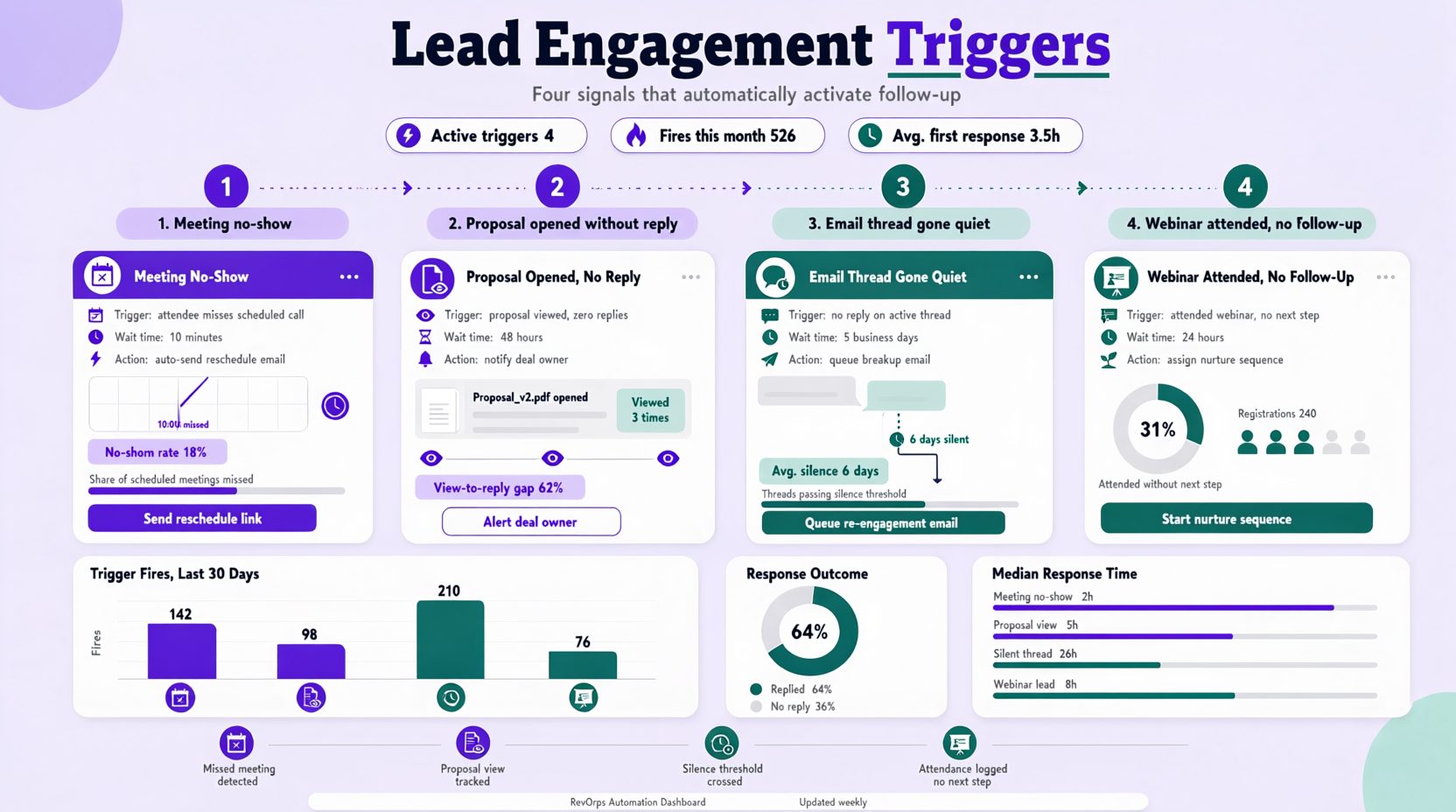
Getting a reply is an encouraging sign, but it doesn’t automatically mean the prospect is ready to buy. The next step depends on what the person says and whether their original needs are still relevant.
An AI follow-up agent should recognize the type of response and guide the conversation accordingly.
Confirm whether the original need still exists
A prospect who went quiet several months ago may have a different budget, new responsibilities, or changing business priorities.
Rather than assuming the previous qualification information is still accurate, the assistant can ask a relevant question such as:
“Last time we spoke, you were exploring ways to automate incoming customer inquiries. Is that still something your team is considering?”
Identify the appropriate next step
If the prospect expresses renewed buying interest, the agent can collect any missing information and arrange an appropriate sales handoff. An AI lead qualification agent can help evaluate current buying intent, identify missing details, and determine which prospects should be routed to a sales representative.
If the person only wants educational information, the assistant can provide an approved resource without pushing for a meeting.
If the reply indicates that the prospect is no longer interested, the recovery sequence should stop.
Preserve context during the handoff
When a human representative takes over, they should receive a concise summary of the original inquiry, previous concerns, new responses, and any information that needs confirmation.
This allows the representative to continue the conversation without requiring the prospect to repeat everything.
Stop scheduled messages after a reply
Once a prospect responds, pause the automated recovery sequence while the new conversation is handled.
This prevents the person from receiving another generic follow-up while already speaking with your team.
FAQ
How long should I wait before re-engaging a silent lead?
Depends on the stage. No-show: 3–7 days. Went quiet mid-conversation: 5–7 days. Went quiet after a proposal: 10–14 days. Longer silences get longer waits.
Is this different from a standard email drip?
Yes, in one key way: AI agents reference the specific conversation and adapt based on the reply. Drip sequences send the same message regardless. The AI version is a conversation, not a broadcast.
What about leads from 2+ years ago?
Often better to treat as new. The contact may have changed roles, the company may have changed direction, and referencing a conversation from two years ago can feel creepy rather than personal.
How do I stop this from feeling like spam?
The same way you stop any outreach from feeling like spam: relevance. If every message references something specific from your prior conversation, it reads as personal follow-up. If it reads like a template, it reads as spam — regardless of how clever the subject line is.
Final thought
Abandoned lead recovery is most useful when businesses treat previous conversations as valuable context rather than a list of contacts to message repeatedly. Some prospects may be ready to reconsider a solution, while others have moved on or no longer want to be contacted.
AI follow-up agents can help sales teams manage this process by identifying appropriate recovery opportunities, personalizing messages based on previous interactions, and recognizing when a conversation needs human attention. Their effectiveness depends on accurate CRM data, thoughtful communication, and reliable stop conditions.
Start with a manageable group of previously engaged leads, test your follow-up messages, and measure how many conversations lead to meaningful sales opportunities. As you gather results, refine your timing, qualification criteria, and handoff process.
The goal of abandoned lead recovery isn’t to bring every inactive contact back into the pipeline. It’s to make reconnecting easier for prospects whose needs and interests still align with what your business offers.
Don’t Let Your Next Sales Opportunity Go Unanswered
Discover how Botsify can help your business engage incoming prospects, manage AI-powered conversations, and connect interested leads with your team.