


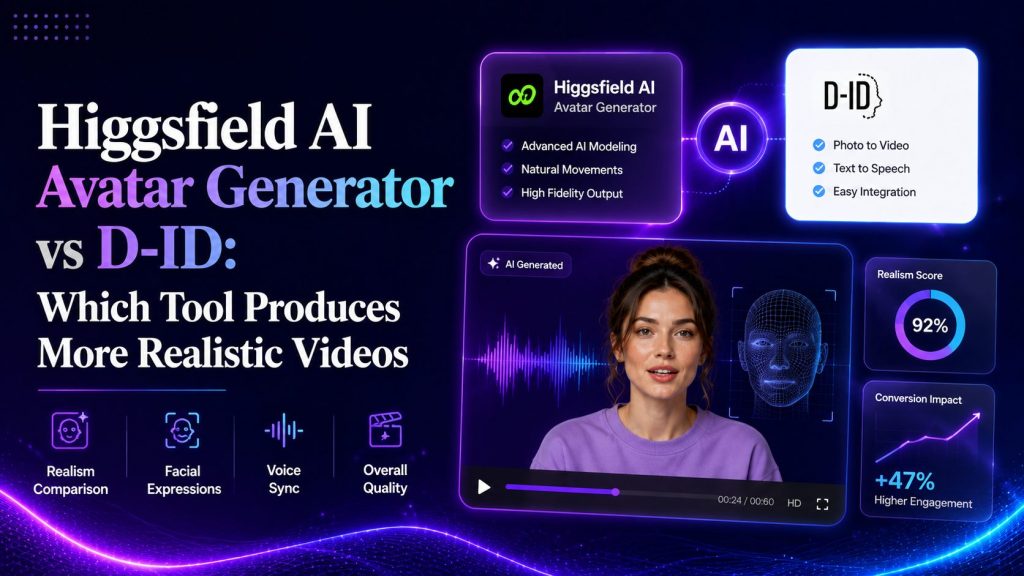
The landscape of digital content creation is shifting from static images to dynamic, AI-driven video. For marketers and creators, the choice between platforms often comes down to the realism of the final output. This comparison examines the performance of the ai avatar generator by Higgsfield against the established industry veteran, D-ID.
As businesses look to scale their video production, the demand for “digital humans” that do not look like robots has increased. High-fidelity facial movements, natural skin textures, and consistent character physics are now the benchmarks for success. This article breaks down the technical differences and the visual results of both tools.
The Dawn of Hyper-Realistic AI Video
For years, D-ID has been a primary choice for creating talking-head videos. It excels at animating a single portrait image to match an audio file or text script. However, as the industry matures, the limitations of simple 2D animation have become more apparent.
Higgsfield represents the next generation of this technology. By integrating the Seedance 2.0 model, it moves beyond basic facial animation. It offers a more holistic approach to video generation that includes cinematic camera movements and complex character interactions.
Modern AI video is no longer just about moving a mouth. It is about environmental lighting, micro-expressions, and the way a character occupies a 3D space. Generative AI is fundamentally altering the value chain of creative industries. Higgsfield is at the forefront of this shift. As Agentic AI systems continue evolving, creators are beginning to expect AI tools that can handle more autonomous creative decision-making during video production.
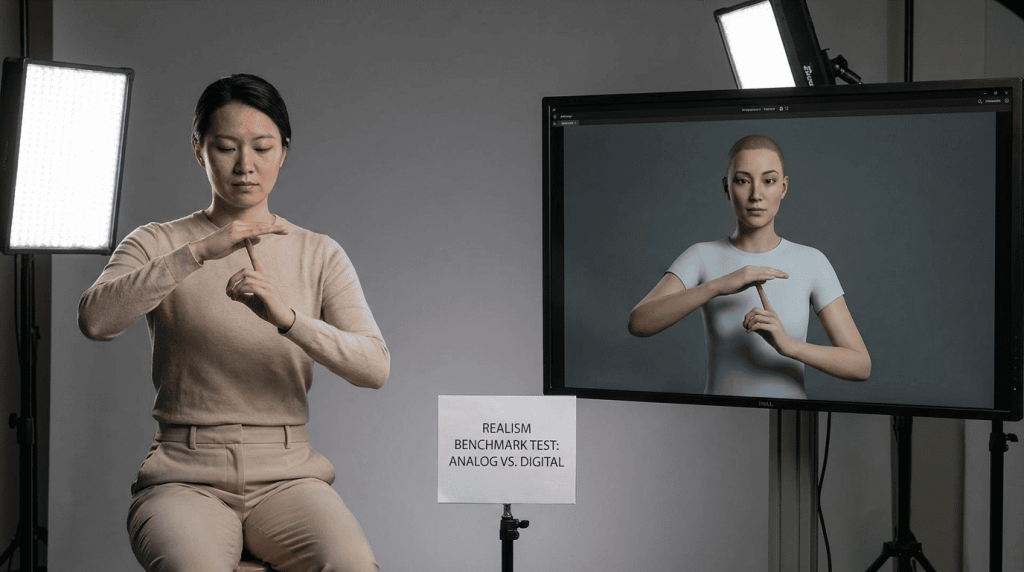

Technical Architecture: Seedance 2.0 vs Legacy Models
The most significant differentiator for higgsfield is the underlying engine. It utilizes Seedance 2.0, a state-of-the-art model developed by ByteDance. This model is engineered specifically for high-motion video and frame-level precision.
The Seedance 2.0 Advantage
- Advanced Temporal Consistency: Unlike older models that might flicker between frames, Seedance 2.0 maintains pixel-perfect stability.
- Multi-Modal Inputs: The model can ingest text, images, videos, and audio simultaneously to inform the final output.
- Full Body Dynamics: While D-ID focuses primarily on the head and neck, Seedance 2.0 understands the mechanics of the entire human body.
- Global Accessibility: Users can access this high-end model on all higgsfield subscription plans, democratizing top-tier AI. The growing popularity of Seedance 2.0 among faceless content creators also highlights how AI video workflows are becoming faster, more scalable, and easier to maintain consistently.
D-ID uses proprietary drivers that focus on lip-syncing. While effective for simple presentations, these drivers often fail when the character needs to turn their head or show intense emotion. The “uncanny valley” effect is much more pronounced in legacy systems compared to the fluid motion of Higgsfield.
Comparing Core Capabilities
To determine which tool produces more realistic videos, we must look at the specific features that contribute to the “human” feel of an AI avatar. Realism is the sum of many technical parts, including audio sync and scene composition.
Multi-Shot Production and Cinematic Flow
One of the biggest hurdles in AI video is creating a story, not just a clip. Higgsfield allows for cinematic multi-shot videos. This means you can have a wide shot followed by a close-up, all while maintaining the same character appearance.
- Consistent Character Identity: The AI remembers the features of your avatar across different camera angles.
- Native Audio Sync: The audio is not just layered on top; it is integrated into the generation process to ensure the jaw and throat movements are anatomically correct.
- Dynamic Environments: The background reacts to the presence of the avatar, with realistic shadows and reflections.
D-ID typically produces a single, static shot. If you want a different angle, you often have to generate a completely new video, which usually results in a slight change in the character’s face. This lack of consistency is a major drawback for professional video ads.
Asset Handling: The Power of 12
A major technical edge for higgsfield is its ability to handle up to 12 different assets for a single generation. These assets can be a mix of reference images, specific audio clips, or text prompts. This level of input allows the user to “direct” the AI with extreme precision. For creators developing advanced AI skills, this kind of granular control makes it easier to produce highly customized video content at scale.
- Input a specific voice tone to influence facial expression.
- Provide a reference video for specific body movements.
- Upload high-resolution images for clothing texture. This level of control is especially valuable for creators combining AI image generation with cinematic video workflows to maintain visual consistency across campaigns.
- Add text prompts to define the lighting and mood.
D-ID is much more restricted in its input. Usually, you provide one image and one audio file. The AI does the rest, but you have very little control over the nuances of the performance.
Realism and Character Consistency
The “flicker” effect is the enemy of realism in AI video. This happens when the AI forgets what a character looked like in the previous frame. Higgsfield addresses this through frame-level precision. Because it is powered by Seedance 2.0, the model calculates the physics of every frame in relation to the ones before and after it.
Character consistency is vital for brand trust. If a spokesperson’s face changes slightly during a 30-second ad, the viewer will subconsciously feel that something is “off.” The ai avatar generator within the Higgsfield ecosystem ensures that the digital human remains identical from start to finish.
D-ID has improved its consistency over the years, but it still struggles with “drifting.” This is where the facial features slowly morph as the video progresses. In a side-by-side comparison, the Higgsfield output looks like a filmed human, while the D-ID output often looks like a high-quality animation.
Professional Use Cases: Where Higgsfield Dominates
When choosing a tool, you must consider the end goal. Different scenarios require different levels of technical sophistication. Higgsfield is designed for the high-stakes world of professional marketing and video production.
Video Ads and Social Media
In the fast-paced world of social media, you have less than two seconds to capture attention. A realistic ai avatar generator is essential for creating User Generated Content (UGC) style ads. Higgsfield allows you to create:
- Product demos where the avatar interacts with an item.
- High-energy talking-head ads with varied camera movements.
- Multilingual content where the mouth movements are perfectly synced to different languages.
Corporate Training and Demos
While D-ID is often used for simple training videos, Higgsfield offers a more engaging experience. Instead of a floating head in a circle, you can have a full-bodied virtual instructor in a realistic office environment. This increases viewer retention and makes the content feel more professional.
Pros and Cons: An Unbiased Evaluation
Every tool has its strengths. To make an informed decision, professionals must weigh the modern architecture of Higgsfield against the simplicity of D-ID.
Higgsfield

Pros:
- Uses the cutting-edge Seedance 2.0 model for superior realism.
- Supports multi-shot cinematic sequences.
- Exceptional character consistency across different angles.
- Handles up to 12 assets for precise creative control.
- Native audio sync that looks anatomically natural.
Cons:
- The high level of control might require a steeper learning curve for beginners.
- The wealth of options can be overwhelming for simple, 5-second clips.
D-ID


Pros:
- Very simple user interface for quick projects.
- Large library of pre-made avatars.
- Integration with various third-party apps and APIs.
Cons:
- Limited to talking-head style videos with minimal body movement.
- Character consistency can drift in longer videos.
- Lacks the cinematic multi-shot capabilities of modern models.
Final Verdict: The New Gold Standard
When the primary metric is realism, the winner is clear. D-ID paved the way for the industry, but its technology is increasingly being surpassed by more modern architectures. Higgsfield provides a level of depth and precision that was previously impossible without a massive visual effects budget.
The integration of ByteDance’s Seedance 2.0 model gives higgsfield a massive technical advantage. By supporting multi-shot capabilities, native audio sync, and maintaining character consistency, it has become the superior choice for professional creators.
If you need a simple animated photo for a joke or a basic notification, D-ID is sufficient. However, for anyone serious about video marketing, product demos, or cinematic storytelling, the ai avatar generator by Higgsfield is the professional standard. It moves the industry from “animated images” to “true digital humans,” making it the most realistic tool on the market today.
AI Agentic Platform For Building Portable AI Agents
Say Hello To Agentic AI That Connects With Your CRM And Even Other Agents