



CrewAI has quickly become one of the most talked-about tools in the world of AI agents. If you’ve been exploring ways to build multi-agent systems or automate workflows, chances are you’ve already come across it.
And to be fair, CrewAI does a lot of things right. It gives developers a structured way to create agents that can collaborate, assign tasks, and execute workflows together. For technical teams, that level of control is powerful.
But once you move beyond experimentation and try to use it in real business scenarios, the limitations start to appear.
You need to write code. You need to manage orchestration manually. And if your team isn’t deeply technical, the whole setup quickly becomes a bottleneck instead of a solution.
That’s exactly why more teams today are actively looking for CrewAI alternatives, not because CrewAI is bad, but because it’s not built for everyone.
What Are the Best CrewAI Alternatives?
Here are the top CrewAI alternatives in 2026:
- Botsify (best no-code option)
- Relevance AI
- Lindy AI
- Gumloop
- Flowise
- Botpress
- MindPal
CrewAI Alternatives Comparison (Simple Overview)
| Platform | Best For (Simple Use Case) | Coding Required | Ease of Use | Why People Use It | Downsides |
| Botsify | Businesses that want AI agents without coding | ❌ No | ⭐⭐⭐⭐⭐ | Very easy, fast setup, works on website & WhatsApp | Less control for complex setups |
| Relevance AI | Teams automating tasks with data | ⚠️ Some | ⭐⭐⭐ | Handles complex workflows | Can be confusing for beginners |
| Lindy AI | Ready-made AI assistants | ❌ No | ⭐⭐⭐⭐ | Quick setup with pre-built agents | Limited customization |
| Gumloop | Building AI workflows quickly | ❌ No | ⭐⭐⭐⭐ | Easy to create agents using prompts | Still growing platform |
| Flowise | Developers who want visual control | ✅ Yes | ⭐⭐ | Flexible and open-source | Not beginner-friendly |
| Botpress | Chatbots with AI capabilities | ⚠️ Some | ⭐⭐⭐ | Strong for customer conversations | Takes time to learn |
| MindPal | Turning your knowledge into AI workflows | ❌ No | ⭐⭐⭐⭐ | Great for complex systems | Too complex for simple tasks |
Why People Are Looking for CrewAI Alternatives
CrewAI works best in environments where developers are comfortable designing systems from scratch. It fits well into technical workflows where flexibility matters more than speed.
The problem is that most businesses don’t operate like that.
The first issue is the technical barrier. CrewAI requires you to define agents, roles, and logic programmatically. If you’re not familiar with how AI agent frameworks operate under the hood, even simple workflows can feel complicated.
Then comes setup complexity. What looks clean in documentation often turns into multiple iterations in practice. Debugging agent behavior, managing dependencies, and maintaining logic adds friction.
And finally, there’s the usability gap. If you’re a founder, marketer, or operations lead trying to implement automation, CrewAI simply isn’t designed for you.
This is why alternatives are gaining traction.
Not because CrewAI fails, but because different teams need different types of tools.
For most teams, the challenge isn’t building AI agents, it’s deploying them quickly and making them useful in real workflows.
What to Look for in CrewAI Alternatives
Before choosing any platform, it’s worth stepping back and thinking about what actually matters.
Most people compare features. But features don’t determine success, your workflow does.
The first factor is ease of use. Some tools are built for developers, while others allow you to build without writing code. If your team is non-technical, this becomes the most important decision.
Then there’s the balance between flexibility and speed. Tools that give you full control often take longer to implement. On the other hand, platforms designed for speed may limit customization.
Integrations are another critical piece. An AI agent is only useful if it connects with your existing systems, whether that’s your CRM, email tools, or internal workflows. Without that, it stays isolated.
Deployment matters just as much. Can you actually use what you build in real scenarios? Or does it remain a demo?
And finally, support and ecosystem play a bigger role than most people realize. Documentation, tutorials, and community support can significantly reduce your learning curve.
When evaluating alternatives to CrewAI, these factors matter more than feature lists.
Portable AI Agents In Seconds, Use Everywhere
Prompt, Test, and Deploy AI Agents Across Social Platforms and LLMs. Automate Everything.
Best CrewAI Alternatives in 2026
There’s no single “best” tool here. Some platforms are built for developers, others for businesses, and some try to bridge both worlds.
The right choice depends entirely on how you plan to use AI in your workflow.
1. Botsify – Best No-Code AI Agent Platform for Businesses and Agencies
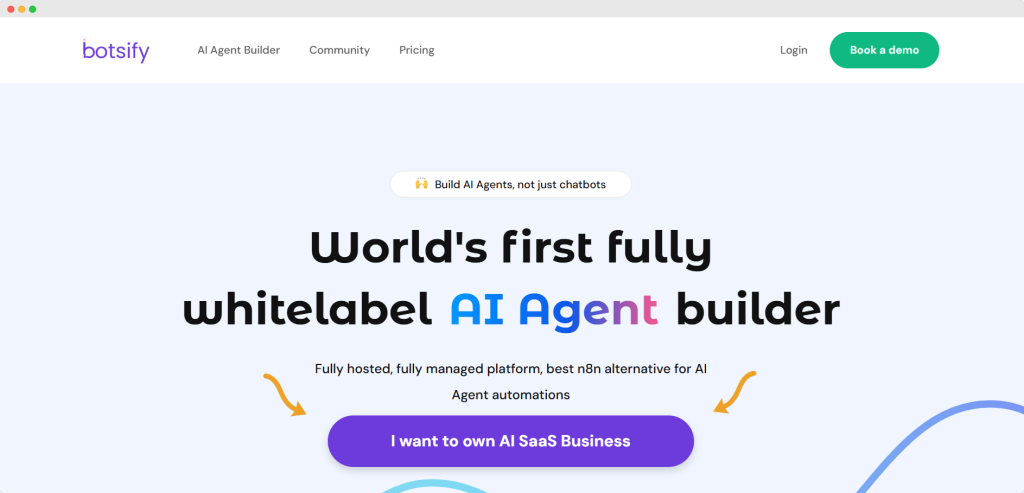

Botsify takes a completely different approach.
Instead of focusing on code and orchestration, it works as an AI agent builder where you can create agents using simple prompts. You describe what you want the agent to do, and the platform turns that into a working system.
This makes it significantly easier for teams that don’t want to deal with technical complexity.
The biggest advantage is speed. You can go from idea to deployment without spending weeks building logic from scratch. This is especially useful for businesses building custom AI agents that need to operate in real environments.
Botsify also supports multi-channel deployment, which means your agent can work across websites, messaging platforms, and customer touchpoints instead of being limited to a single interface.
Another important strength is integrations. The platform connects with external tools, allowing your agent to take action instead of just responding. That’s what turns it into a complete AI agent platform rather than a simple chatbot tool.
For agencies, the white-label capability adds another layer. You can create solutions using white label AI and offer them under your own brand. This is why many teams use it as a white label AI agent platform when building services for clients.
Compared to CrewAI, Botsify removes complexity and focuses on usability. You’re not building systems from scratch, you’re deploying them faster.
That said, it’s not designed for highly experimental setups or deep custom orchestration. If your goal is research-level flexibility, developer tools may still be better.
But for real-world business use, it’s one of the most practical options available.
Pricing
- Personal: $49/month
- Done-for-You Agents: $149/month
- Agency: Custom pricing
Limits
- The self-serve builder is better for fast business deployment than highly experimental agent architecture. It is not the ideal choice if you want deep custom orchestration or research-style multi-agent systems.
- Teams that want very granular developer-level control may prefer a more code-heavy framework, especially for advanced multi-agent logic.
2. Relevance AI – Best for Multi-Agent Workflows and Data Automation
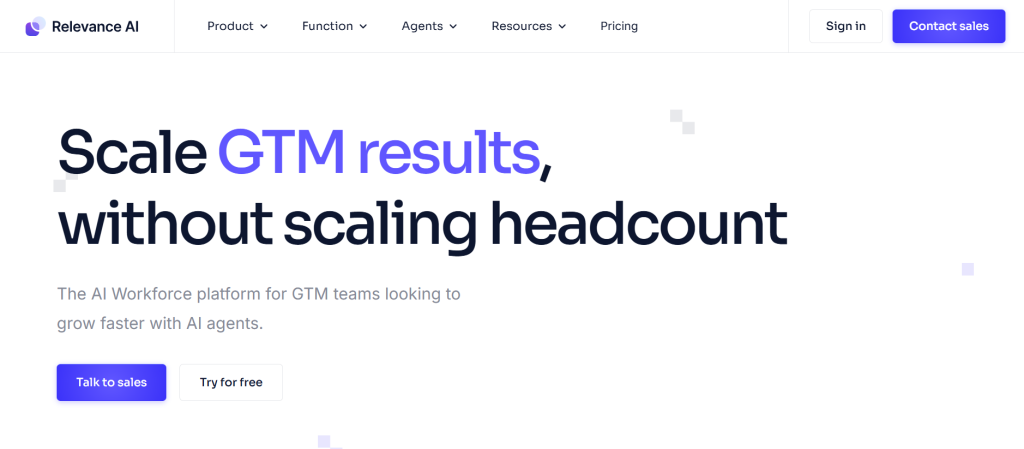

Relevance AI focuses on orchestrating multiple agents within structured workflows.
Instead of building a single agent, you can create systems where different agents handle different parts of a process, research, analysis, generation, and execution.
This makes it particularly useful for teams working with large datasets or multi-step operations.
It fits well into the broader shift toward Agentic AI, where systems operate with defined goals rather than isolated tasks.
Compared to CrewAI, it reduces the need for heavy coding while still allowing complex workflows.
The trade-off is complexity at scale. As workflows grow, managing them can become challenging, especially for new users.
If your use case revolves around automation and data-heavy processes, Relevance AI is a strong CrewAI alternative.
Pricing
- Free: $0/month
- Pro: $19/month
- Team: $234/month
- Enterprise: Custom pricing
Limits
- Relevance AI uses an actions + vendor credits model, so cost can become harder to predict as usage grows.
- It is powerful, but for non-technical beginners, the platform can feel heavier and more operational than simpler no-code tools.
3. Lindy AI – Best for Pre-Built AI Employees
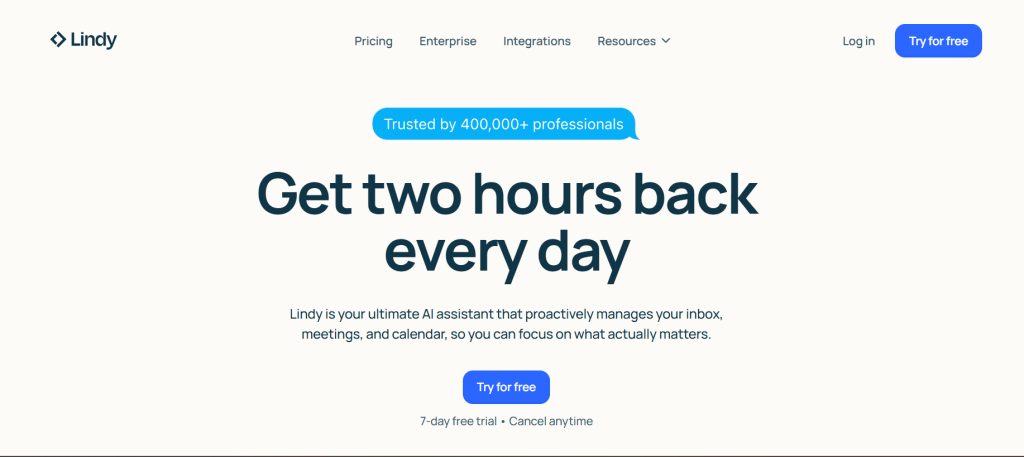

Lindy approaches things differently by treating agents as “AI employees.”
Instead of building everything from scratch, you start with predefined roles, like assistants, support agents, or sales agents, and customize them based on your needs.
This significantly reduces setup time.
For teams that want to deploy quickly, especially in areas like customer support or outreach, it’s a practical option. It’s also commonly used in workflows where AI agents for small businesses need to operate without complex setup.
Compared to CrewAI, Lindy removes the need for designing systems manually.
The limitation is flexibility. Because you’re working with predefined structures, there’s less room for deep customization.
Still, for teams that prioritize speed over control, it’s a strong alternative.
Pricing
- Plus: $49.99/month
- Pro: $99.99/month
- Max: $199.99/month
- Enterprise: Custom pricing
Limits
- Lindy is optimized around assistant-style use cases like inbox, meetings, and follow-ups, so it is less flexible than platforms built specifically for broader agent orchestration.
- If you need complex multi-agent workflow design, Lindy may feel more constrained than developer-first alternatives.
4. Gumloop – Best for AI Automation with Assistant-Led Agent Building
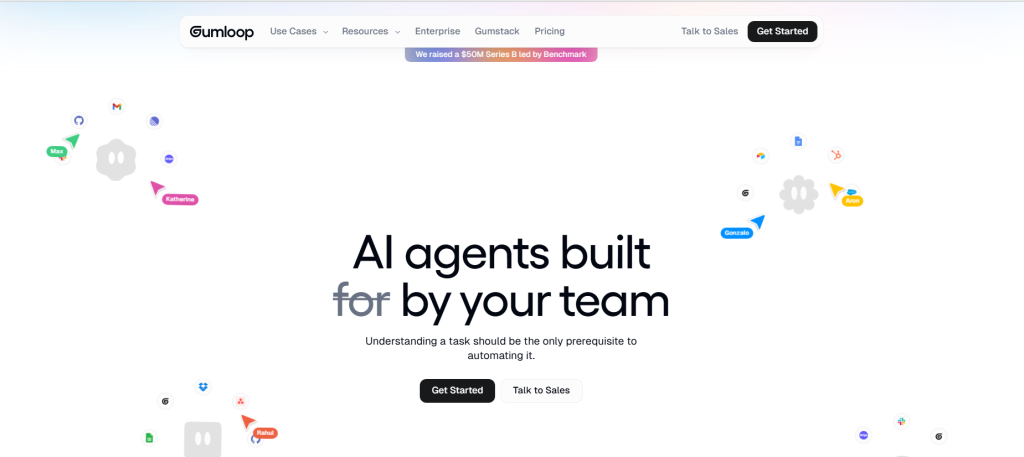
Gumloop stands out because of how it simplifies the building process.
Instead of manually designing workflows, you can describe what you want, and the platform helps generate it. This assistant-led approach makes it easier to build AI agent systems without coding.
It also supports a wide range of integrations, allowing your agents to interact with tools and data sources.
Compared to CrewAI, Gumloop focuses more on speed and usability rather than structured orchestration.
The downside is that the ecosystem is still evolving. Some features and community support are not as mature as older platforms.
But if your goal is fast execution with minimal setup, Gumloop is worth considering.
Pricing
- Free: $0/month
- Pro: Starts at $37/month
- Enterprise: Custom pricing
Limits
- Gumloop is credit-based, so heavy usage can scale cost depending on how many workflows, runs, and agent interactions you need.
- It is excellent for fast automation, but teams needing deep governance or enterprise controls will likely need the higher tiers.
5. Flowise – Best Open-Source Visual AI Agent Builder
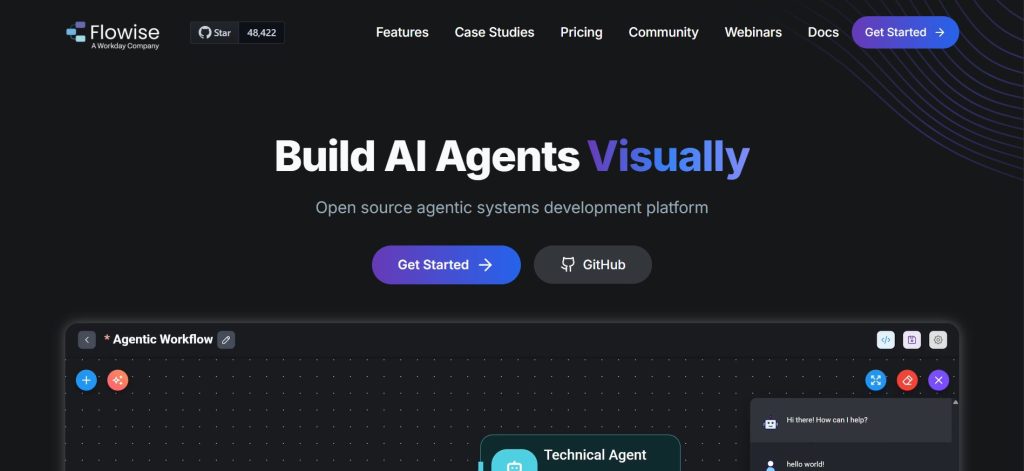

Flowise sits somewhere between developer tools and no-code platforms.
It provides a visual interface for building workflows, but it’s built on top of LangChain. This means you still get flexibility while working in a more structured environment.
For teams that want control without writing everything manually, it offers a good balance.
Compared to CrewAI, it’s more visual but still requires some technical understanding.
It’s not fully beginner-friendly, but it’s easier to work with than purely code-based tools.
Pricing
- Free: 0$/month
- Starter: 35$/month
- Pro: 65$/month
Limits
- Flowise is easier than raw code, but it still expects some technical comfort, especially if you self-host.
- It is a strong visual builder, but setup, maintenance, and production reliability can be more demanding than fully managed no-code platforms.
6. Botpress – Best for Conversational AI + Agent Hybrid
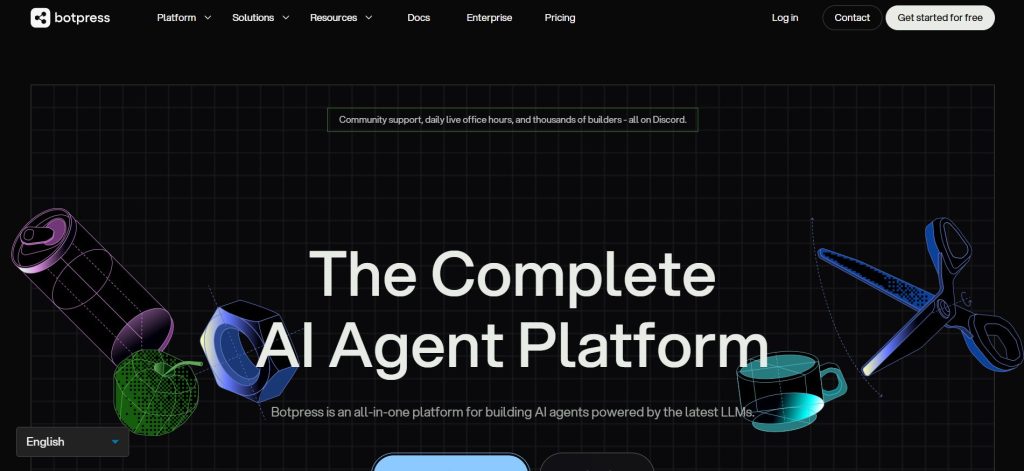
Botpress started as a chatbot platform but has evolved into a hybrid system that includes agent capabilities.
It’s particularly strong in conversational workflows, where interactions with users are central to the system.
Compared to CrewAI, it focuses less on backend orchestration and more on structured conversations.
If you’re already exploring a Botpress Alternative, it’s important to evaluate how much flexibility you need versus how much structure you prefer.
It’s often considered among the best AI agent platforms for customer-facing use cases.
The main limitation is the learning curve. While it’s more visual than developer tools, it still requires time to master.
Pricing
- Pay-as-you-go: $0/month + AI Spend
- Plus: $89/month or $79/month billed annually
- Team: $495/month or $445/month billed annually
- Managed: $1,495/month or $1,245/month billed annually
- Enterprise: Custom pricing
Limits
- Botpress is powerful, but pricing can rise quickly because core subscription cost is separate from AI Spend and add-ons.
- It is stronger for conversational and customer-facing experiences than for simple, ultra-fast no-code business deployment.
7. MindPal – Best for Turning Knowledge into Scalable AI Agent Workflows
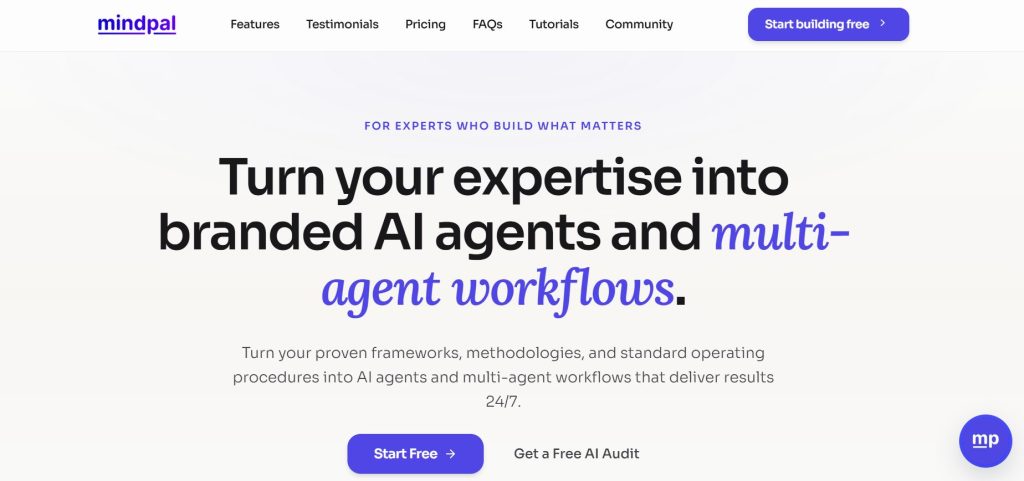

MindPal takes a different approach compared to most CrewAI alternatives.
Instead of focusing only on building individual agents, it allows you to create complete systems where multiple agents work together around your knowledge and processes. You can upload documents, define workflows, and structure how different agents collaborate without writing code.
This makes it especially useful for people who want to turn their expertise into something scalable. Instead of repeating the same work manually, you can build a system that handles it for you.
Compared to CrewAI, the biggest difference is how much setup is required. With CrewAI, you define agents and logic step by step. With MindPal, you start with your knowledge and let the platform structure the workflow around it.
It also gives you flexibility in how you use these systems. You can deploy them as tools, embed them into your workflow, or even turn them into client-facing solutions.
Pricing
- Free: $0 forever
- Pro: $39/month
- Advanced: $149/month
- Ultra: $374/month
Limits
- MindPal is best when you are building structured, knowledge-heavy systems, so it can feel like too much for simpler use cases.
- If your goal is a lightweight automation or a very basic agent, the platform may be more than you need.
CrewAI vs These Alternatives: Which One Should You Choose?
The answer depends entirely on your use case.
CrewAI makes sense if you’re part of a technical team that wants full control. If you’re comfortable writing code and managing workflows manually, it gives you flexibility.
But for most businesses, that level of control isn’t necessary.
If your goal is to deploy quickly, automate workflows, or build systems that interact with real users, alternatives often make more sense.
Many teams researching the best AI agent platforms realize that usability and speed matter more than raw flexibility.
In real-world scenarios, it’s not about choosing the most powerful tool. It’s about choosing the one that fits your workflow.
Final Thoughts
There’s no shortage of tools in the AI space right now. But tools alone don’t solve problems.
What matters is how clearly you define your workflow and how effectively you implement it.
CrewAI is powerful, but it’s not always practical. Alternatives exist because different teams have different needs.
If you’re just starting out, focus on simplicity. Build one working system. Understand how it fits into your process.
From there, scaling becomes much easier.
Because in the end, it’s not about the tool you choose, it’s about how you use it.
Frequently Asked Questions
What are the best CrewAI alternatives?
The best CrewAI alternatives include Botsify, Relevance AI, Lindy AI, Gumloop, Flowise, Botpress, and MindPal.
Is there a no-code alternative to CrewAI?
Yes, platforms like Botsify and Lindy AI allow you to build AI agents without coding.
Which CrewAI alternative is best for beginners?
Botsify is one of the easiest tools for beginners due to its no-code approach and fast setup.
Is CrewAI better than no-code tools?
CrewAI offers more control for developers, while no-code tools are better for speed and usability.
AI Agentic Platform For Building Portable AI Agents
Say Hello To Agentic AI That Connects With Your CRM And Even Other Agents