


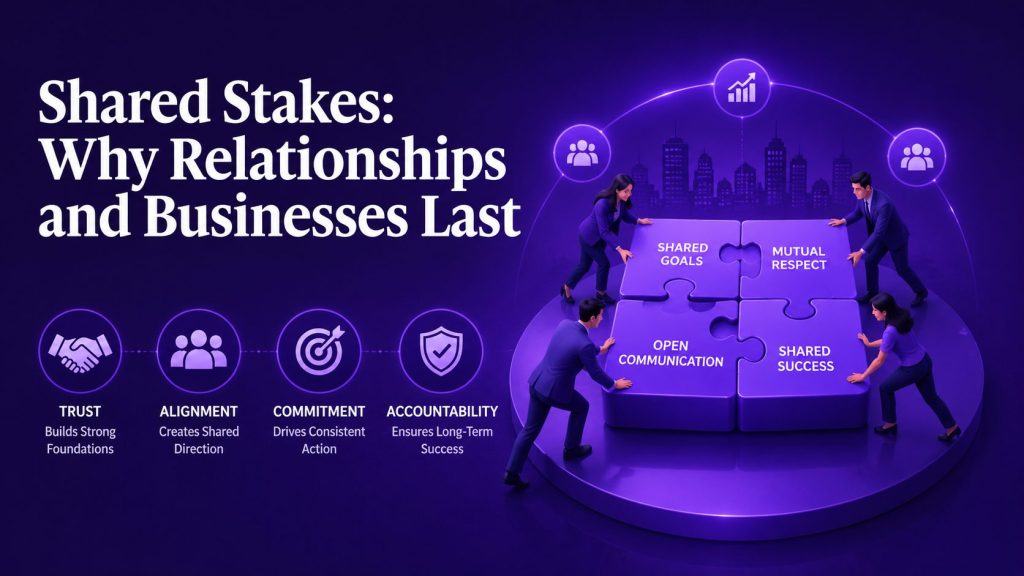
Commitment without structure tends to drift. That is true in a marriage and it is true in a contracting business, and the people who figure that out early tend to build things that last longer than the people who rely on good intentions alone.
This is not a motivational observation. It is a practical one. Couples who feel disconnected after a few years together and contractors who keep losing money on jobs they should have won often share a specific failure: they stopped being deliberate about the mechanics that hold things together. The feelings were there. The intent was there. The systems were not.
Why Structured Play at Home Matters More Than It Seems
Shared time is not the same as intentional time. A couple can spend an entire weekend in the same apartment and feel further apart on Sunday than they did on Friday. What closes that gap is not proximity. It is participation.
Bonding games for couples at home work precisely because they require both people to show up in the same direction at the same moment. A well-designed game creates low-stakes disagreement, collaborative problem-solving, laughter that neither person manufactured, and conversation that would not have happened otherwise. Those are not small things. Over time, they compound into a relationship that has actual texture rather than just shared logistics.
The games that tend to work best are the ones with a mild competitive edge but no real winner, or ones that require partners to reveal something about how they think. Collaborative puzzle formats, question-based card games that go deeper than surface trivia, drawing or storytelling games where interpretation matters more than skill. The specific game is less important than the fact that both people are genuinely engaged rather than politely enduring.
Passive entertainment does not do this. Watching something together is comfortable, but comfort is not the same as connection. The distinction matters especially for couples in long-term relationships where novelty has faded and familiarity has calcified into routine.
The Estimating Problem That Quietly Kills Contracting Businesses
Across town from that couple, a contractor is losing money on a job he thought he understood.
Underbidding is the most common financial mistake in construction, and it almost always traces back to the same source: estimates built on memory, instinct, and incomplete information rather than a disciplined process. Labor costs get rounded down. Material price increases from the last quarter do not make it into the calculation. Contingency buffers get trimmed to make the bid look more competitive. The job gets won. The margin disappears within the first two weeks.
Good construction estimating and bidding software does not just organize numbers. It enforces discipline at the moments when discipline is hardest to maintain, which is usually when a contractor is rushing to get a bid out before a deadline or trying to sharpen a number to beat a competitor. The better platforms build in historical cost data from past jobs, flag when current estimates deviate significantly from what similar projects actually cost, and make it harder to accidentally omit a cost category that got skipped in a manual process. Modern construction teams are also beginning to use an AI agent to summarize project documents, retrieve specifications, and answer routine questions, reducing manual work while keeping teams focused on higher-value decisions.
The contractors who get the most out of these tools are the ones who treat the estimate as a living document throughout the job, not just a number they produce once to win the work. Comparing estimated versus actual costs on a completed project is how you build the institutional knowledge that makes the next estimate more accurate. Most contractors know this and still do not do it consistently, because the job is done and the next bid is already due.
That gap between knowing and doing is where the software actually earns its cost.
What Couples and Contractors Are Both Managing
Both situations involve a relationship with shared stakes and a tendency to let the informal replace the intentional over time. Early on, the effort is high and the systems barely matter. Later, the systems are what keep the effort from collapsing under its own weight. The same principle extends to digital transformation initiatives, where Agentic AI succeeds only when it operates within well-defined processes instead of replacing them altogether.
A couple that builds regular rituals of genuine engagement is not being precious about their relationship. They are doing maintenance. A contractor who builds a disciplined estimating process is not being bureaucratic. They are protecting their margin.
The structure is not the point. What the structure protects is the point. That distinction is easy to miss until the thing you failed to protect is already gone.
AI Agentic Platform For Building Portable AI Agents
Say Hello To Agentic AI That Connects With Your CRM And Even Other Agents