


OpenClaw made a lot of people rethink what AI agents could actually do.
For the first time, it wasn’t just about generating text or answering questions. It was about execution, writing code, running commands, automating workflows, and acting across systems with minimal human input.
That level of autonomy is powerful. But it also comes with trade-offs that become obvious the moment you try to use it beyond experimentation.
Setting up OpenClaw often involves managing Docker containers, configuring environments, handling API keys, and maintaining infrastructure over time. For developers, that might be acceptable. For founders, marketers, or operators, it quickly becomes a distraction.
That’s exactly why interest in OpenClaw alternatives has grown so rapidly.
What people are really looking for now isn’t just power. They want reliability, usability, and systems that can deliver real outcomes without constant supervision.
What is OpenClaw?
At its core, OpenClaw is an open-source AI agent framework designed to go beyond conversation and actually perform tasks.
It connects a language model to tools like:
- file systems
- APIs
- browsers
- command-line interfaces
This allows you to build AI agents that don’t just suggest actions but execute them.
For developers, this opens up a wide range of possibilities. You can create agents that write and run code, automate workflows, or interact with external systems in complex ways.
But this same flexibility is also where most of the challenges begin.
Portable AI Agents In Seconds, Use Everywhere
Prompt, Test, and Deploy AI Agents Across Social Platforms and LLMs. Automate Everything.
Why People Are Looking for OpenClaw Alternatives
Most people don’t leave OpenClaw because it’s weak. They leave because it’s too heavy for their needs.
The first issue is complexity. Running OpenClaw in a stable way often requires infrastructure knowledge. You’re dealing with environments, dependencies, and updates that can break things unexpectedly. What works today might fail tomorrow after a minor change.
Security is another concern. Because OpenClaw agents can access system-level resources, the risk surface is much larger. A poorly configured setup or a malicious prompt can lead to unintended actions, especially when the agent has broad permissions.
There’s also the usability problem. OpenClaw doesn’t provide a polished interface or workflow builder. Most interactions happen through technical layers, which makes it harder for non-developers to adopt.
Finally, it’s not built with business workflows in mind. It’s great for experimentation and prototyping, but when you need consistent outputs, auditability, and team collaboration, it starts to fall short.
This is where newer AI agent platforms have started to differentiate themselves.
What to Look for in an OpenClaw Alternative
Choosing the right alternative depends less on features and more on how you plan to use it.
If your goal is experimentation, flexibility matters. But if you’re trying to build something that runs daily without breaking, then reliability becomes the priority.
The best alternatives today tend to focus on a few key areas. They reduce setup complexity, offer cloud-based execution instead of local environments, and provide structured ways to build custom AI agents.
They also tend to include integrations, better memory handling, and clearer control over what the agent is allowed to do.
In other words, they trade a bit of raw freedom for a lot more usability.
OpenClaw Alternatives Comparison Table
Before diving into each tool, here’s a quick snapshot of how they compare:
| Tool | Best For | Ease of Use | No-Code | Hosting | Key Strength |
| Hermes Agent | Developers | Low | No | Self-hosted | Self-improving agents |
| Botsify | Non-devs & agencies | High | Yes | Cloud | AI skills + execution |
| NanoClaw | Security-focused users | Low | No | Local | Container isolation |
| Perplexity Computer | Research workflows | Medium | Yes | Cloud | Multi-model execution |
| Lindy AI | Business automation | High | Yes | Cloud | No-code workflows |
| n8n | Workflow automation | Medium | Yes | Cloud/self-hosted | Reliability |
| Manus | Autonomous execution | Medium | No | Cloud | Long-horizon tasks |
Top OpenClaw Alternatives in 2026
OpenClaw is powerful, but it’s not always the easiest tool to work with. Below are some of the best OpenClaw alternatives that offer a better balance of usability, reliability, and real-world execution.
1. Hermes Agent
Best for: Developers who want self-improving AI agents
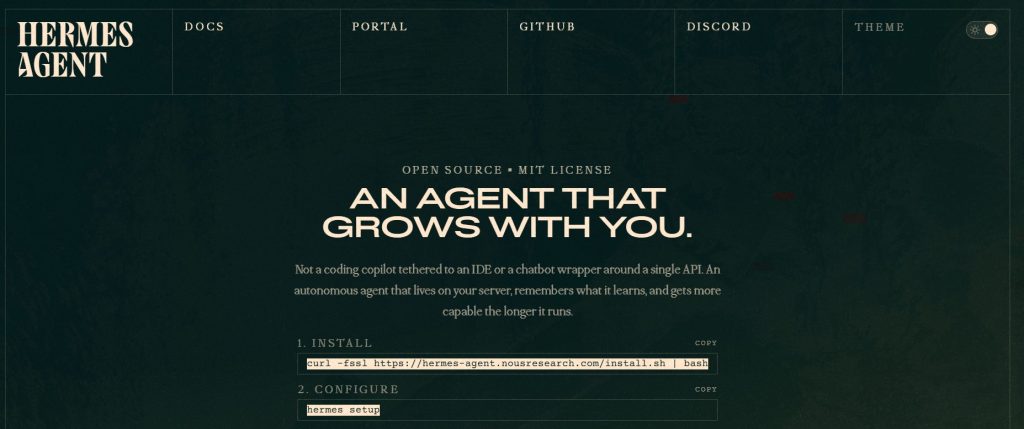

Hermes Agent is one of the closest conceptual alternatives to OpenClaw. It focuses on building agents that evolve over time using persistent memory and dynamic skill development. Instead of simply executing tasks, Hermes introduces a learning loop that allows agents to refine their behavior across sessions.
Key Features
- Persistent memory across sessions
- Skill generation and reuse
- Autonomous learning loop
- Open-source flexibility
Pros
- Highly customizable for developers
- Strong memory and reasoning capabilities
- Ideal for experimental and advanced agent systems
Cons
- Requires technical setup (Docker, environment configs)
- No visual interface
- Not suitable for non-developers
2. Botsify
Best for: Non-developers, agencies, and business automation
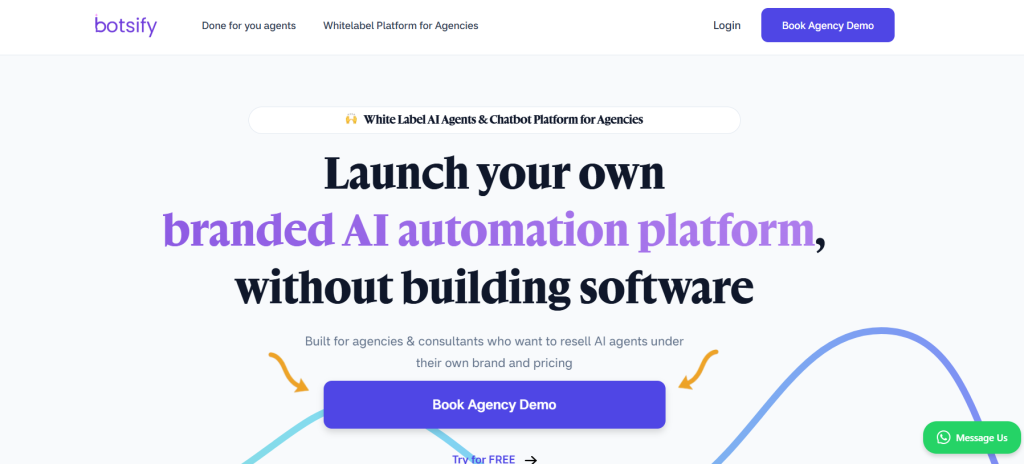

Botsify takes a more practical approach to AI agents by focusing on execution rather than experimentation. It allows users to build custom AI agents using reusable AI skills, memory-driven workflows, and a fully managed cloud environment.
Instead of configuring infrastructure, you can deploy skillful agents that perform real-world tasks like lead generation, customer support, or internal automation.
Key Features
- Reusable AI skills for task execution
- Memory-based decision-making
- Built-in cloud execution (no VPS required)
- White label AI capabilities for agencies
Pros
- No-code builder, easy for beginners
- Designed for real business use cases
- Scalable for agencies and teams
- Eliminates infrastructure complexity
Cons
- Less control over deep technical customization compared to open-source frameworks
- Not open-source
3. NanoClaw
Best for: Security-conscious developers
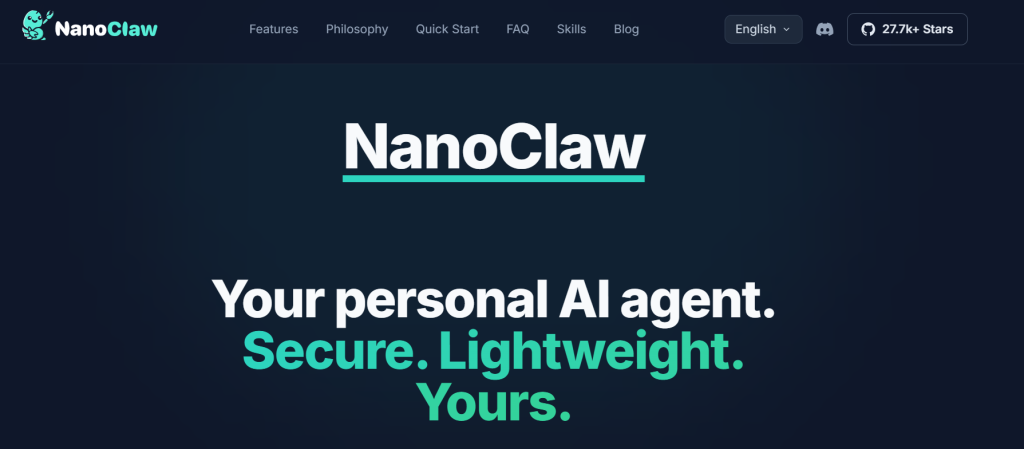

NanoClaw is designed as a safer alternative to OpenClaw by restricting how agents interact with the system. It runs agents inside isolated containers, which significantly reduces the risk of unintended actions or data exposure.
This makes it particularly useful for environments where security and control are critical.
Key Features
- Container-based execution
- Restricted system access
- Lightweight codebase
- Focus on safe automation
Pros
- Strong security model
- Minimal and transparent architecture
- Better control over agent behavior
Cons
- Limited integrations and ecosystem
- Requires technical setup
- Not ideal for business workflows
4. Perplexity Computer
Best for: Research and multi-step workflows
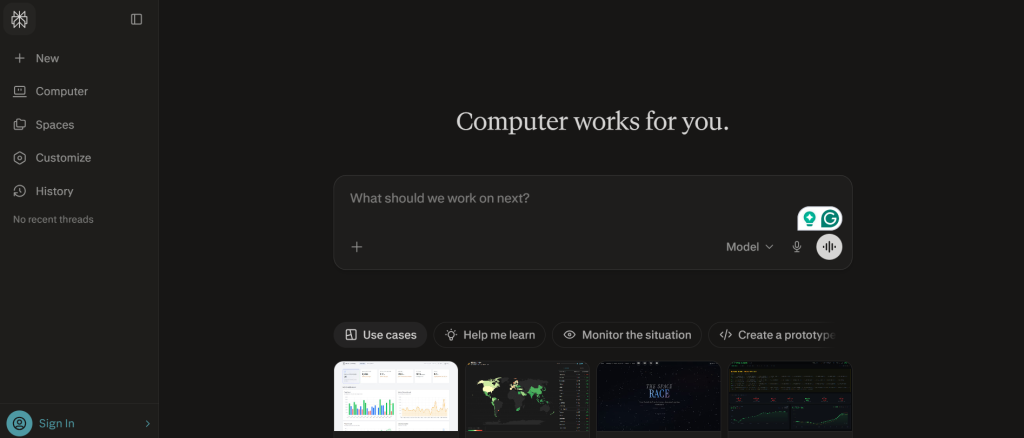

Perplexity Computer offers a cloud-based approach to AI agents by handling most of the complexity behind the scenes. It can perform multi-step tasks like research, data analysis, and content generation without requiring manual configuration.
This makes it a strong option for users who want results without managing infrastructure.
Key Features
- Multi-model execution
- Automated research workflows
- Cloud-based deployment
- Tool integrations
Pros
- No setup required
- Powerful for knowledge work
- Handles complex workflows efficiently
Cons
- Limited customization
- Less transparency in execution
- Fully cloud-dependent
5. Lindy AI
Best for: No-code business automation
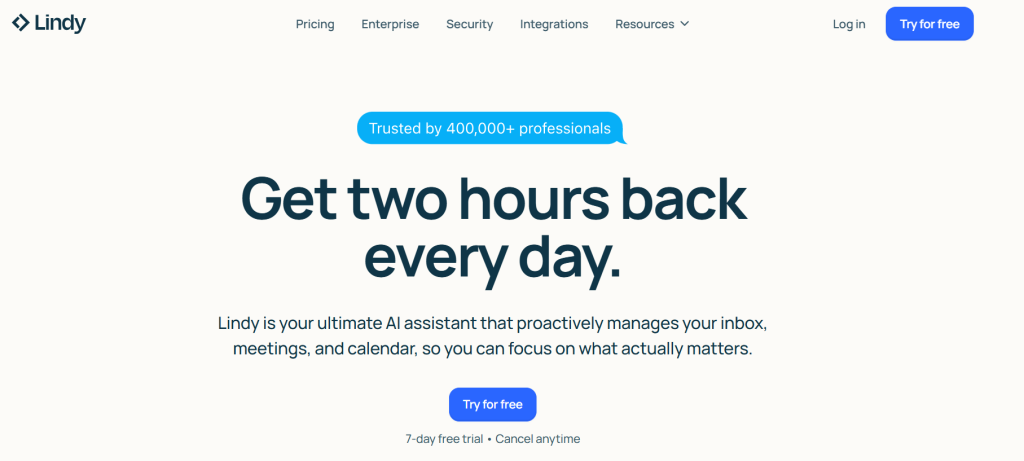

Lindy AI is built for teams that want to automate workflows without dealing with technical complexity. It uses a visual builder that allows users to create automation flows for sales, support, and operations.
This makes it especially useful for AI agents for small businesses that need quick and reliable solutions.
Key Features
- Visual workflow builder
- No-code automation setup
- Wide range of integrations
- Pre-built automation templates
Pros
- Extremely easy to use
- Fast deployment
- Ideal for non-technical teams
Cons
- Limited customization for advanced use cases
- Less flexible than developer-focused tools
6. n8n
Best for: Reliable workflow automation
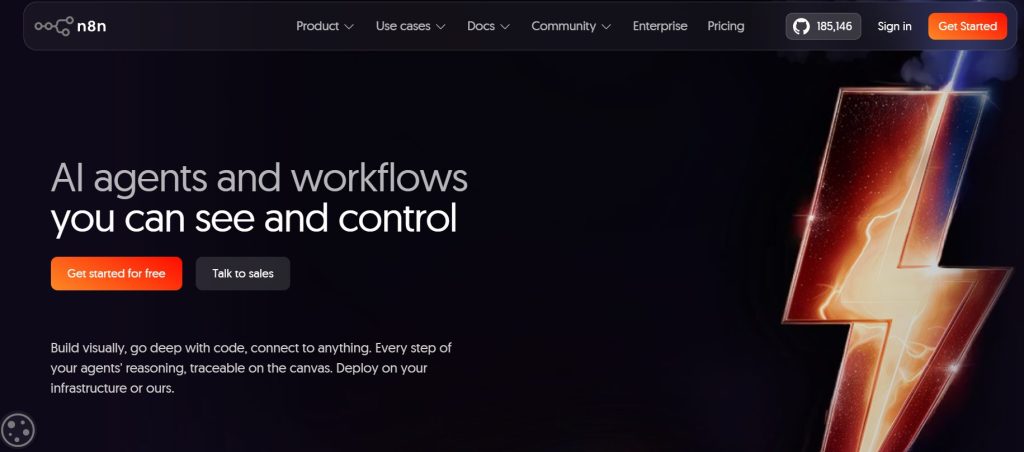

n8n is not a traditional AI agent, but it solves many of the same problems more reliably. Instead of relying on autonomous decision-making, it uses structured workflows that execute predictable actions.
This makes it a strong choice for business processes where consistency is more important than flexibility.
Key Features
- Visual workflow automation
- Trigger-based execution
- Integration with hundreds of tools
- Optional self-hosting
Pros
- Highly reliable and predictable
- Strong integration ecosystem
- Works well for structured automation
Cons
- Not fully autonomous like AI agents
- Requires some setup for advanced workflows
7. Manus
Best for: Autonomous long-horizon tasks
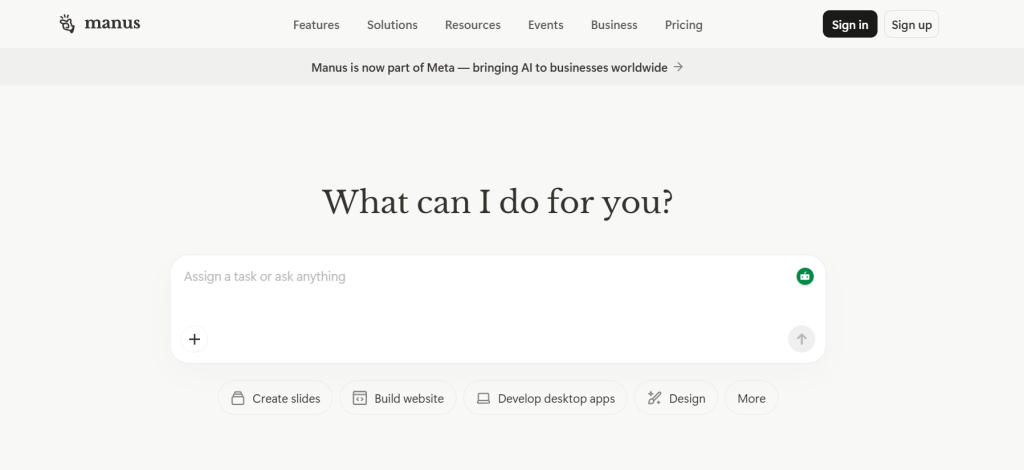

Manus focuses on executing complex tasks with minimal human input. You provide a goal, and the system determines the steps required to complete it.
This makes it one of the more advanced tools for automation, especially when dealing with multi-step workflows.
Key Features
- Goal-based task execution
- Long-horizon workflows
- Autonomous decision-making
- Cloud-based system
Pros
- High level of automation
- Minimal user input required
- Strong execution capabilities
Cons
- Limited visibility into decision-making
- Less control over processes
- Cloud-only environment
Which OpenClaw Alternative Should You Choose?
If you’re short on time, here’s a simple way to decide based on your needs:
- Choose Hermes Agent if you’re a developer who wants full control over how your AI agent behaves, along with persistent memory and the ability to experiment with evolving, self-improving systems.
- Choose NanoClaw if your main concern is security and controlled execution, especially when working with sensitive data or environments where unrestricted access isn’t acceptable.
- Choose Botsify if you want to build and deploy custom AI agents without dealing with infrastructure. It’s especially useful for agencies and teams that need reliable automation using reusable AI skills and scalable workflows.
- Choose Perplexity Computer if your work revolves around research, content generation, or multi-step information gathering, and you want a system that handles complexity for you in the background.
- Choose Lindy AI if you’re looking for a no-code solution to automate business workflows quickly, particularly for teams or those building AI agents for small businesses.
- Choose n8n if you prefer predictable, structured automation over autonomous behavior, and you want workflows that run consistently without surprises.
- Choose Manus if you want maximum autonomy and need an AI agent that can handle long, multi-step tasks with minimal input, even if that means giving up some control over how decisions are made.
Final Thoughts
OpenClaw is still one of the most powerful tools for experimenting with autonomous systems, but it’s not always the most practical choice for everyday use. As the space evolves, more tools are focusing on usability, reliability, and real-world execution rather than just raw flexibility.
That’s why exploring the right OpenClaw alternatives matters. Whether you’re a developer looking for control or a business aiming for scalable automation, there are now better-suited options depending on your needs.
The key is to choose a platform that doesn’t just work in theory, but actually delivers consistent results in practice.
AI Agentic Platform For Building Portable AI Agents
Say Hello To Agentic AI That Connects With Your CRM And Even Other Agents
FAQs
What is the best OpenClaw alternative in 2026?
It depends on your needs. Developers may prefer Hermes Agent, while non-developers and teams often find Botsify or Lindy AI more practical due to ease of use and built-in execution.
Are there any no-code OpenClaw alternatives?
Yes. Tools like Botsify and Lindy AI allow you to build AI agents without coding using visual workflows and pre-built components.
Do OpenClaw alternatives require a VPS or local setup?
Not always. Open-source tools usually require setup, but platforms like Botsify, Perplexity Computer, and Lindy AI run fully in the cloud.
Which OpenClaw alternative is best for businesses or agencies?
Botsify is a strong option for agencies due to its structured workflows and white-label capabilities, while n8n works well for reliable business automation.
Are OpenClaw alternatives secure to use?
It depends on the tool. Open-source options require manual configuration, while platforms like NanoClaw and cloud-based tools handle security more directly.
Can I build AI agents without technical knowledge?
Yes. Many modern AI agent platforms are designed for non-developers and offer no-code builders to create functional agents easily.