


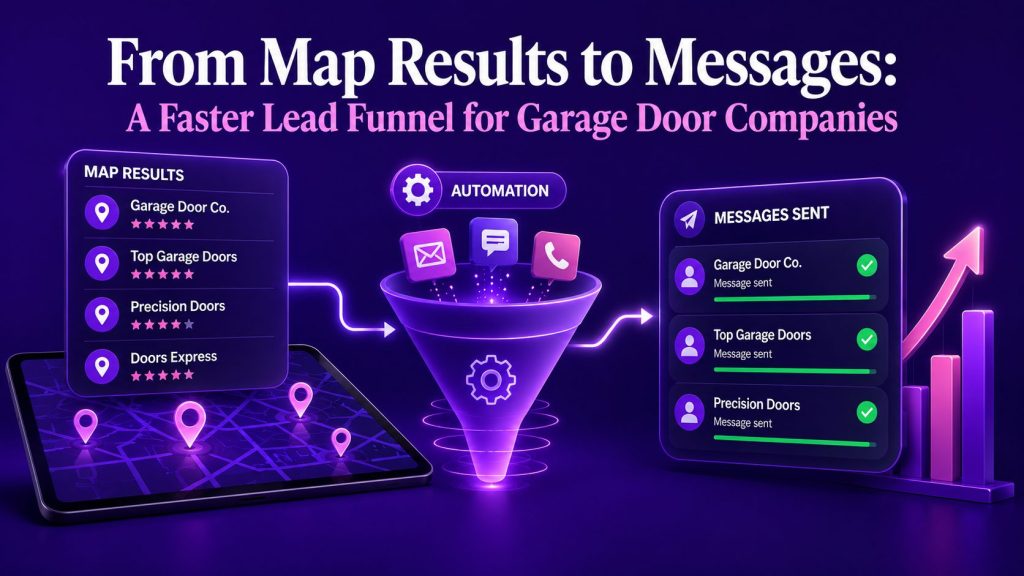
A broken garage door creates a very different customer journey from a casual online purchase. People often begin searching because something needs attention now, which means the business that is easiest to discover and contact immediately has an advantage. Learning how to rank your garage door business in local search is therefore only the beginning. The real opportunity comes from connecting that visibility to a fast website, useful service information, strong reviews, and a lead-handling system that responds while the customer’s need is still fresh. Local optimization strategies for the industry bring together map visibility, business profiles, consistent company data, relevant content, and authority-building signals.
Search Intent Is Also a Timing Signal
Not every search carries the same level of urgency, and garage door businesses should build their marketing around that distinction.
Someone researching new door styles may still be weeks away from making a decision. A homeowner whose door suddenly refuses to open may want to speak with someone within minutes. Commercial customers can face even greater pressure when malfunctioning equipment interrupts access to a building.
That makes search intent valuable for more than choosing keywords. It can also help determine how a page should behave.
A page targeting an urgent repair need should make contact options immediately visible. A page aimed at customers researching replacements can offer more detailed information, images, comparisons, and answers to common questions.
The best local strategy does not force every visitor through the same journey. It recognizes why people are searching and gives them the shortest reasonable route to what they need. The same principle can apply to custom AI agents, which can be configured to respond differently depending on whether someone needs an urgent repair, a quote, general service information, or an appointment.
Portable AI Agents In Seconds, Use Everywhere
Prompt, Test, and Deploy AI Agents Across Social Platforms and LLMs. Automate Everything.
Make Your Search Profile Work Like a Mini Landing Page
A potential customer may form an opinion about a garage door company without visiting its website at all.
Business profiles displayed in maps and search results can surface hours, contact information, customer feedback, photographs, categories, and other important details. Optimizing these elements is a core part of improving local visibility for garage door providers.
That means the profile deserves the same attention given to a website landing page.
Photos should look current. Service information should reflect what the company actually provides. Telephone numbers and operating hours should be correct. Categories should accurately describe the business rather than being chosen simply because they appear to have high search volume.
Freshness matters as well. An active, maintained profile creates a very different impression from one with outdated information and years-old imagery.
The objective is simple: when someone encounters the company in search, there should be as little uncertainty as possible about what it does and how to reach it.

Build Web Pages Around Problems Customers Actually Have
Internal service terminology does not always match the way customers search.
A homeowner may not know the technical name of the component causing a problem. They simply know that their door is stuck, making a strange noise, moving unevenly, or refusing to respond.
Website architecture should account for that reality.
Individual pages can be created around major services and customer needs rather than asking one generic page to represent the entire business. The target local-search approach emphasizes focused content and relevant keywords tied to what prospective customers are genuinely searching for.
Each page should quickly establish what problem it addresses, explain what customers should know, and provide a clear route to requesting help. Strong on-page SEO also means structuring these pages around clear headings, relevant search terms, useful information, and an experience that makes it easy for visitors to take the next step.
This also creates better opportunities for internal links. An educational article about a common problem can direct readers to the relevant service page instead of ending with a generic invitation to return to the homepage.
Search optimization works much more naturally when the site mirrors the way customers think.
Don’t Let a Qualified Visitor Disappear After Hours
Local visibility can generate a valuable visitor at any time, but businesses cannot always have someone answering every inquiry immediately.
This is where digital automation can complement search marketing.
Website chat tools and automated assistants can help capture information, answer straightforward questions, and keep a conversation moving when staff members are unavailable. AI agents for small businesses are increasingly being used to assist with lead handling, sales inquiries, appointment requests, and routine customer communication.
For a garage door business, the goal should not be to automate every conversation.
Instead, automation can cover the gap between discovery and human follow-up. Businesses that need more control over this process can use an AI agent builder to customize questions, qualification steps, booking requirements, and escalation rules around their services. A visitor might then identify whether the inquiry concerns repair or installation, provide contact details, select a preferred appointment window, or explain the problem.
That information can then be passed to a person who is better prepared to continue the conversation.
The technology should reduce waiting and friction, not create another barrier between the customer and the business.
Reviews Can Do Part of the Selling Before You Answer
Local search gives customers an unusually easy way to compare reputations.
Two businesses might offer similar services, yet one can feel considerably more trustworthy because its reviews demonstrate responsiveness, professionalism, and consistent customer experiences.
Reviews therefore deserve a structured process.
Businesses can ask satisfied customers for genuine feedback soon after work is completed, when the experience is still recent. Responses should also become part of reputation management rather than something handled only when a complaint appears.
Customer feedback is one of the signals highlighted in local optimization strategies because it contributes to credibility while helping businesses compete for attention in map-based searches. Reviews can also strengthen an online business reputation, particularly when potential customers are comparing several local providers before deciding whom to contact.
Reviews also contain useful business intelligence.
If customers repeatedly mention fast communication, that may be a strength worth reinforcing in marketing. If similar complaints continue appearing, there may be an operational issue that needs attention.
Marketing data does not always live inside analytics software.
Keep Your Digital Business Information in Sync
One incorrect telephone number can undo a surprising amount of marketing work.
Business details often appear across directories, search platforms, mapping services, industry websites, and other online sources. When those details stop matching, customers may encounter conflicting information.
Local optimization therefore includes maintaining consistent core company data across relevant directories.
This becomes especially important when a business changes phone systems, opening hours, service arrangements, or other operational details.
Think of these listings as part of a distributed digital database about the company. Updating only the website does not necessarily update everything else.
A periodic review can catch outdated information before customers do.
It is not the most glamorous part of marketing, but accuracy is a conversion issue. A customer who cannot reach the business may simply call the next result.
Connect Educational Content to Real Services
A garage door website can attract customers before they are ready to request an appointment.
People search for maintenance advice, signs of potential problems, replacement considerations, unusual noises, operating issues, and ways to make equipment last longer. Publishing genuinely useful answers can give a company more opportunities to appear during these earlier research moments.
Focused blogging also creates more pages for search engines to understand and more opportunities to connect educational content with relevant service pages.
The important part is resisting the temptation to publish content merely to hit a monthly quota.
Every article should answer a real question.
If a topic cannot reasonably help a potential customer understand a problem, make a decision, or discover a relevant service, it may not deserve a place in the content calendar.
Useful beats frequent.
Measure the Journey Beyond the Ranking
A higher search position is encouraging, but it does not tell you whether the marketing is generating worthwhile work.
Businesses should follow the customer journey further.
Which pages generate phone calls? Which services receive form submissions? How many chat conversations become qualified inquiries? Are visitors finding the correct service quickly? Which types of search traffic actually create appointments?
Automation and chatbot platforms can support lead capture and qualification, while search analytics provide information about discovery. Connecting those two sides gives marketers a clearer picture of what happens between visibility and conversion.
That information can guide the next round of improvements.
A high-ranking page with weak lead generation may need a better conversion path. A lower-traffic page that consistently produces quality opportunities may deserve greater search investment.
The aim is not to collect impressive numbers. It is to understand which digital interactions lead toward real jobs.
Build a System That Responds as Fast as Customers Search
Garage door marketing works best when discovery and response are treated as parts of the same system.
Effective SEO strategies should do more than help potential customers find the business. They should also create a better customer experience once someone arrives. Strong profiles and reviews build confidence, while focused pages help people recognize that they have reached the right provider. Fast contact options and sensible automation reduce the chance that valuable inquiries disappear while waiting for a response.
Lead qualification and appointment scheduling are particularly practical AI agent use cases for service businesses, where responding quickly can directly affect whether an inquiry becomes a customer.
Each element strengthens the others.
For garage door businesses, that connected approach is more useful than obsessing over a single ranking. The real competitive advantage comes from being visible when customers need help, giving them confidence quickly, and making the transition from search to conversation almost effortless.
That is when local search stops being a traffic strategy and starts becoming a practical lead-generation engine.
AI Agentic Platform For Building Portable AI Agents
Say Hello To Agentic AI That Connects With Your CRM And Even Other Agents